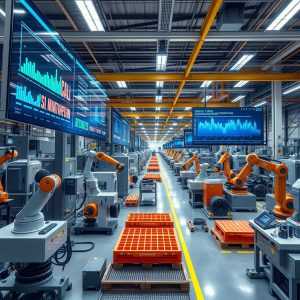
The Convergence of Additive Manufacturing and Digital Twin Technology: Crafting the Next Era of Smart Factories
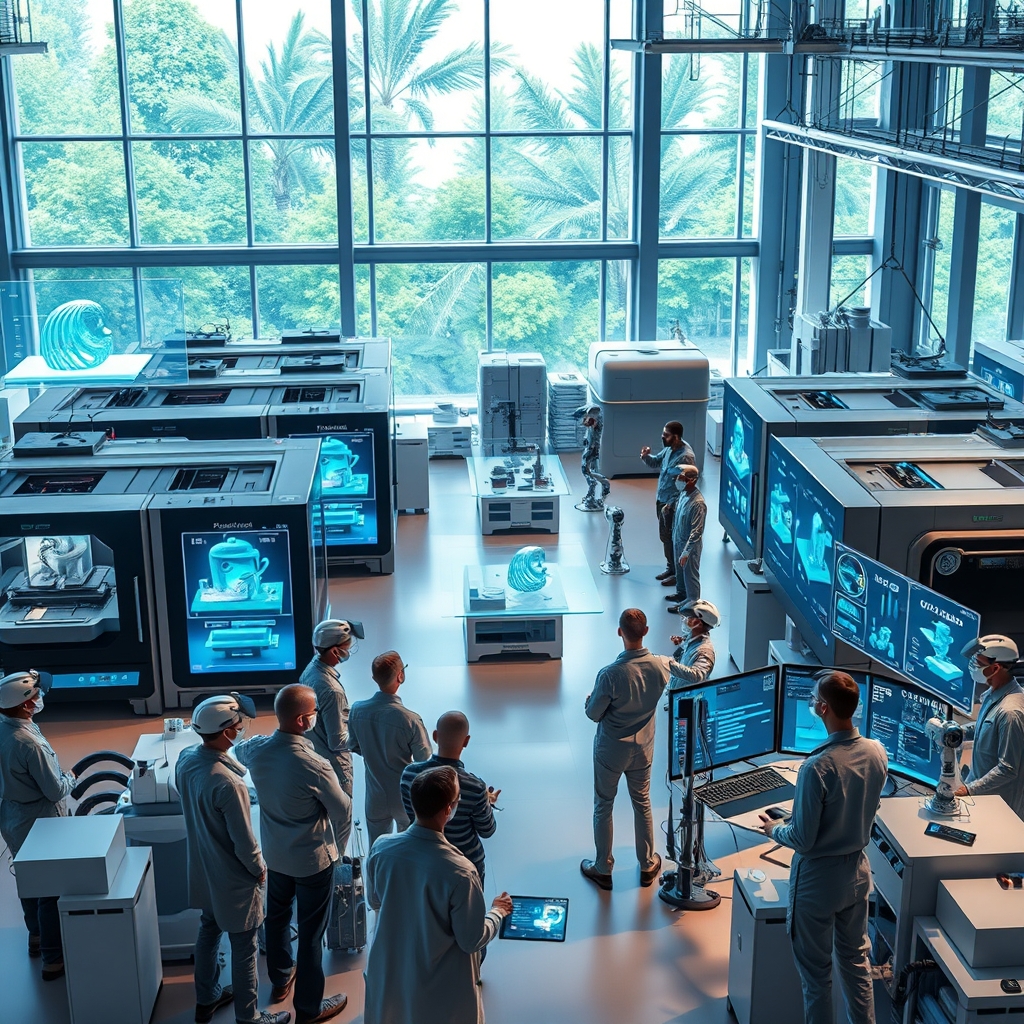
In the rapidly evolving landscape of modern manufacturing, two technologies have emerged as pivotal forces driving innovation: additive manufacturing (AM) and digital twin technology. While each holds transformative potential on its own, their convergence is unlocking unprecedented opportunities for smart factories, redefining how products are designed, prototyped, and produced. This synergy is not just enhancing efficiency but also fostering a new paradigm of agility, sustainability, and human-centric production.
The Rise of Additive Manufacturing in Smart Factories
Additive manufacturing, often referred to as 3D printing, has transcended its origins as a tool for rapid prototyping to become a cornerstone of scalable industrial solutions. Unlike traditional subtractive manufacturing methods, AM builds components layer by layer, offering unparalleled design freedom, reduced material waste, and the ability to produce complex geometries that were once deemed impossible. In smart factories, AM is enabling on-demand production, reducing lead times, and allowing manufacturers to respond swiftly to market demands.
However, the true power of AM lies in its integration with digital ecosystems. By embedding sensors and IoT devices within 3D-printed components, manufacturers can gather real-time data on performance, wear, and environmental conditions. This data-driven approach not only enhances predictive quality control but also paves the way for more sustainable manufacturing practices by minimizing material usage and energy consumption.
Digital Twin Technology: The Virtual Mirror of Physical Production
At the heart of the smart factory revolution is digital twin technology—a dynamic, virtual replica of physical assets, processes, or systems. Digital twins enable manufacturers to simulate, monitor, and optimize production workflows in a risk-free virtual environment. By mirroring real-world operations, digital twins provide actionable insights into equipment performance, process inefficiencies, and potential bottlenecks before they manifest in the physical world.
The integration of digital twins with additive manufacturing workflows is a game-changer. For instance, manufacturers can use digital twins to simulate the 3D printing process, identifying optimal printing parameters, material distributions, and structural integrity before a single layer is deposited. This not only reduces trial-and-error costs but also ensures that the final product meets stringent quality standards. Moreover, digital twins facilitate experiential product prototyping, allowing engineers to test and refine designs in a virtual space, accelerating innovation cycles.
Enhancing Predictive Quality Control and Process Analytics
The fusion of AM and digital twin technology is elevating predictive quality control to new heights. By leveraging real-time process analytics, manufacturers can detect anomalies during the printing process, such as thermal distortions or material inconsistencies, and make immediate adjustments. Digital twins enable continuous monitoring of these processes, providing a feedback loop that enhances accuracy and repeatability.
For example, in industries like aerospace and healthcare, where precision is paramount, digital twins can simulate the entire additive manufacturing workflow, from powder bed fusion to post-processing. This ensures that each component adheres to exact specifications, reducing defects and rework. The result is a more agile and responsive manufacturing environment where quality is not just inspected but ingrained into the process.
Human-Centric Production in the Age of Automation
While automation and digitalization are often associated with the displacement of human labor, the convergence of AM and digital twin technology is fostering a more human-centric approach to production. By automating repetitive and hazardous tasks, these technologies free up human workers to focus on higher-value activities such as design innovation, problem-solving, and process optimization. Tech-enabled workforce training programs are equipping employees with the skills needed to operate and maintain advanced manufacturing systems, bridging the gap between traditional manufacturing and Industry 4.0.
Collaborative robotics, or cobots, are playing a crucial role in this transition. When integrated with digital twins, cobots can be programmed and monitored in real-time, ensuring seamless collaboration with human workers. This not only enhances safety but also improves productivity, as cobots can assist in tasks that require precision and consistency, such as support structure removal in additive manufacturing or quality inspection.
Sustainable and Ethical Manufacturing Practices
The environmental impact of manufacturing has never been more scrutinized. The convergence of AM and digital twin technology is enabling manufacturers to adopt more sustainable and ethical practices. Additive manufacturing inherently reduces material waste by using only the necessary amount of raw materials, while digital twins optimize energy consumption by simulating and refining production processes.
Furthermore, digital twins can track the entire lifecycle of a product, from raw material sourcing to end-of-life recycling. This transparency is crucial for ethical sourcing, as manufacturers can ensure that materials are responsibly sourced and that production processes adhere to environmental and social standards. By integrating sustainable supply chain practices with digital twin technology, manufacturers can not only reduce their carbon footprint but also build trust with consumers who prioritize ethical and eco-friendly products.
The journey toward fully integrated smart factories is still unfolding, but the convergence of additive manufacturing and digital twin technology is undeniably a cornerstone of this transformation. As these technologies continue to evolve, they will unlock new levels of efficiency, flexibility, and sustainability, reshaping the manufacturing landscape for decades to come. The factories of the future will not be defined by rigid, linear production lines but by dynamic, data-driven ecosystems where innovation thrives, and human ingenuity is amplified by the power of technology. In this new era, the boundaries between the physical and digital worlds blur, creating a seamless synergy that propels manufacturing into uncharted territories of possibility.