
The Pulse of Precision: How Real-Time Process Analytics and Collaborative Robotics Are Crafting the Smart Factory Ecosystem
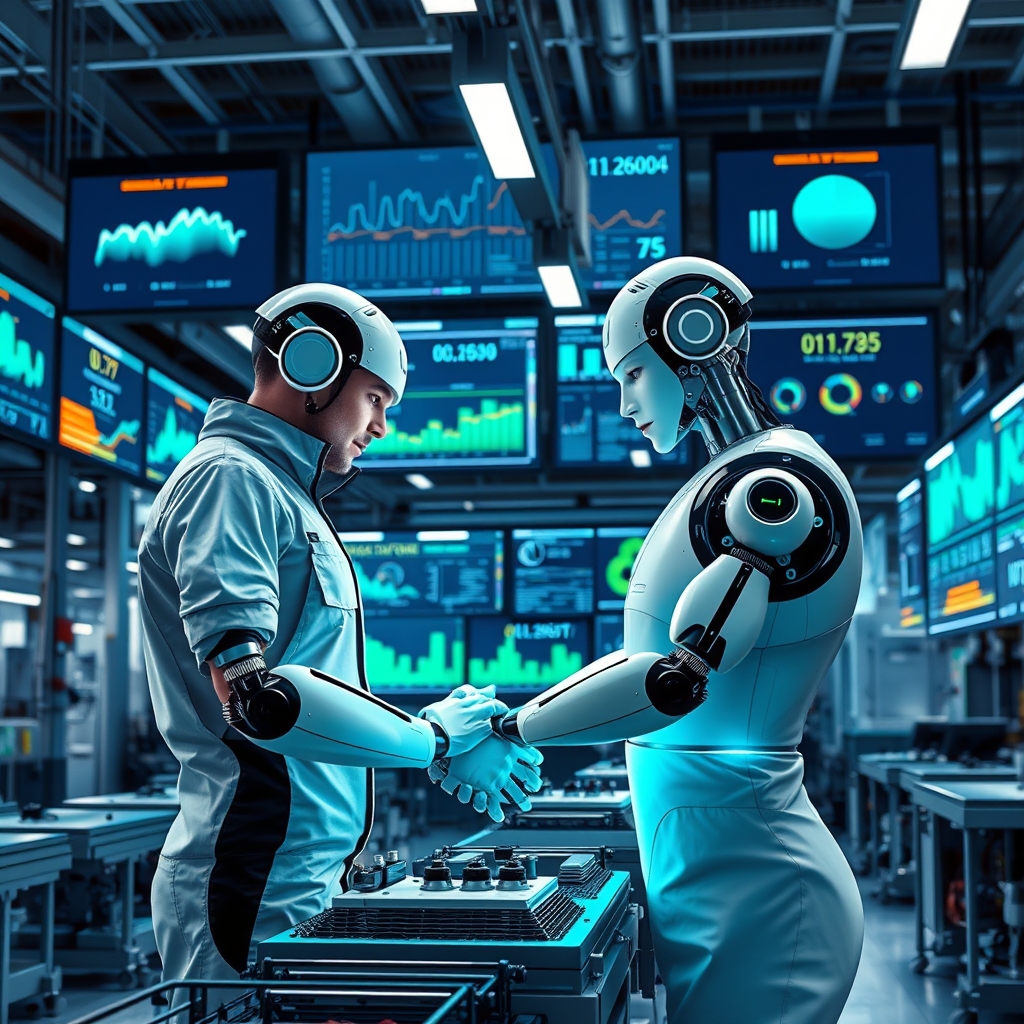
The modern manufacturing landscape is no longer defined by rigid assembly lines and isolated machines. Instead, it thrives on a dynamic interplay of data, automation, and human ingenuity—a symphony of precision where every note matters. At the heart of this transformation lies the fusion of real-time process analytics and collaborative robotics, two pillars that are redefining what it means to operate a smart factory. Together, they create an ecosystem where efficiency, adaptability, and quality are not just goals but inherent outcomes of a well-orchestrated system.
The Data-Driven Nervous System
Real-time process analytics act as the nervous system of a smart factory, continuously collecting, processing, and interpreting data from every corner of the production floor. Sensors embedded in machinery, IoT-enabled devices, and advanced monitoring tools generate a relentless stream of information—temperature fluctuations, vibration patterns, cycle times, and material properties, to name a few. This data is not merely stored; it is analyzed in the moment, enabling manufacturers to detect anomalies, predict bottlenecks, and optimize workflows before issues escalate.
For example, a sudden spike in vibration on a CNC machine might indicate impending tool wear. With real-time analytics, the system can automatically adjust cutting parameters or trigger a maintenance alert, preventing costly downtime. Similarly, deviations in material consistency can be flagged instantly, ensuring that only products meeting strict quality standards proceed down the line. This level of responsiveness was unimaginable in traditional manufacturing, where decisions were often reactive rather than proactive.
The Collaborative Workforce: Humans and Robots in Harmony
While data provides the insights, collaborative robotics—often referred to as cobots—bring those insights to life. Unlike their industrial predecessors, cobots are designed to work alongside human operators, augmenting their capabilities rather than replacing them. Equipped with advanced sensors, machine learning algorithms, and adaptive programming, these robots can perform repetitive, hazardous, or precision-critical tasks with unmatched consistency. Yet, their true power lies in their ability to collaborate seamlessly with human workers.
Consider a scenario in an automotive assembly plant. A cobot might handle the heavy lifting of positioning a car door for installation, while a human worker focuses on the intricate task of aligning and securing it. The cobot’s movements are guided by real-time data, ensuring optimal ergonomics for the worker and reducing the risk of injury. Meanwhile, the human operator’s expertise in fine-tuning the fit and finish remains irreplaceable. This synergy not only enhances productivity but also fosters a safer, more engaging work environment.
Adaptive Learning and Continuous Improvement
The integration of real-time analytics and cobots creates a feedback loop that drives continuous improvement. Every interaction, every adjustment, and every outcome is recorded and analyzed, allowing the system to learn and evolve. For instance, if a cobot repeatedly encounters resistance while performing a task, the analytics platform can identify the root cause—whether it’s a misalignment in the workspace or a variation in material properties—and suggest corrective actions. Over time, this adaptive learning minimizes errors, reduces waste, and refines processes to near-perfection.
Moreover, this data-driven approach enables manufacturers to implement predictive quality control. By correlating real-time production data with historical quality metrics, the system can anticipate defects before they occur. For example, if a particular combination of temperature, pressure, and material properties has historically led to product failures, the system can flag similar conditions in real time and adjust parameters accordingly. This proactive stance not only improves product quality but also reduces the need for costly rework or recalls.
Sustainability and Ethical Considerations
The benefits of this integrated ecosystem extend beyond operational efficiency. Real-time analytics enable manufacturers to monitor energy consumption, material usage, and waste generation with unprecedented granularity. By identifying inefficiencies and optimizing resource allocation, factories can significantly reduce their environmental footprint. For instance, analytics might reveal that a particular machine consumes excessive energy during idle periods, prompting a schedule adjustment to minimize waste.
Collaborative robotics also contribute to sustainability by enhancing precision and reducing scrap. Cobots can perform tasks with minimal material waste, whether it’s in additive manufacturing workflows or traditional assembly processes. Additionally, their ability to work alongside humans reduces the need for overly automated, energy-intensive systems, striking a balance between efficiency and environmental responsibility.
Empowering the Workforce of Tomorrow
One of the most compelling aspects of this transformation is its impact on the workforce. Far from rendering human workers obsolete, the integration of real-time analytics and cobots empowers them to focus on higher-value tasks. Tech-enabled workforce training programs ensure that employees are equipped with the skills to operate, maintain, and optimize these advanced systems. Workers transition from repetitive, physically demanding roles to positions that require critical thinking, problem-solving, and creativity—qualities that are uniquely human.
For example, a technician who once spent hours manually inspecting products for defects can now oversee a cobot-assisted inspection system, interpreting data and making strategic decisions based on real-time analytics. This shift not only enhances job satisfaction but also opens up new career pathways in a rapidly evolving industry.
The Path Forward: Scalability and Flexibility
The true test of any manufacturing innovation lies in its scalability and adaptability. Real-time process analytics and collaborative robotics are inherently modular, allowing manufacturers to deploy them incrementally based on their specific needs. A small-scale producer might start with a single cobot and a basic analytics dashboard, while a large enterprise could integrate an entire network of interconnected systems. This flexibility ensures that the benefits of smart factory integration are accessible to businesses of all sizes.
Furthermore, the agility afforded by these technologies enables manufacturers to respond swiftly to market demands. Whether it’s scaling up production to meet a sudden surge in orders or pivoting to a new product line, the combination of real-time data and collaborative automation provides the responsiveness needed to stay competitive. Modular manufacturing systems, which can be reconfigured with minimal downtime, further enhance this adaptability, making it easier to introduce new processes or technologies as they emerge.
As the manufacturing industry continues to evolve, the fusion of real-time process analytics and collaborative robotics will remain a cornerstone of innovation. These technologies are not merely tools but enablers of a broader vision—one where factories are not just smart but also sustainable, efficient, and human-centric. They represent a shift from static, linear production models to dynamic, interconnected ecosystems where every element, from the smallest sensor to the most advanced robot, plays a role in crafting the future of manufacturing. The factories of tomorrow are being built today, and their pulse is one of precision, collaboration, and endless possibility.