Revolutionizing Production: How Collaborative Robotics and Real-Time Analytics Are Shaping the Factories of Tomorrow

The manufacturing landscape is undergoing a seismic shift, driven by advancements that blend cutting-edge technology with human ingenuity. At the heart of this transformation lies the integration of collaborative robotics and real-time process analytics, two pillars that are redefining how factories operate, optimize, and innovate. As industries strive for greater efficiency, flexibility, and sustainability, these technologies are not just enhancing production—they are fundamentally reshaping the very fabric of manufacturing.
The Rise of Collaborative Robotics: A New Era of Human-Machine Synergy
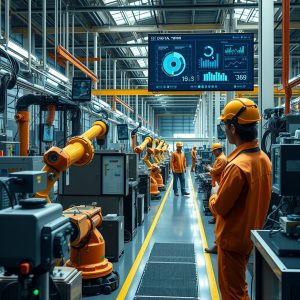
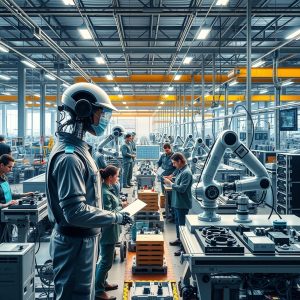
Collaborative robots, or cobots, represent a paradigm shift in industrial automation. Unlike traditional robots, which often operate in isolated, caged environments, cobots are designed to work alongside human operators, augmenting their capabilities rather than replacing them. This human-centric approach to production fosters a symbiotic relationship where machines handle repetitive, precision-based tasks, while humans focus on complex problem-solving, creativity, and oversight.
One of the most compelling advantages of cobots is their adaptability. Equipped with advanced sensors and machine learning algorithms, these robots can quickly learn new tasks, adjust to changes in the production line, and even anticipate the needs of their human counterparts. For example, in automotive assembly lines, cobots can assist with tasks like welding, painting, or part installation, reducing the physical strain on workers while improving accuracy and speed. This not only enhances productivity but also creates a safer and more ergonomic work environment.
Enhancing Workforce Training and Safety
The deployment of collaborative robotics also addresses a critical challenge in modern manufacturing: workforce training. As factories become more technologically advanced, the skills required to operate and maintain equipment evolve rapidly. Cobots serve as a bridge, enabling workers to upskill in real time by interacting with intelligent systems. Many cobots are equipped with intuitive interfaces, such as touchscreens or voice commands, making them accessible even to those without extensive technical backgrounds.
Safety is another area where cobots shine. Traditional industrial robots often require strict safety protocols, including physical barriers, to prevent accidents. Cobots, however, are designed with built-in safety features such as force-limiting technology, which allows them to stop or slow down if they encounter an obstacle—like a human worker. This not only reduces the risk of workplace injuries but also enables more dynamic and flexible production layouts.
Real-Time Process Analytics: The Nervous System of Smart Factories
While collaborative robotics redefine the physical aspects of manufacturing, real-time process analytics act as the nervous system, providing the data-driven insights needed to optimize every facet of production. In a smart factory, sensors, IoT devices, and advanced software collect and analyze data in real time, offering a granular view of operations that was previously unimaginable. This level of visibility enables manufacturers to identify inefficiencies, predict potential issues, and make informed decisions on the fly.
Driving Predictive Quality Control and Preventive Maintenance
One of the most impactful applications of real-time analytics is in predictive quality control. By continuously monitoring production parameters—such as temperature, pressure, and vibration—manufacturers can detect anomalies that may indicate defects or deviations from quality standards. This proactive approach allows for immediate corrective actions, reducing waste and ensuring that only products meeting the highest standards reach the customer.
Similarly, real-time analytics play a crucial role in preventive equipment maintenance. Traditional maintenance schedules are often based on time intervals or usage metrics, which can lead to unnecessary downtime or unexpected failures. With real-time data, manufacturers can predict when a machine is likely to fail and perform maintenance only when needed. This not only extends the lifespan of equipment but also minimizes disruptions to production, leading to significant cost savings.
Enabling Agile and Data-Driven Decision Making
The ability to access and analyze data in real time empowers manufacturers to adopt agile manufacturing processes. Agility in production means being able to respond quickly to changes in demand, supply chain disruptions, or market trends. For instance, if a sudden spike in orders occurs, real-time analytics can help reallocate resources, adjust production schedules, and optimize workflows to meet the increased demand without compromising quality.
Moreover, real-time analytics facilitate a more customer-centric approach to manufacturing. By integrating customer feedback and market data into the production process, manufacturers can tailor their outputs to meet specific needs, reducing time-to-market for new products and enhancing customer satisfaction. This level of responsiveness is a key differentiator in today’s competitive industrial landscape.
The Convergence of Cobots and Analytics: A Blueprint for the Future
The true power of modern manufacturing lies in the convergence of collaborative robotics and real-time process analytics. When these technologies work in tandem, they create a feedback loop where cobots not only perform tasks but also provide valuable data that can be analyzed to further optimize operations. For example, a cobot equipped with sensors can collect data on its own performance, such as cycle times or error rates, which can then be analyzed to identify opportunities for improvement.
This synergy also extends to sustainable manufacturing practices. By optimizing resource usage, reducing waste, and improving energy efficiency, cobots and real-time analytics contribute to more sustainable supply chains. For instance, additive manufacturing workflows, which are often supported by cobots, can minimize material waste by building components layer by layer, rather than subtracting material from a larger block. When combined with real-time analytics, manufacturers can further refine these processes to achieve even greater sustainability.
As industries continue to evolve, the integration of collaborative robotics and real-time analytics will be a defining factor in the success of smart factories. These technologies are not merely tools but enablers of a broader vision—one where manufacturing is more efficient, flexible, and responsive to the needs of both businesses and society. The factories of tomorrow will be characterized by their ability to adapt, innovate, and thrive in an ever-changing world, and at the core of this transformation will be the seamless collaboration between humans, machines, and data.