Unlocking Agile Manufacturing: How Modular Systems and Real-Time Analytics Drive Next-Gen Production
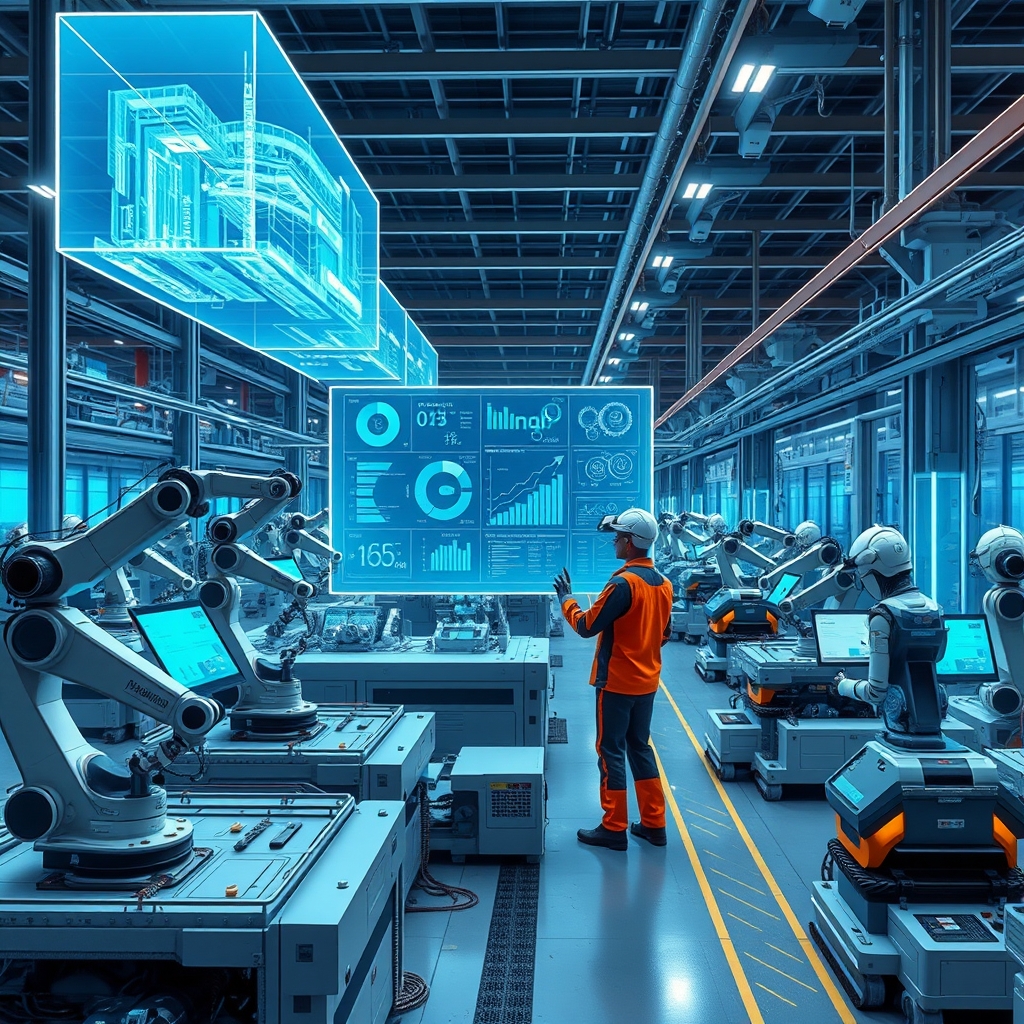
The manufacturing landscape is undergoing a seismic shift, moving away from rigid, monolithic production lines toward dynamic, adaptable systems. At the heart of this transformation lies agile manufacturing, a philosophy that prioritizes flexibility, responsiveness, and continuous improvement. By integrating modular manufacturing systems with real-time process analytics, manufacturers are not only enhancing efficiency but also redefining what’s possible in modern production.
The Rise of Modular Manufacturing Systems
Traditional manufacturing often relies on fixed, linear production lines designed for mass production of a single product. While efficient for high-volume runs, these systems struggle with customization, rapid product iterations, or sudden market shifts. Modular manufacturing, however, breaks this rigidity by decomposing production into interchangeable, self-contained units—modules—that can be reconfigured, upgraded, or replaced with minimal downtime.
For example, automotive manufacturers are increasingly adopting modular platforms where different vehicle models share standardized components, such as chassis or powertrains. This approach reduces design complexity, accelerates time-to-market, and allows for greater customization without overhauling entire production lines. Similarly, electronics manufacturers use modular assembly stations that can switch between product variants by simply swapping out tooling or software configurations.
Key Benefits of Modularity
Modular systems offer several advantages that align with the demands of modern manufacturing:
- Scalability: Manufacturers can scale production up or down by adding or removing modules, making it easier to respond to fluctuating demand.
- Cost Efficiency: Reduces capital expenditure by reusing modules across multiple product lines, rather than investing in entirely new production lines.
- Resilience: If one module fails, others can continue operating, minimizing disruptions and improving overall equipment effectiveness (OEE).
- Sustainability: Modular designs facilitate easier repairs, upgrades, and recycling of components, reducing waste and extending the lifecycle of manufacturing assets.
Real-Time Process Analytics: The Nervous System of Agile Manufacturing
While modular systems provide the physical flexibility, real-time process analytics supply the intelligence to make agile manufacturing truly dynamic. By leveraging IoT sensors, edge computing, and advanced data analytics, manufacturers can monitor every aspect of production in real time—from machine performance to material flow and quality control.
Consider a semiconductor fabrication plant where even minor deviations in temperature or humidity can compromise product quality. Real-time analytics enable operators to detect anomalies instantly, adjust parameters on the fly, and prevent defects before they occur. This level of visibility extends beyond individual machines; it encompasses entire supply chains, enabling predictive logistics and just-in-time inventory management.
Driving Data-Driven Decision Making
The integration of real-time analytics with modular systems creates a feedback loop that empowers manufacturers to:
- Optimize Workflows: Identify bottlenecks and inefficiencies in real time, allowing for immediate corrective action.
- Enhance Predictive Maintenance: Monitor equipment health continuously, predicting failures before they happen and scheduling maintenance during non-peak hours.
- Improve Quality Control: Use machine learning algorithms to analyze production data and detect patterns that indicate potential quality issues, enabling predictive quality control.
- Enable Collaborative Robotics: Real-time data feeds into robotic systems, allowing them to adapt to changing conditions or collaborate seamlessly with human workers in human-centric production environments.
The Synergy of Modularity and Analytics in Action
One of the most compelling examples of agile manufacturing in practice is the aerospace industry. Companies like Airbus and Boeing are adopting modular assembly lines where sections of an aircraft—such as wings, fuselage, or avionics—are built in parallel modules before being integrated into the final product. Real-time analytics track the progress of each module, ensuring that any delays or quality issues in one section don’t cascade into larger problems.
In consumer electronics, companies like Foxconn use modular workstations combined with real-time monitoring to switch between producing different smartphone models with minimal retooling. This agility allows them to respond quickly to market trends, such as the sudden demand for a new feature or design change.
Overcoming Implementation Challenges
Despite its promise, transitioning to agile manufacturing is not without challenges. Manufacturers must address:
- Integration Complexity: Combining modular hardware with real-time analytics requires robust IT infrastructure, standardized communication protocols, and seamless interoperability between systems.
- Workforce Training: Employees need to be upskilled to work with modular systems and interpret real-time data. Tech-enabled workforce training programs, such as augmented reality (AR) simulations or digital twins, can accelerate this transition.
- Cybersecurity Risks: Increased connectivity exposes manufacturing systems to cyber threats. Implementing robust security measures, such as zero-trust architectures and encrypted data transmission, is critical.
- Cultural Shift: Agile manufacturing requires a mindset shift from top-down decision-making to decentralized, data-driven collaboration. Leadership must foster a culture of continuous improvement and experimentation.
The Future: Toward a More Responsive and Sustainable Manufacturing Ecosystem
The convergence of modular manufacturing systems and real-time analytics is not just a technological evolution—it’s a fundamental reimagining of how products are designed, produced, and delivered. As manufacturers embrace this agility, they unlock new opportunities for sustainable supply chains, where resources are used more efficiently, waste is minimized, and production adapts dynamically to global challenges like climate change or geopolitical disruptions.
Moreover, agile manufacturing paves the way for customer-integrated design, where end-users can customize products in real time, and manufacturers can respond instantly to feedback. Imagine a world where a customer orders a pair of shoes with a unique color combination, and the factory reconfigures its modular assembly line on the fly to produce the exact design—all while maintaining high efficiency and quality standards.
The factories of the future will not be static, monolithic structures but living, breathing ecosystems that evolve alongside market demands and technological advancements. By harnessing the power of modular systems and real-time analytics, manufacturers can turn agility from a buzzword into a competitive advantage, ensuring they remain resilient, innovative, and ready for whatever challenges lie ahead. The journey toward agile manufacturing is not without its hurdles, but those who embrace it will be the ones shaping the next era of industry.