Digital Twin Manufacturing: The Blueprint for Next-Generation Smart Factories
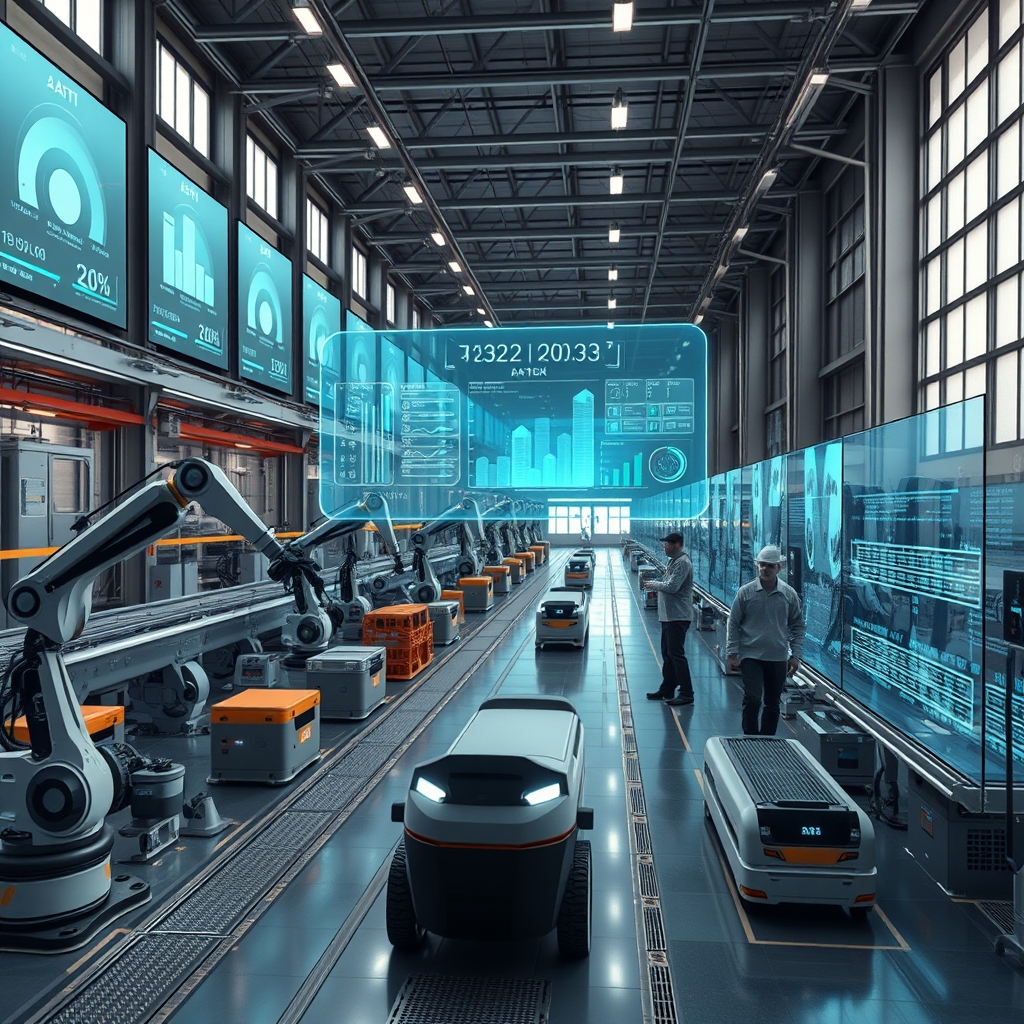
In the rapidly evolving landscape of modern manufacturing, the concept of a Digital Twin has emerged as a game-changer, bridging the gap between the physical and digital worlds. By creating a virtual replica of a physical manufacturing system, companies can simulate, predict, and optimize processes in ways that were previously unimaginable. This technology is not just a trend—it’s a fundamental shift in how factories operate, enabling unprecedented levels of efficiency, flexibility, and innovation.
The Core of Digital Twin Technology
A digital twin is more than just a 3D model or a simulation. It’s a dynamic, data-driven representation of a physical asset, process, or system that evolves in real time. By integrating Real-Time Process Analytics, IoT sensors, and advanced algorithms, digital twins provide a living, breathing mirror of their physical counterparts. This allows manufacturers to monitor performance, identify inefficiencies, and test scenarios without disrupting actual production.
For example, in an automotive assembly line, a digital twin can simulate the impact of a new robotic arm before it’s even installed. Engineers can adjust parameters, predict outcomes, and optimize workflows, reducing downtime and costly errors. This level of precision is transforming industries from aerospace to pharmaceuticals, where even minor improvements can yield significant cost savings and quality enhancements.
Enhancing Predictive Quality Control
One of the most compelling applications of digital twin technology is in Predictive Quality Control. Traditional quality control methods often rely on post-production inspections, which can lead to waste and rework. Digital twins, however, enable manufacturers to detect anomalies and predict defects before they occur. By analyzing historical data and real-time inputs, the system can flag potential issues, allowing for proactive interventions.
Consider a semiconductor fabrication plant where even the slightest deviation in temperature or pressure can ruin an entire batch of chips. A digital twin can continuously monitor these variables, compare them against optimal conditions, and alert operators to take corrective action. This not only improves yield rates but also enhances product reliability, a critical factor in industries where precision is paramount.
Human-Centric Production in a Digital World
While digital twins are often associated with automation, they also play a crucial role in Human-Centric Production. By providing workers with real-time insights and augmented reality (AR) interfaces, digital twins empower employees to make better decisions, reduce errors, and improve safety. For instance, a technician wearing AR glasses can overlay digital twin data onto a physical machine, guiding them through complex maintenance procedures with step-by-step instructions.
This synergy between humans and technology fosters a more collaborative and adaptive workforce. Instead of replacing jobs, digital twins enhance them, allowing workers to focus on higher-value tasks like problem-solving and innovation. Companies that embrace this approach are not only boosting productivity but also creating a more engaged and skilled workforce.
Driving Sustainable Supply Chains
Sustainability is no longer a buzzword—it’s a business imperative. Digital twins are proving to be a powerful tool in building Sustainable Supply Chains by optimizing resource usage, reducing waste, and minimizing carbon footprints. By simulating different scenarios, manufacturers can identify the most efficient routes for logistics, the best materials for production, and the most energy-efficient processes.
For example, a digital twin of a supply chain can model the impact of sourcing materials from different suppliers, taking into account factors like transportation emissions, cost, and lead times. This enables companies to make data-driven decisions that align with their sustainability goals while maintaining profitability. In an era where consumers and regulators are demanding greater transparency and responsibility, digital twins provide the insights needed to meet these expectations.
Additive Manufacturing and Digital Twins: A Perfect Pair
The rise of Additive Manufacturing Workflows (3D printing) has opened new frontiers in production, and digital twins are the perfect complement to this technology. By creating a digital twin of a 3D-printed component, manufacturers can simulate the printing process, predict potential defects, and optimize design parameters before a single layer is printed. This reduces material waste, speeds up prototyping, and ensures higher-quality end products.
In industries like healthcare, where custom prosthetics and implants are produced using additive manufacturing, digital twins ensure that each piece meets exact specifications. The ability to simulate and refine designs digitally before physical production is a game-changer, particularly in fields where precision and customization are critical.
The Future of Collaborative Robotics
As Collaborative Robotics Deployment becomes more prevalent, digital twins are playing a key role in ensuring seamless integration between humans and robots. By simulating robotic workflows, manufacturers can test different configurations, identify potential safety risks, and optimize task allocation. This not only improves efficiency but also enhances workplace safety, as robots and humans can work side by side without conflict.
For instance, in a warehouse setting, a digital twin can simulate the movement of autonomous mobile robots (AMRs) and human workers, ensuring that pathways are optimized and collisions are avoided. This level of coordination is essential for achieving the full potential of collaborative robotics, where the strengths of both humans and machines are leveraged to create a more agile and responsive production environment.
Digital twin manufacturing is not just about technology—it’s about reimagining what’s possible in production. By creating a dynamic, data-driven ecosystem, manufacturers can achieve levels of efficiency, quality, and sustainability that were once out of reach. As industries continue to evolve, those who harness the power of digital twins will be the ones leading the charge into the next era of smart manufacturing. The factories of the future are being built today, and digital twins are the blueprint for success.