
The Future of Manufacturing: How Predictive Quality Control and Collaborative Robotics Are Redefining Human-Centric Production
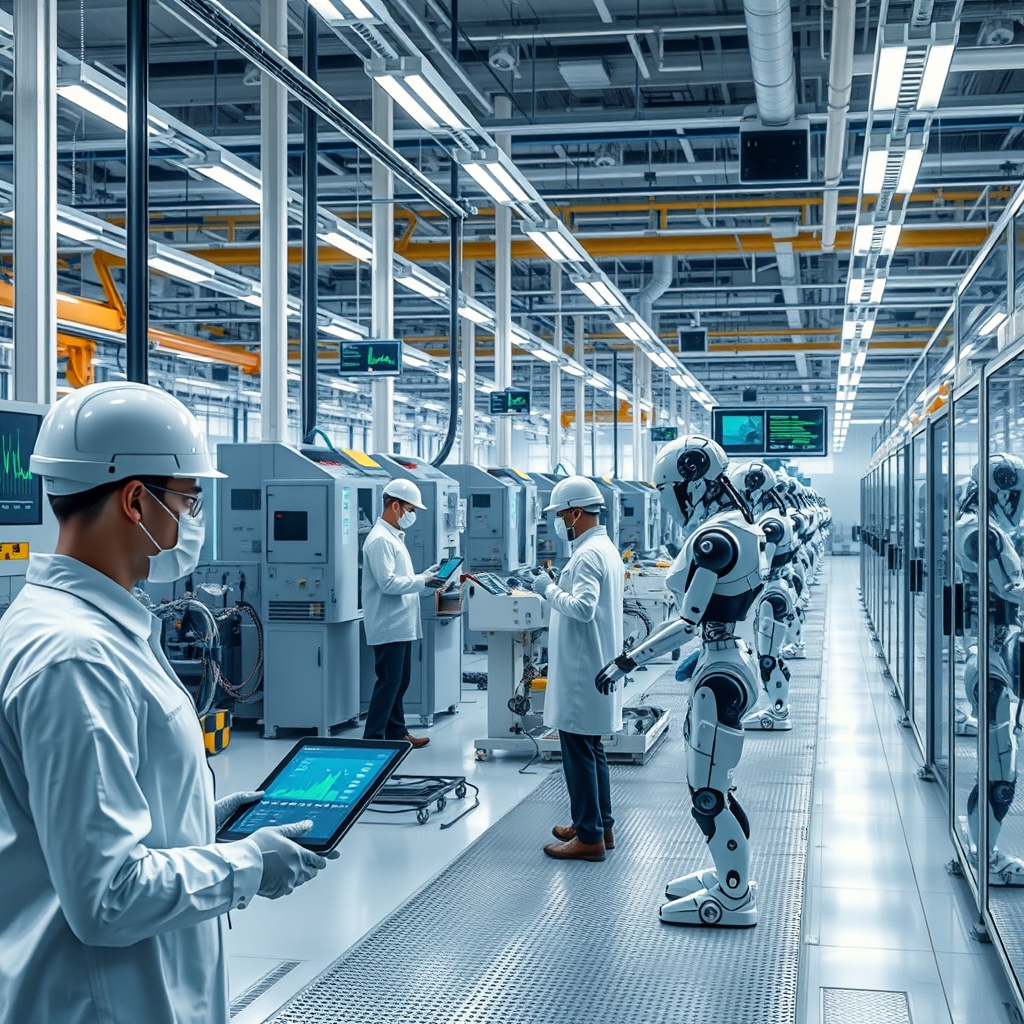
The manufacturing landscape is undergoing a seismic shift, driven by the convergence of advanced technologies and a renewed focus on human-centric production. At the heart of this transformation lies the integration of predictive quality control and collaborative robotics, two innovations that are not only enhancing efficiency but also redefining the role of human workers in smart factories. As industries strive to meet the demands of agility, sustainability, and customization, these technologies are emerging as the cornerstones of next-generation manufacturing.
The Rise of Predictive Quality Control
Predictive quality control is revolutionizing the way manufacturers approach product consistency and defect prevention. Unlike traditional quality control methods, which rely on post-production inspections, predictive quality control leverages real-time process analytics and machine learning to identify potential issues before they occur. By analyzing data from sensors, production lines, and historical trends, manufacturers can anticipate defects, optimize processes, and reduce waste—all while maintaining the highest standards of product quality.
This shift toward predictive quality control is not just about improving efficiency; it’s about creating a more responsive and adaptive manufacturing environment. For example, in additive manufacturing workflows, predictive algorithms can adjust parameters in real time to ensure that each layer of a 3D-printed component meets exact specifications. This level of precision is critical for industries like aerospace and healthcare, where even minor deviations can have significant consequences. Moreover, by integrating predictive quality control with digital twin manufacturing, companies can simulate and test production scenarios virtually, further reducing the risk of errors and downtime.
Collaborative Robotics: Bridging the Gap Between Automation and Human Expertise
While automation has long been a staple of modern manufacturing, the rise of collaborative robotics—often referred to as cobots—is taking human-machine interaction to new heights. Unlike traditional industrial robots, which operate in isolation, cobots are designed to work alongside human workers, augmenting their capabilities and enhancing safety. These robots are equipped with advanced sensors and AI-driven controls, allowing them to adapt to dynamic environments and perform tasks with precision and flexibility.
The deployment of collaborative robotics is particularly impactful in human-centric production environments, where the focus is on leveraging technology to empower rather than replace workers. For instance, in automated assembly lines, cobots can handle repetitive or physically demanding tasks, freeing up human workers to focus on more complex and creative aspects of production. This not only improves efficiency but also enhances job satisfaction and reduces the risk of workplace injuries. Furthermore, cobots can be easily reprogrammed and redeployed, making them ideal for agile manufacturing processes that require rapid reconfiguration to meet changing demands.
Tech-Enabled Workforce Training: Preparing for the Future
The integration of predictive quality control and collaborative robotics is reshaping the skills required for the modern manufacturing workforce. As these technologies become more prevalent, there is a growing need for workers who can operate, maintain, and optimize advanced systems. Tech-enabled workforce training programs are emerging as a critical component of smart factory integration, providing employees with the knowledge and hands-on experience needed to thrive in this new era.
These training programs often leverage virtual reality (VR) and augmented reality (AR) to simulate real-world scenarios, allowing workers to practice operating cobots or interpreting predictive analytics in a risk-free environment. For example, a technician might use AR glasses to receive step-by-step guidance on maintaining a robotic arm, or a quality control specialist could use VR to train on identifying defects in a virtual production line. By combining theoretical knowledge with practical, immersive experiences, these programs are bridging the skills gap and ensuring that the workforce is prepared for the demands of Industry 4.0.
Sustainable and Ethical Manufacturing: A Holistic Approach
The benefits of predictive quality control and collaborative robotics extend beyond efficiency and productivity—they also play a crucial role in promoting sustainability and ethical practices in manufacturing. Predictive quality control reduces waste by minimizing defects and optimizing resource usage, while collaborative robotics can contribute to lean operational excellence by streamlining processes and reducing energy consumption. Together, these technologies enable manufacturers to adopt more sustainable practices without compromising on quality or output.
Moreover, the transparency enabled by real-time process analytics and digital twin manufacturing supports ethical sourcing and supply chain management. Manufacturers can track the origins of raw materials, monitor production conditions, and ensure compliance with environmental and labor standards. This level of transparency is increasingly important to consumers and regulators alike, who are demanding greater accountability from companies. By integrating predictive quality control and collaborative robotics into their operations, manufacturers can not only meet these expectations but also drive long-term value for their businesses and the planet.
The Path Forward: Embracing a Human-Centric Future
As manufacturing continues to evolve, the synergy between predictive quality control, collaborative robotics, and human-centric production will be key to unlocking new levels of innovation and competitiveness. These technologies are not just tools for automation; they are enablers of a more adaptive, sustainable, and inclusive manufacturing ecosystem. By embracing this future, companies can create environments where human workers and advanced technologies coexist harmoniously, driving efficiency, creativity, and resilience in the face of ever-changing demands.
The factories of tomorrow will not be defined by the absence of human workers but by the seamless integration of their expertise with the precision and scalability of technology. In this new era, the focus will shift from merely producing goods to creating value—value for customers, for workers, and for society as a whole. The journey has already begun, and those who lead the way will shape the future of manufacturing for generations to come.