Building the Factory of the Future: How Automated Assembly Insights Are Driving Modular Manufacturing Systems

The modern manufacturing landscape is undergoing a seismic shift, propelled by advancements in automation, data analytics, and modular design. At the heart of this transformation lies the convergence of automated assembly insights and modular manufacturing systems, two pillars that are redefining how products are designed, produced, and optimized. These innovations are not just enhancing efficiency—they are fundamentally reshaping the very architecture of production, enabling factories to adapt with unprecedented agility to market demands, supply chain disruptions, and evolving customer expectations.
The Rise of Automated Assembly Insights
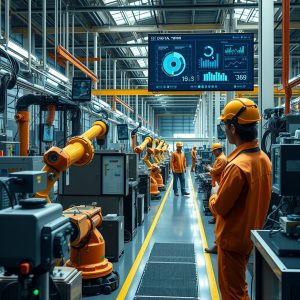
Automated assembly has long been a cornerstone of industrial production, but the integration of real-time analytics and machine learning is elevating it to new heights. Today’s assembly lines are no longer static sequences of repetitive tasks; they are dynamic ecosystems where sensors, computer vision, and AI-driven algorithms work in tandem to monitor, analyze, and optimize every stage of the process. These automated assembly insights provide manufacturers with a granular understanding of production variables—from torque precision in fastening operations to the alignment accuracy of components—enabling them to detect anomalies, predict failures, and implement corrective actions before defects occur.
For example, in automotive manufacturing, AI-powered vision systems can inspect thousands of welds per hour, identifying microscopic deviations that human inspectors might miss. Similarly, in electronics assembly, machine learning models can predict soldering defects by analyzing thermal profiles and material properties in real time. The result is a dramatic reduction in scrap rates, rework, and downtime, all while maintaining the highest standards of quality. These insights don’t just improve efficiency—they create a feedback loop where data from the assembly line informs design improvements, supplier quality assessments, and even predictive maintenance schedules for equipment.
Modular Manufacturing: The Backbone of Agile Production
While automated assembly insights optimize the execution of production, modular manufacturing systems redefine its structure. Modularity in manufacturing refers to the design of production lines, workstations, and even entire factories as interchangeable, scalable components that can be reconfigured quickly to accommodate new products, processes, or volumes. This approach contrasts sharply with traditional, monolithic production systems, which are often rigid, capital-intensive, and slow to adapt.
Modular systems leverage standardized interfaces, plug-and-play hardware, and software-defined controls to enable rapid reconfiguration. For instance, a manufacturer producing multiple variants of a product—such as different models of a smartphone or appliance—can use modular workstations that can be swapped or rearranged in minutes rather than days. This flexibility is particularly valuable in industries where product lifecycles are shortening, and customization is becoming the norm. Companies like Tesla and Siemens have pioneered modular manufacturing, using it to scale production up or down based on demand, integrate new technologies seamlessly, and even repurpose entire sections of a factory for different product lines.
Beyond hardware, modularity extends to software and digital infrastructure. Cloud-based manufacturing execution systems (MES) and digital twins allow manufacturers to simulate and optimize modular configurations virtually before implementing them on the shop floor. This digital-physical synergy ensures that modular systems are not just flexible but also data-driven, aligning production capacity with real-time demand signals and supply chain conditions.
Bridging the Gap: Where Automation Meets Modularity
The true power of modern manufacturing emerges when automated assembly insights and modular manufacturing systems converge. This integration creates a production environment that is not only efficient but also inherently adaptable. Consider a scenario where a manufacturer detects a recurring defect in a specific assembly step through automated insights. With a modular system, the solution isn’t just to adjust the process parameters—it’s to reconfigure the entire workstation or even the production line layout to eliminate the root cause of the defect. This could involve swapping out a faulty robotic arm, re-routing a conveyor belt, or integrating a new quality control module, all without halting production for extended periods.
Moreover, the combination of these two approaches enables a level of customization that was previously unattainable. In consumer electronics, for example, modular manufacturing allows companies to produce highly personalized devices—such as laptops with customer-specified components—without sacrificing efficiency. Automated assembly insights ensure that each custom configuration meets quality standards, while modular systems enable the rapid retooling needed to accommodate diverse product variants. This capability is a game-changer for industries where mass customization is becoming a competitive necessity.
The Human Element: Empowering the Workforce in a Modular, Automated World
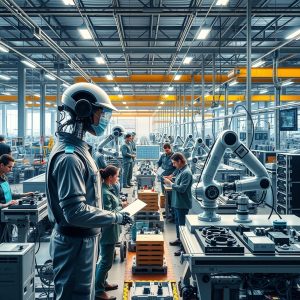
As factories become more automated and modular, the role of the human workforce is evolving rather than diminishing. While machines handle repetitive and precision-critical tasks, humans are increasingly focused on oversight, problem-solving, and continuous improvement. Tech-enabled workforce training plays a crucial role in this transition, equipping employees with the skills needed to operate, maintain, and optimize advanced manufacturing systems. Virtual reality (VR) and augmented reality (AR) tools, for instance, allow workers to simulate assembly processes, troubleshoot issues, and practice reconfiguring modular workstations in a risk-free environment before applying their knowledge on the shop floor.
Collaborative robots, or cobots, further enhance this human-machine partnership. Unlike traditional industrial robots, cobots are designed to work alongside humans, assisting with tasks that require dexterity, adaptability, or decision-making. In a modular manufacturing system, cobots can be quickly reprogrammed or redeployed to different workstations, amplifying the flexibility of the production line. This collaboration not only boosts productivity but also creates a safer and more engaging work environment, where employees are empowered to focus on value-added activities rather than mundane or hazardous tasks.
Sustainability and Scalability: The Broader Impact
The benefits of integrating automated assembly insights with modular manufacturing extend beyond operational efficiency. These systems also contribute to sustainable supply chains by reducing waste, optimizing energy consumption, and enabling more efficient use of materials. For example, modular production lines can be scaled up or down to match demand, minimizing overproduction and excess inventory. Automated insights, meanwhile, ensure that resources are used judiciously, with real-time monitoring of energy usage, material consumption, and emissions.
Scalability is another critical advantage. Modular systems allow manufacturers to start small—perhaps with a single production cell—and expand incrementally as demand grows. This approach lowers the barrier to entry for small and medium-sized enterprises (SMEs) and enables larger companies to test new processes or products without committing to large-scale infrastructure investments. Automated assembly insights provide the data needed to validate these expansions, ensuring that each new module or workstation integrates seamlessly with existing operations.
The factory of the future is not a distant vision—it is being built today, one modular component and automated insight at a time. By embracing these technologies, manufacturers are not just optimizing their operations; they are future-proofing their businesses against an increasingly unpredictable and competitive landscape. The ability to adapt quickly, produce efficiently, and maintain high quality is no longer a luxury—it is a necessity. Those who invest in the convergence of automation and modularity will find themselves at the forefront of a new era of manufacturing, where flexibility, intelligence, and sustainability are the defining characteristics of success. The question is no longer whether to adopt these innovations, but how swiftly and strategically they can be integrated to unlock their full potential.