The Rise of Digital Twin Manufacturing: Enhancing Predictive Quality Control and Sustainable Supply Chains
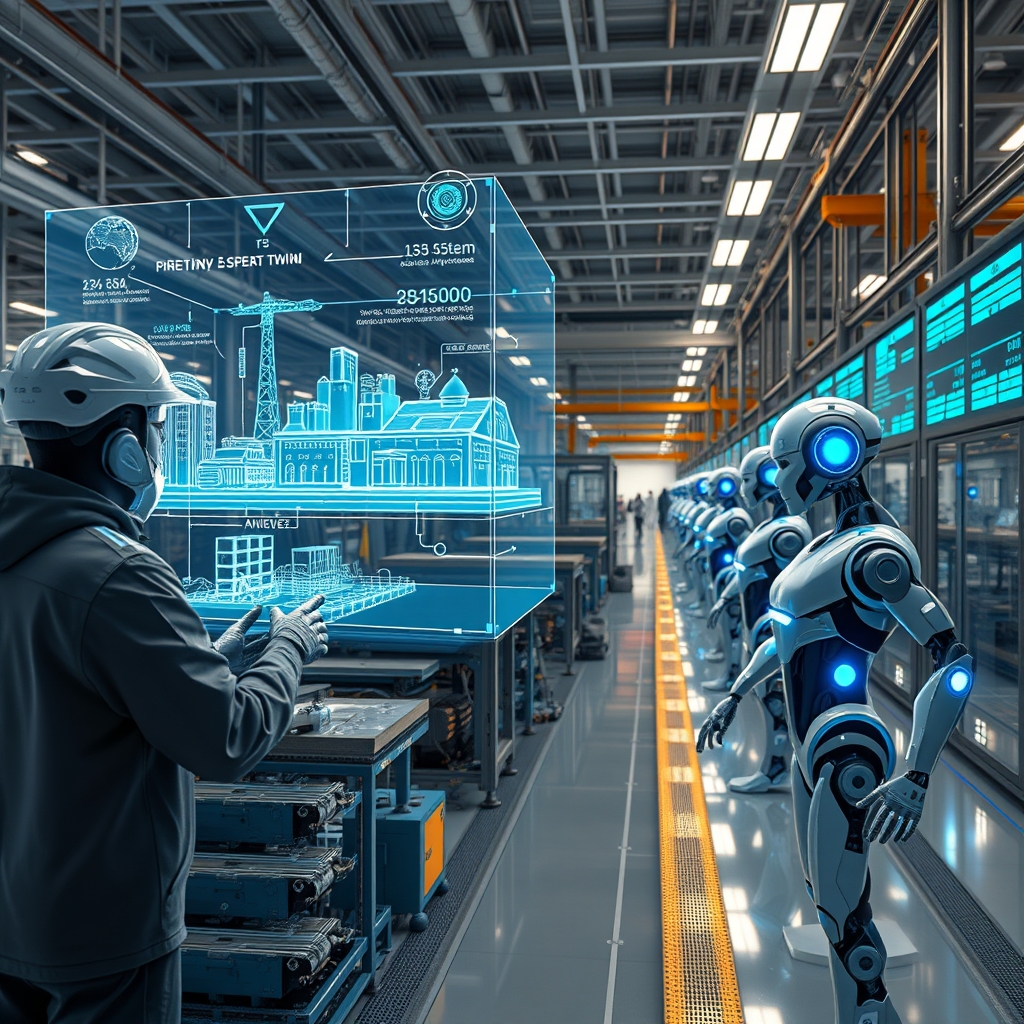
In the rapidly evolving landscape of modern manufacturing, the convergence of cutting-edge technologies is reshaping how industries operate. Among these innovations, Digital Twin Manufacturing stands out as a transformative force, bridging the gap between physical production systems and their virtual counterparts. By creating dynamic, real-time digital replicas of manufacturing processes, companies can unlock unprecedented levels of efficiency, precision, and sustainability. This technology is not just a tool for optimization—it is a catalyst for redefining Predictive Quality Control and fostering Sustainable Supply Chains, ensuring that industries remain competitive in an era of relentless innovation.
The Core of Digital Twin Manufacturing
A digital twin is more than a static model; it is a living, breathing simulation that mirrors every aspect of a physical system, from individual machines to entire production lines. By integrating data from sensors, IoT devices, and advanced analytics, digital twins provide manufacturers with a comprehensive view of their operations. This real-time visibility enables proactive decision-making, reducing downtime, minimizing waste, and enhancing overall productivity. For industries striving for Lean Operational Excellence, digital twins offer a powerful means to identify inefficiencies and implement corrective measures before they escalate into costly problems.
The applications of digital twins extend beyond mere monitoring. They serve as a sandbox for experimentation, allowing engineers to test new processes, workflows, and even product designs in a risk-free virtual environment. This capability is particularly valuable in Additive Manufacturing Workflows, where complex geometries and material properties can be fine-tuned before physical production begins. By simulating different scenarios, manufacturers can optimize their Agile Manufacturing Processes, ensuring that every adjustment aligns with broader business goals.
Predictive Quality Control: A New Standard for Excellence
Quality control has long been a cornerstone of manufacturing, but traditional methods often rely on reactive measures—identifying defects after they occur. Predictive Quality Control, powered by digital twins, flips this paradigm by anticipating issues before they arise. By analyzing historical and real-time data, digital twins can detect patterns that indicate potential defects, allowing manufacturers to intervene early and maintain consistent product quality. This shift from reactive to predictive not only reduces waste but also enhances customer satisfaction, as products meet or exceed expectations with greater reliability.
The integration of Real-Time Process Analytics further amplifies the impact of predictive quality control. By continuously monitoring key performance indicators (KPIs), manufacturers can identify deviations from optimal conditions and take corrective action immediately. For example, if a digital twin detects an anomaly in a machine’s performance, it can trigger an alert, enabling maintenance teams to address the issue before it leads to a breakdown. This proactive approach is a game-changer for industries where downtime can result in significant financial losses.
Sustainable Supply Chains: The Ethical Imperative
As global awareness of environmental and social responsibility grows, manufacturers are under increasing pressure to adopt Sustainable Supply Chains. Digital twins play a pivotal role in this transition by providing transparency and traceability across the entire production lifecycle. By simulating the environmental impact of different sourcing, production, and distribution strategies, companies can make informed decisions that minimize their carbon footprint and promote Ethical Sourcing Transparency.
For instance, a digital twin can model the energy consumption of a production line under various conditions, helping manufacturers identify opportunities to reduce waste and optimize resource usage. This data-driven approach not only supports sustainability goals but also enhances operational efficiency, creating a win-win scenario for businesses and the planet. Moreover, by integrating Customer-Integrated Design into the digital twin framework, companies can ensure that their products align with consumer demand for eco-friendly and ethically produced goods.
Collaborative Robotics and the Human Element
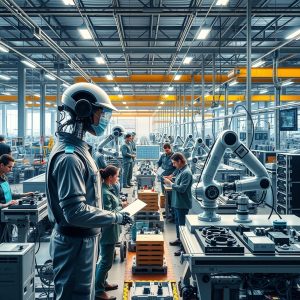
While digital twins and automation are often associated with reducing human involvement, the reality is far more nuanced. Collaborative Robotics Deployment (cobots) exemplifies how technology can augment human capabilities rather than replace them. Digital twins enable cobots to operate alongside human workers with greater precision and safety, creating a harmonious balance between automation and Human-Centric Production. By simulating human-robot interactions, manufacturers can design workflows that maximize efficiency while prioritizing worker well-being.
This human-centric approach extends to Tech-Enabled Workforce Training, where digital twins provide immersive, hands-on learning experiences. Workers can practice operating machinery, troubleshooting issues, and optimizing processes in a virtual environment, reducing the learning curve and improving overall productivity. As industries embrace Modular Manufacturing Systems, the ability to quickly adapt to new technologies and workflows becomes a critical competitive advantage.
The Path Forward: Scalable Industrial Solutions
The adoption of digital twin technology is not without its challenges, particularly for small and medium-sized enterprises (SMEs) with limited resources. However, the rise of Scalable Industrial Solutions is making this technology more accessible than ever. Cloud-based digital twin platforms, for example, allow companies to leverage advanced analytics and simulation tools without the need for significant upfront investment. This democratization of technology ensures that businesses of all sizes can benefit from the efficiencies and insights that digital twins provide.
As digital twin manufacturing continues to evolve, its integration with other emerging technologies—such as artificial intelligence, machine learning, and blockchain—will further enhance its capabilities. These advancements will enable even more sophisticated simulations, predictive analytics, and automation, driving the next wave of innovation in manufacturing. The factories of the future will not be defined by rigid, linear processes but by flexible, adaptive systems that respond dynamically to changing conditions and demands.
The journey toward fully realized digital twin manufacturing is still unfolding, but its potential is undeniable. By embracing this technology, industries can achieve new heights of efficiency, quality, and sustainability, positioning themselves at the forefront of the next industrial revolution. The key lies in recognizing that digital twins are not just a tool for optimization—they are a fundamental shift in how we conceive, design, and execute manufacturing processes, paving the way for a smarter, more resilient future.