
The Symphony of Sustainability: How Digital Twin Manufacturing and Ethical Sourcing Are Orchestrating the Future of Smart Factories
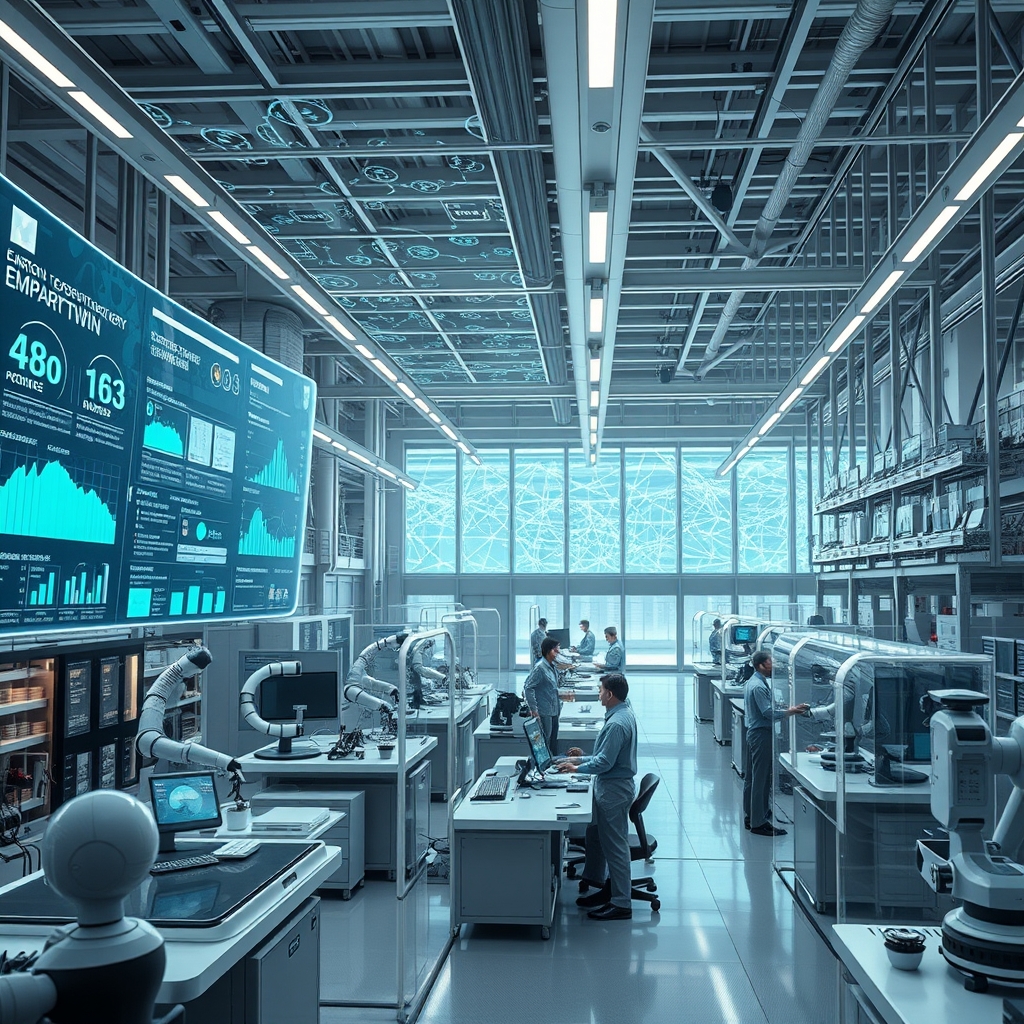
In the grand theater of modern manufacturing, a new act is unfolding—one where sustainability is not just a buzzword but the central character in a narrative of innovation and responsibility. At the heart of this transformation lies the fusion of Digital Twin Manufacturing and Ethical Sourcing Transparency, two forces that are redefining what it means to build a factory that is as kind to the planet as it is efficient in production. This is not merely a shift in technology; it is a cultural evolution, where every decision, from the sourcing of raw materials to the final product rollout, is guided by a commitment to sustainability and ethical integrity.
The Digital Twin: A Mirror to the Future
The concept of a Digital Twin—a virtual replica of a physical manufacturing system—has long been hailed as a game-changer for operational efficiency. But its true power lies in its ability to simulate not just processes, but entire ecosystems. By creating a digital counterpart of a factory, manufacturers can test scenarios that would be impossible or prohibitively expensive to explore in the real world. Want to see how a change in material sourcing affects your carbon footprint? The digital twin can model it. Curious about the long-term impact of a new production line on energy consumption? The digital twin provides the answers before a single bolt is turned.
This predictive capability is particularly transformative when paired with Sustainable Supply Chain initiatives. Traditional supply chains are often opaque, with little visibility into the environmental or ethical practices of suppliers. A digital twin, however, can integrate data from every stage of the supply chain, offering real-time insights into everything from the carbon emissions of transportation routes to the labor conditions in mining operations. This level of transparency is not just a competitive advantage; it is a moral imperative in an era where consumers and regulators alike are demanding accountability.
Ethical Sourcing: The Foundation of Trust
Ethical sourcing is no longer a niche concern—it is a cornerstone of modern manufacturing. Companies that fail to prioritize Ethical Sourcing Transparency risk not only reputational damage but also legal and financial repercussions. The challenge, however, lies in the complexity of global supply chains. A single product might pass through dozens of suppliers across multiple continents, each with its own standards and practices. How can a manufacturer ensure that every link in this chain adheres to ethical and sustainable principles?
The answer lies in technology. Blockchain, for instance, is being increasingly adopted to create immutable records of every transaction in the supply chain. When combined with a digital twin, this technology can provide an unprecedented level of transparency. Imagine a consumer scanning a QR code on a product and instantly seeing a detailed history of its journey—from the mine where the raw materials were extracted to the factory where it was assembled, complete with certifications for fair labor practices and environmental compliance. This is not a futuristic fantasy; it is a reality that forward-thinking manufacturers are already embracing.
The Human Element: Empowering Ethical Decision-Making
While technology provides the tools, it is the people behind the machines who ultimately drive change. Human-Centric Production is about more than just ergonomic workstations or collaborative robots; it is about fostering a culture where ethical and sustainable practices are ingrained in every decision. This requires a shift in mindset, from viewing sustainability as a compliance issue to seeing it as a core value. Training programs that educate employees on the importance of ethical sourcing, for example, can empower them to make decisions that align with the company’s sustainability goals.
Moreover, digital twins can serve as powerful educational tools. By visualizing the impact of their decisions in real time, employees can better understand how their actions contribute to the bigger picture. A production manager, for instance, might use a digital twin to see how switching to a locally sourced material could reduce transportation emissions, or how optimizing a production schedule could minimize energy waste. These insights not only improve efficiency but also foster a sense of ownership and pride in the company’s sustainability efforts.
The Ripple Effect: From Factory to Ecosystem
The benefits of integrating Digital Twin Manufacturing and Ethical Sourcing Transparency extend far beyond the factory walls. When a manufacturer commits to sustainability, it sends a ripple effect through the entire ecosystem. Suppliers are incentivized to adopt more ethical and sustainable practices to maintain their contracts, while customers are empowered to make more informed choices. Governments and regulatory bodies, too, are taking notice, with many introducing incentives for companies that demonstrate a commitment to sustainability.
This ripple effect is perhaps most evident in the growing trend of circular economies, where waste is minimized, and materials are reused or recycled. Digital twins can play a crucial role in this transition by modeling the entire lifecycle of a product, from design to disposal. By identifying opportunities for material reuse or recycling, manufacturers can reduce their environmental footprint while also creating new revenue streams. For example, a digital twin might reveal that a certain component in a product can be easily disassembled and reused in a new product, reducing the need for virgin materials and lowering costs.
The Role of Real-Time Analytics in Sustainable Decision-Making
At the intersection of digital twins and ethical sourcing lies Real-Time Process Analytics, a technology that enables manufacturers to monitor and optimize their operations on the fly. By collecting and analyzing data from every stage of the production process, manufacturers can identify inefficiencies, reduce waste, and make more sustainable decisions. For instance, real-time analytics might reveal that a particular machine is consuming more energy than necessary, prompting a maintenance check or a recalibration. Or it might highlight a bottleneck in the supply chain that is causing unnecessary delays and emissions.
The beauty of real-time analytics is that it allows manufacturers to act quickly and decisively. In the past, sustainability initiatives often relied on retrospective data, meaning that by the time an issue was identified, the damage had already been done. With real-time analytics, however, manufacturers can proactively address problems before they escalate, ensuring that their operations remain as sustainable as possible. This is particularly important in industries where regulations are constantly evolving, and companies must adapt quickly to stay compliant.
As the manufacturing industry continues to evolve, the fusion of digital twin technology and ethical sourcing will become increasingly central to its success. This is not just about meeting regulatory requirements or appeasing consumers; it is about building a future where manufacturing is synonymous with responsibility, innovation, and respect for the planet. The factories of tomorrow will not be judged solely by their output, but by the positive impact they have on the world around them. In this new era, sustainability is not a constraint—it is the very foundation upon which the future of manufacturing is being built, one digital twin and ethical decision at a time.