The New Financial Architects: How Venture Capital and Algorithmic Trading Are Redesigning Global Market Indexes
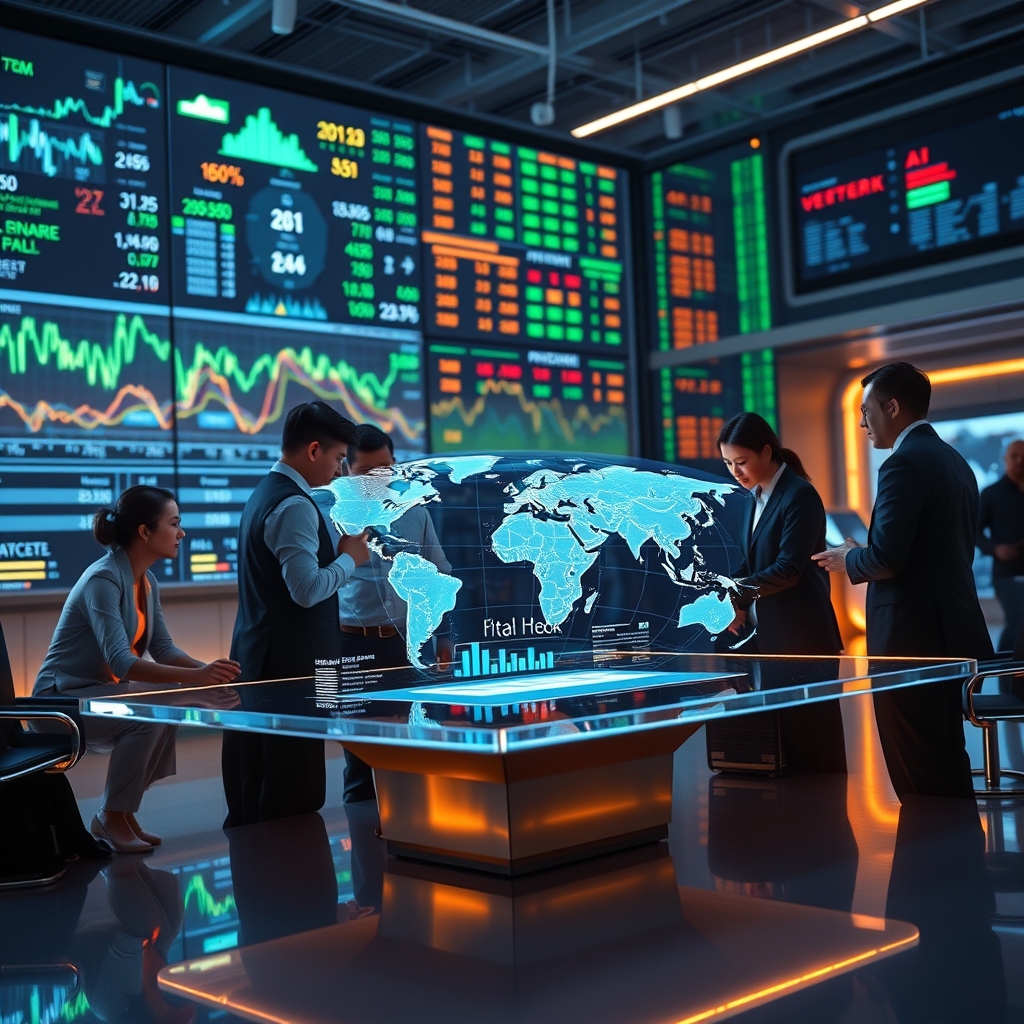
The hum of servers in a dimly lit data center is the modern-day equivalent of the trading floor’s once-raucous energy. Here, in the quiet precision of algorithmic systems, the future of global market indexes is being rewritten. No longer are these benchmarks static reflections of economic performance; they are dynamic, evolving entities shaped by the interplay of venture capital funding and cutting-edge trading technologies. The transformation is not just incremental—it is foundational, altering how investors perceive value, risk, and opportunity on a global scale.
The Venture Capital Catalyst
Venture capital has long been the lifeblood of innovation, but its role in reshaping global market indexes is often overlooked. Traditionally, indexes like the S&P 500 or the MSCI World were composed of established companies with proven track records. Today, however, the influx of venture capital into disruptive sectors—such as fintech, biotechnology, and renewable energy—has accelerated the inclusion of high-growth, high-risk companies into these benchmarks. This shift is not merely about diversification; it is about redefining what constitutes a “blue-chip” asset in the digital age.
Take, for example, the rise of private companies staying private longer, fueled by abundant venture capital. These firms, often valued in the tens of billions, operate in the shadows of public markets until they choose to go public—or until their influence becomes too significant to ignore. When they finally debut on exchanges, their inclusion in major indexes can trigger seismic shifts in market capitalization and investor sentiment. The result? A more volatile, but also more opportunity-rich, landscape for those who can navigate it.
The Algorithmic Backbone
While venture capital provides the fuel, algorithmic trading systems supply the engine. These sophisticated programs, powered by machine learning and artificial intelligence, analyze vast datasets in real-time to identify patterns, predict trends, and execute trades at speeds unimaginable to human traders. Their impact on global market indexes is profound. By processing everything from earnings reports to geopolitical events in milliseconds, algorithms can amplify or dampen market movements, creating a feedback loop that continuously reshapes index compositions.
Consider the role of algorithmic trading in the rise of thematic indexes, which focus on specific sectors like cybersecurity, artificial intelligence, or clean energy. These indexes are not just passive reflections of market activity; they are actively curated by algorithms that identify and weight companies based on their relevance to emerging trends. The result is a more nuanced, forward-looking representation of global markets—one that rewards agility and foresight over traditional metrics like market capitalization or dividend yield.
The Democratization of Access
One of the most significant consequences of this transformation is the democratization of access to global market indexes. Historically, investing in these benchmarks required substantial capital and institutional connections. Today, retail investors can gain exposure through exchange-traded funds (ETFs) and robo-advisors, many of which are powered by the same algorithmic systems that drive institutional trading. This shift has leveled the playing field, allowing individual investors to participate in the growth of high-potential sectors that were once the exclusive domain of venture capitalists and hedge funds.
Yet, this democratization is not without its challenges. The same algorithms that enable broader access can also exacerbate market volatility, particularly during periods of uncertainty. Flash crashes, like the one that occurred in May 2010, serve as stark reminders of the risks inherent in a market increasingly dominated by machines. For investors, the key lies in understanding the mechanics behind these systems and adopting strategies that balance the benefits of algorithmic precision with the need for human oversight.
The Future of Index Evolution
As venture capital continues to flow into disruptive sectors and algorithmic trading systems grow ever more sophisticated, the evolution of global market indexes will accelerate. We are moving toward a future where indexes are not just reflections of past performance but predictive tools that anticipate economic shifts before they occur. This shift will require investors to adopt a more dynamic approach to portfolio management, one that embraces the fluidity of modern markets while remaining grounded in fundamental principles of risk assessment and diversification.
The integration of environmental, social, and governance (ESG) criteria into index methodologies is another trend to watch. As investors increasingly prioritize sustainability and ethical considerations, indexes that incorporate these factors are gaining traction. Algorithmic systems are playing a crucial role here as well, analyzing non-financial data to identify companies that align with ESG principles. The result is a new generation of indexes that not only track financial performance but also reflect the values of a changing investor base.
The Human Element
Amidst this technological revolution, it is easy to overlook the human element. Venture capitalists, fund managers, and even retail investors bring intuition, experience, and judgment to the table—qualities that algorithms, no matter how advanced, cannot fully replicate. The most successful investors of the future will be those who can harness the power of technology while retaining the ability to think critically, adapt to unforeseen challenges, and make decisions based on a holistic understanding of the market.
The interplay between venture capital and algorithmic trading is not just reshaping global market indexes; it is redefining the very nature of investing. In this new era, success will belong to those who can navigate the complexities of a market where innovation and automation collide, where opportunity and risk are two sides of the same coin. The financial architects of tomorrow are not just building portfolios—they are designing the future of global finance, one algorithm at a time. The question is no longer whether these changes will occur, but how swiftly and profoundly they will transform the landscape for every participant in the market.