
The Alchemy of Agility: How Modular Manufacturing and Additive Workflows Are Forging the Future of Smart Factories
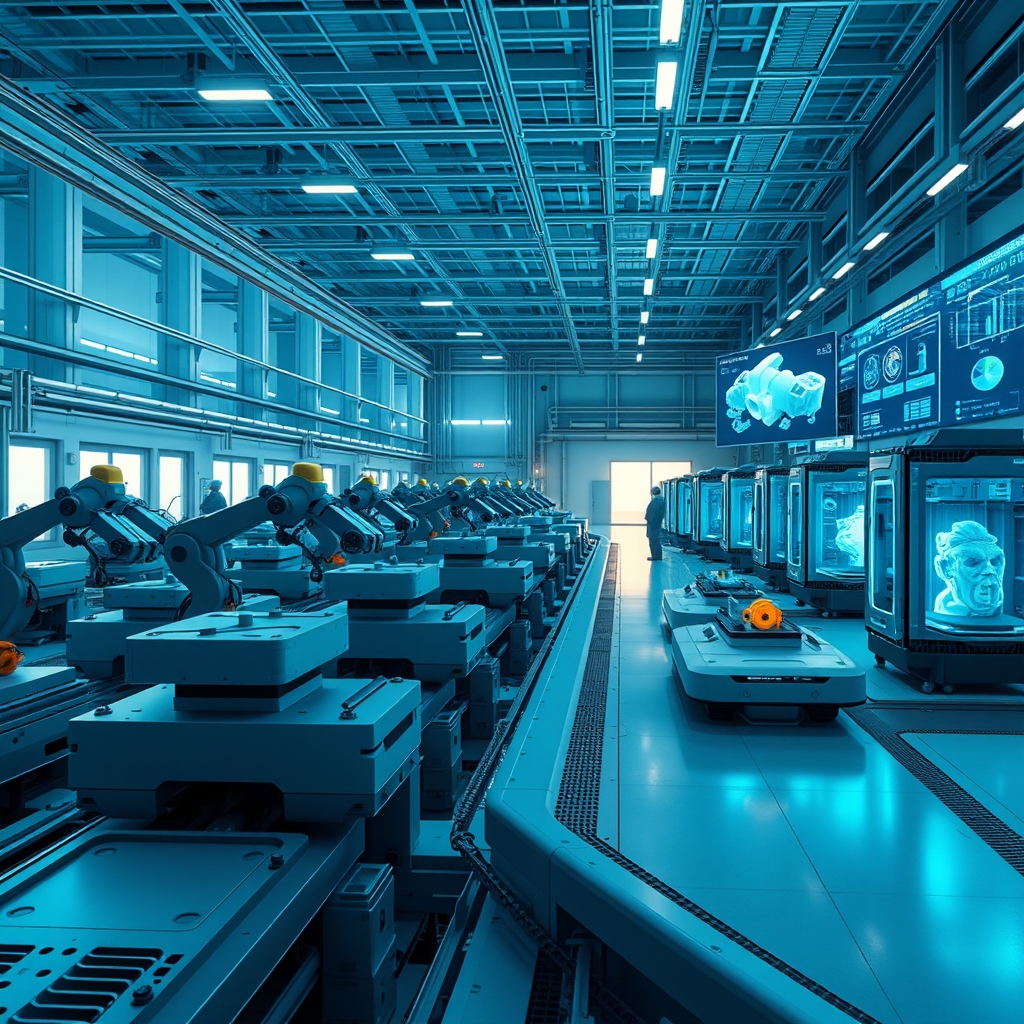
In the relentless pursuit of operational excellence, modern manufacturing is undergoing a metamorphosis, one where rigidity is replaced by fluidity, and static systems give way to dynamic ecosystems. At the heart of this transformation lies the fusion of modular manufacturing systems and additive workflows, a synergy that is redefining the very fabric of smart factories. This is not merely an evolution—it is an alchemical process, turning the base metals of traditional production into the gold of agile, responsive, and sustainable manufacturing.
The Modular Mindset: Breaking Down the Monolith
For decades, manufacturing plants operated as monolithic entities, where production lines were fixed, inflexible, and resistant to change. The introduction of modular manufacturing systems has shattered this paradigm, offering a framework where components, processes, and even entire production lines can be reconfigured with minimal disruption. Modularity is not just about physical components; it is a philosophy that permeates every layer of the factory, from hardware to software, from workflows to workforce management.
Consider a factory producing automotive components. In a traditional setup, shifting production from sedans to SUVs would require extensive retooling, downtime, and significant capital investment. With modular systems, however, the transition becomes a matter of reconfiguring modules—swapping out assembly stations, adjusting robotic arms, and reprogramming digital interfaces. The result? A factory that can pivot in days, not months, and adapt to market demands with unprecedented speed.
The Role of Digital Threads in Modularity
Modular manufacturing does not exist in isolation. It thrives on the digital threads that connect disparate systems, enabling seamless communication and coordination. These threads are woven through the fabric of the smart factory, linking modular hardware with software platforms that manage everything from inventory to quality control. The digital twin, a virtual replica of the physical factory, plays a pivotal role here, allowing manufacturers to simulate, test, and optimize modular configurations before implementing them in the real world.
For instance, a manufacturer can use a digital twin to model the impact of adding a new module to an existing production line. The twin simulates the flow of materials, the interaction between machines, and the potential bottlenecks, providing data-driven insights that inform decision-making. This level of foresight reduces risk, accelerates deployment, and ensures that modular systems deliver on their promise of agility.
Additive Manufacturing: The Catalyst for Experiential Prototyping
While modular systems provide the structural flexibility of a smart factory, additive manufacturing—commonly known as 3D printing—infuses it with creative freedom. Additive workflows are not just about producing parts; they are about reimagining the entire product development lifecycle. By enabling rapid, on-demand prototyping, additive manufacturing allows designers and engineers to experiment, iterate, and refine products in ways that were previously unimaginable.
From Concept to Reality in Hours
Traditional prototyping methods often involve lengthy lead times, high costs, and limited flexibility. A designer might spend weeks waiting for a prototype to be machined, only to discover a flaw that requires a complete redesign. Additive manufacturing eliminates these barriers, allowing prototypes to be printed in hours, tested, and refined in real time. This speed accelerates innovation, reduces time-to-market, and empowers manufacturers to respond swiftly to customer feedback or emerging trends.
Take the aerospace industry, where lightweight, complex components are critical. Additive manufacturing enables engineers to design and produce intricate parts—such as turbine blades with internal cooling channels—that would be impossible to create using conventional methods. The ability to prototype and test these components in-house not only streamlines development but also fosters a culture of continuous improvement.
The Intersection of Additive and Modular
The true power of additive manufacturing is unlocked when it is integrated with modular systems. Imagine a factory where additive workflows are embedded within modular production lines, allowing for on-the-fly customization of products. A customer orders a bespoke component, and the factory’s modular system reconfigures to accommodate the additive process, producing the part in real time. This level of personalization was once the domain of high-end, low-volume manufacturing. Today, it is becoming a reality for mass production, thanks to the synergy between additive and modular technologies.
Sustainability: The Silent Beneficiary
Amid the focus on agility and innovation, it is easy to overlook the environmental benefits of modular and additive manufacturing. Traditional manufacturing often generates significant waste, whether through excess material, energy consumption, or obsolete inventory. Modular systems reduce waste by enabling precise, just-in-time production, while additive workflows minimize material usage by building parts layer by layer, using only what is necessary.
Moreover, the ability to reconfigure modular systems means that factories can adapt to new, more sustainable materials without overhauling their entire infrastructure. For example, a manufacturer transitioning from plastic to biodegradable composites can adjust its modular production lines to accommodate the new material, reducing its environmental footprint without sacrificing efficiency.
The Circular Economy in Action
The principles of the circular economy—designing out waste, keeping products in use, and regenerating natural systems—are inherently aligned with modular and additive manufacturing. Modular systems extend the lifespan of equipment by allowing components to be upgraded or replaced individually, rather than discarding entire machines. Additive manufacturing supports this by enabling the repair and refurbishment of parts, reducing the need for new raw materials.
Consider a scenario where a factory produces industrial machinery. Instead of replacing a worn-out component, the factory can use additive manufacturing to print a replacement part, extending the life of the machine and reducing waste. This approach not only lowers costs but also aligns with the growing demand for sustainable manufacturing practices.
The factories of tomorrow are not static fortresses of steel and concrete; they are living, breathing entities that evolve in real time, responding to the needs of the market, the environment, and the workforce. The fusion of modular manufacturing and additive workflows is not just a technological advancement—it is a fundamental shift in how we conceive of production. It is a testament to the power of agility, where flexibility and innovation are not just aspirations but the very foundation of modern manufacturing. As these technologies continue to mature, they will unlock new possibilities, redefine industry standards, and shape a future where factories are as dynamic as the world they serve.