Scalable Industrial Solutions: How Modular Manufacturing and Additive Workflows Are Redefining Production Flexibility
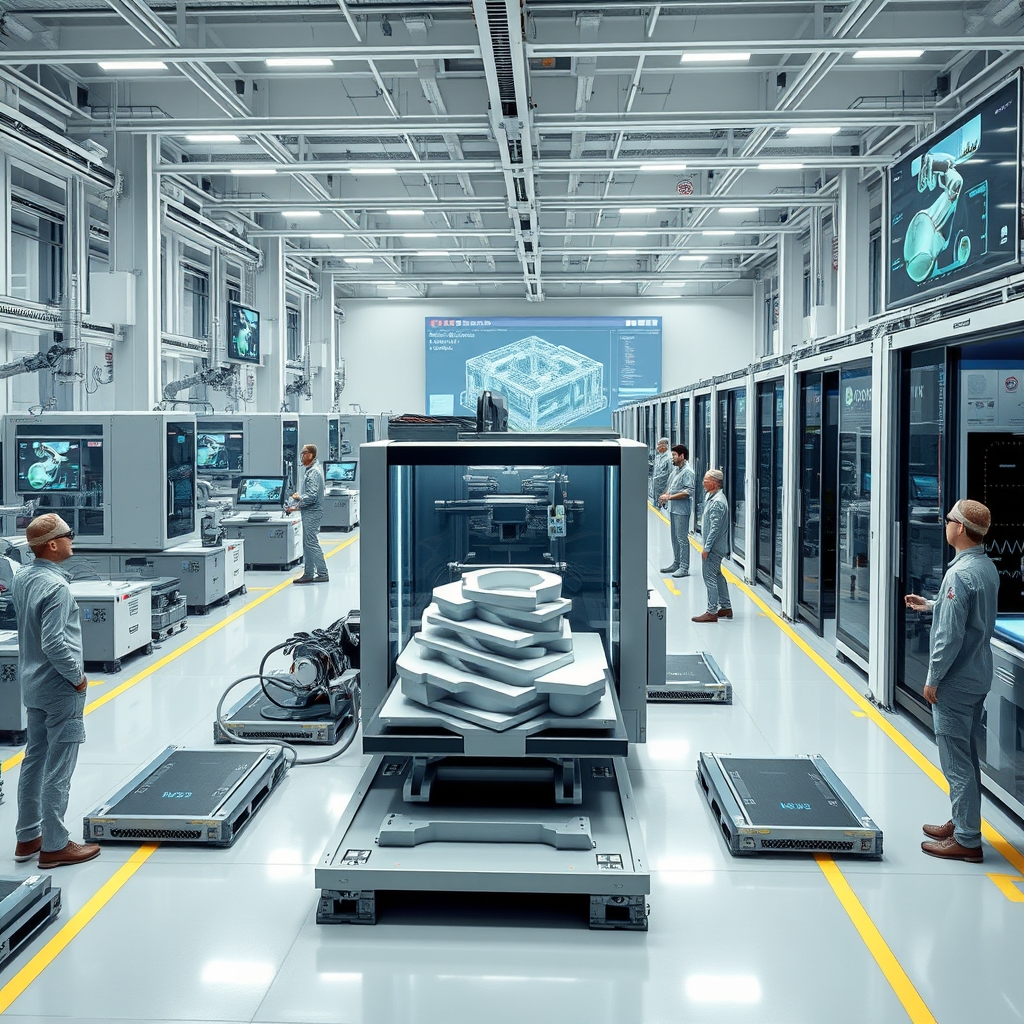
In an era where market demands shift at lightning speed, manufacturers are increasingly turning to scalable industrial solutions to stay competitive. The ability to rapidly adjust production volumes, customize products, and integrate new technologies without overhauling entire systems has become a cornerstone of modern manufacturing. At the heart of this transformation lies the synergy between modular manufacturing systems and additive manufacturing workflows, two approaches that are redefining what it means to build flexibility into production lines.
The Power of Modular Manufacturing Systems
Modular manufacturing is not a new concept, but its adoption has accelerated in recent years thanks to advancements in digitalization and automation. Unlike traditional linear production lines, modular systems break down manufacturing processes into self-contained units or “modules” that can be reconfigured, replaced, or scaled independently. This approach offers several key advantages:
Agility in Response to Market Changes
One of the most significant benefits of modular manufacturing is its ability to adapt quickly to changing market conditions. For example, a manufacturer producing automotive components can easily swap out a module dedicated to electric vehicle parts when demand for internal combustion engines declines. This agility reduces downtime and allows companies to pivot without the need for costly and time-consuming retooling.
Cost-Effective Scalability
Scaling production up or down in a traditional manufacturing setup often requires significant capital investment. Modular systems, however, allow manufacturers to add or remove capacity incrementally. This means businesses can start small, test new products or processes, and expand only when demand justifies it. The result is a more efficient allocation of resources and reduced financial risk.
Enhanced Collaboration and Integration
Modular systems also facilitate better collaboration between different stages of production. By standardizing interfaces between modules, manufacturers can integrate new technologies, such as collaborative robotics or real-time process analytics, without disrupting the entire workflow. This seamless integration is particularly valuable in industries where innovation cycles are short, and time-to-market is critical.
Additive Manufacturing: The Catalyst for Experiential Prototyping
While modular manufacturing provides the structural flexibility needed for scalable production, additive manufacturing (AM) workflows are revolutionizing how products are designed, prototyped, and produced. Often referred to as 3D printing, AM builds objects layer by layer from digital models, enabling complex geometries and customized designs that would be impossible or prohibitively expensive with traditional subtractive methods.
Accelerating Product Development
One of the most transformative aspects of additive manufacturing is its impact on experiential product prototyping. Traditional prototyping methods can take weeks or even months, delaying product launches and increasing costs. With AM, designers and engineers can iterate rapidly, testing multiple versions of a product in a fraction of the time. This speed not only accelerates innovation but also allows manufacturers to gather real-world feedback early in the development process, reducing the risk of costly redesigns later.
Enabling Mass Customization
Additive manufacturing also makes it feasible to produce customized products at scale. In industries like healthcare, where patient-specific implants or prosthetics are in high demand, AM workflows allow manufacturers to create tailored solutions without sacrificing efficiency. Similarly, in consumer goods, companies can offer personalized products, such as custom-fit footwear or bespoke electronics, without the need for expensive tooling changes.
Sustainable and Efficient Production
Beyond flexibility and customization, additive manufacturing contributes to sustainable supply chains by reducing material waste. Traditional manufacturing often involves cutting away excess material, leading to significant scrap. AM, on the other hand, uses only the material necessary to build the final product, minimizing waste and lowering production costs. Additionally, AM enables localized production, reducing the need for long-distance shipping and further lowering the carbon footprint of manufacturing operations.
Bridging Modular and Additive Workflows
The true potential of scalable industrial solutions emerges when modular manufacturing systems and additive workflows are combined. For instance, a manufacturer could use AM to produce customized components on-demand, which are then integrated into a modular production line. This hybrid approach allows for unprecedented flexibility, enabling businesses to respond to niche market demands without sacrificing efficiency.
Case Study: Automotive Industry
Consider the automotive industry, where manufacturers are under pressure to produce a diverse range of vehicles, from traditional gasoline models to electric and autonomous cars. By adopting modular manufacturing, an automaker can reconfigure its production line to accommodate different vehicle types. Simultaneously, additive manufacturing can be used to produce lightweight, complex components, such as battery housings or interior trim, tailored to specific models. This combination not only streamlines production but also reduces the time and cost associated with bringing new vehicles to market.
Case Study: Aerospace and Defense
In aerospace and defense, where precision and reliability are paramount, the integration of modular and additive workflows is equally transformative. Modular systems allow manufacturers to quickly adapt production lines for different aircraft models or defense systems. Meanwhile, AM enables the production of intricate, high-performance parts, such as turbine blades or structural components, with reduced weight and improved durability. This synergy enhances both the agility and the technical capabilities of aerospace manufacturers.
Overcoming Challenges in Implementation
While the benefits of modular manufacturing and additive workflows are clear, their implementation is not without challenges. One of the primary hurdles is the initial investment required to transition from traditional systems. However, the long-term cost savings and increased flexibility often justify the upfront expenditure. Additionally, manufacturers must invest in tech-enabled workforce training to ensure employees can effectively operate and maintain these advanced systems.
Data-Driven Decision Making
Another critical factor in successful implementation is the use of data-driven production efficiency tools. Real-time analytics and digital twin manufacturing technologies can help manufacturers monitor and optimize their modular and additive workflows. By simulating different production scenarios, businesses can identify bottlenecks, predict maintenance needs, and fine-tune their operations for maximum efficiency.
Ensuring Quality and Consistency
Maintaining predictive quality control is essential when adopting new manufacturing methods. Additive manufacturing, in particular, requires rigorous testing and validation to ensure that printed parts meet the same standards as traditionally manufactured components. By leveraging advanced sensors and machine learning algorithms, manufacturers can detect defects early in the production process, ensuring consistent quality across all outputs.
As industries continue to evolve, the ability to scale production efficiently and flexibly will determine which manufacturers thrive in the competitive landscape. Modular manufacturing systems and additive workflows are not just tools for incremental improvement; they represent a fundamental shift in how products are designed, produced, and delivered. By embracing these scalable industrial solutions, businesses can future-proof their operations, reduce waste, and meet the ever-changing demands of the market with confidence. The factories of tomorrow are being built today, and those who invest in flexibility will lead the way in innovation and sustainability.