The Alchemy of Efficiency: How Predictive Quality Control and Human-Centric Production Are Crafting the Future of Smart Factories
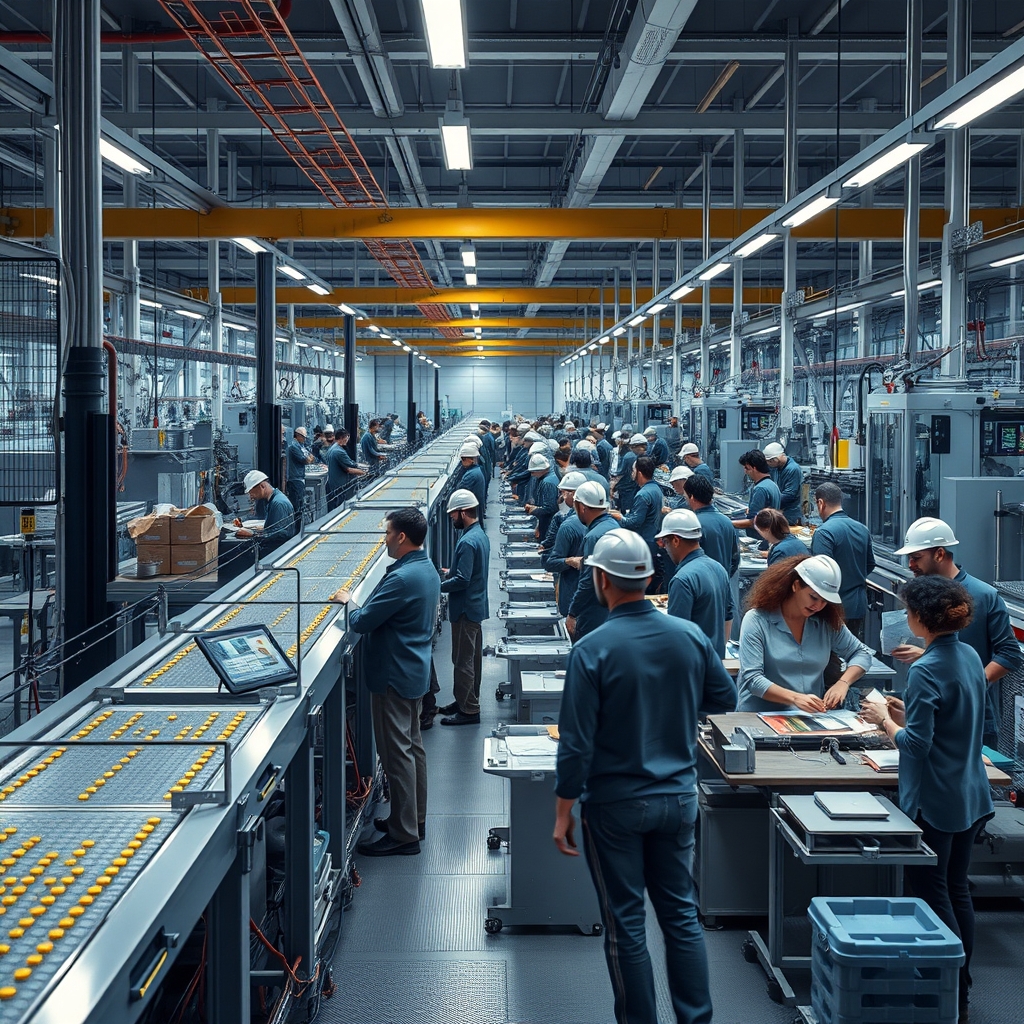
In the ever-evolving landscape of manufacturing, the concept of smart factories has emerged as a beacon of innovation, efficiency, and adaptability. At the heart of this revolution lie two pivotal elements: predictive quality control and human-centric production. These two pillars are not only reshaping the way we manufacture goods but are also setting the stage for a new era of industrial excellence.
Predictive Quality Control: The Unsung Hero of Smart Factories
Predictive quality control is a game-changer in the realm of manufacturing. It leverages the power of data analytics, machine learning, and Internet of Things (IoT) to predict potential quality issues before they occur. By continuously monitoring the production process, predictive quality control systems can identify patterns, anomalies, and deviations from the norm. This proactive approach allows manufacturers to address issues before they escalate, leading to fewer defects, reduced waste, and improved overall product quality.
Imagine a scenario where a manufacturing plant is producing a batch of products. Sensors and IoT devices are embedded throughout the production line, collecting data on various parameters such as temperature, pressure, and vibration. This data is then fed into a machine learning algorithm, which analyzes it to predict the likelihood of defects. If the algorithm detects a potential issue, it can alert the production team, allowing them to take corrective action before the defective product is produced.
Human-Centric Production: The Heartbeat of Smart Factories
While technology plays a crucial role in the smart factory, it is the human element that ultimately brings it to life. Human-centric production is an approach that emphasizes the importance of people in the manufacturing process. It recognizes that humans are not just operators of machines but are integral to the success of the production system.
Human-centric production involves empowering workers with the right tools, training, and support to perform their tasks effectively. It encourages a culture of continuous learning and improvement, where workers are not just following instructions but are actively contributing to the optimization of the production process. This approach fosters a sense of ownership and responsibility among workers, leading to higher levels of engagement, motivation, and job satisfaction.
Moreover, human-centric production recognizes the importance of work-life balance and well-being. It ensures that workers have a healthy and safe working environment, with adequate rest periods and opportunities for personal growth. By prioritizing the well-being of workers, manufacturers can create a more productive and sustainable workforce.
The Synergy of Predictive Quality Control and Human-Centric Production
The true power of smart factories lies in the synergy between predictive quality control and human-centric production. By combining the predictive capabilities of advanced analytics with the human touch of collaboration and continuous learning, manufacturers can achieve a level of efficiency and adaptability that was once thought to be beyond reach.
Predictive quality control provides the data-driven insights that guide the production process, while human-centric production ensures that these insights are translated into actionable strategies. The human element brings creativity, problem-solving skills, and emotional intelligence to the table, complementing the analytical capabilities of predictive quality control systems.
For instance, when a predictive quality control system identifies a potential issue, it can alert the production team. The human-centric approach would then involve the team working together to analyze the situation, brainstorm solutions, and implement corrective actions. This collaborative effort ensures that the most effective and efficient solutions are found, leading to improved product quality and reduced downtime.
In essence, the future of smart factories is not about replacing humans with machines but about augmenting human capabilities with technology. It is about creating a harmonious balance between the predictive power of data analytics and the human touch of collaboration, innovation, and continuous learning.
As we look to the future, it is clear that the alchemy of efficiency, enabled by predictive quality control and human-centric production, will continue to shape the landscape of manufacturing. It will drive us towards a new era of industrial excellence, where the power of data and the potential of people are harnessed to create a more efficient, adaptable, and sustainable manufacturing ecosystem.