Modular Manufacturing Systems: The Backbone of Scalable and Agile Industrial Solutions
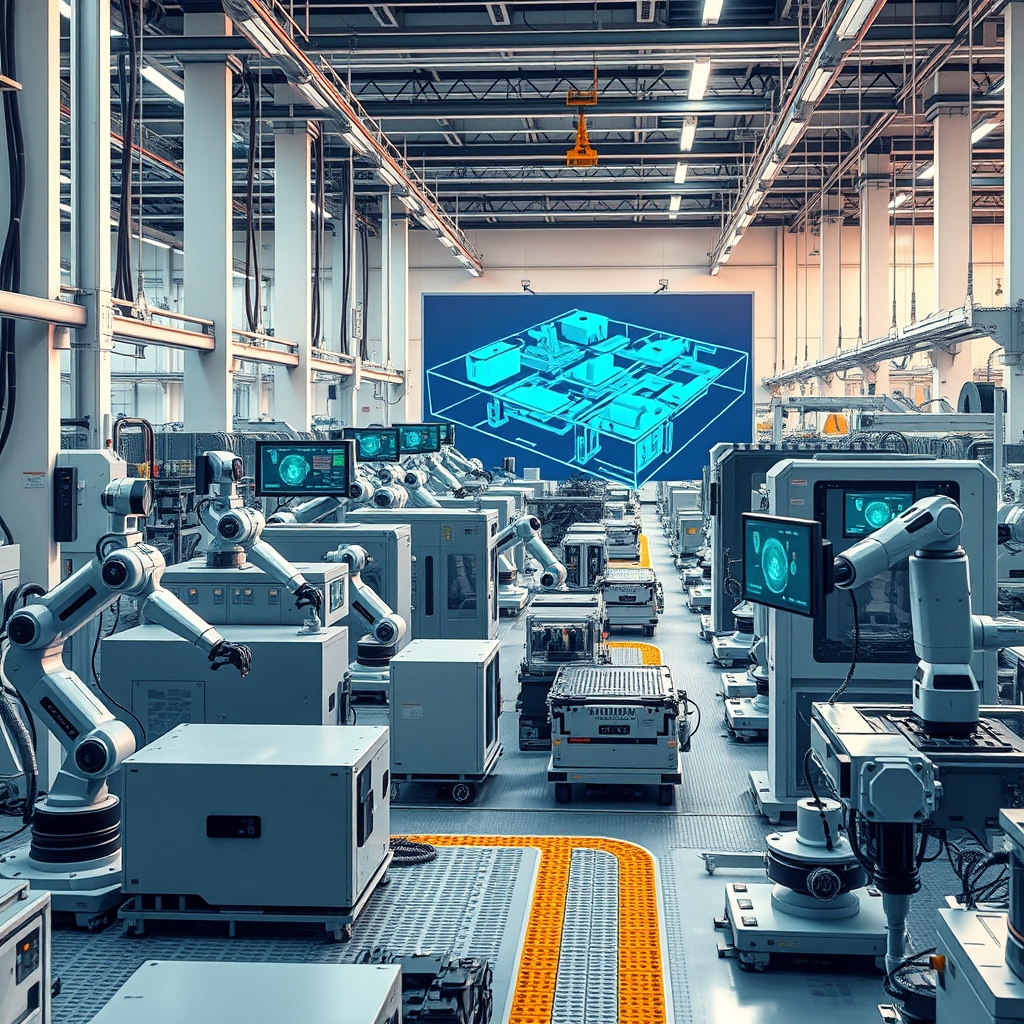
In an era where adaptability is as critical as efficiency, manufacturing systems must evolve beyond rigid, monolithic structures. The shift toward modular manufacturing systems represents a fundamental transformation in how factories design, deploy, and scale production. Unlike traditional linear assembly lines, modular systems break down complex processes into interchangeable, self-contained units that can be reconfigured, upgraded, or expanded with minimal disruption. This approach doesn’t just enhance flexibility—it redefines what it means to build a responsive, future-ready industrial ecosystem.
The Core Principles of Modularity in Manufacturing
At its heart, modular manufacturing is built on three foundational principles: interoperability, scalability, and reconfigurability. Each module—whether it’s a robotic assembly cell, a quality inspection station, or a material handling unit—operates as an independent entity with standardized interfaces. This allows manufacturers to integrate new technologies, adjust production volumes, or pivot to entirely different product lines without overhauling the entire system. For example, a factory producing automotive components can seamlessly switch from manufacturing electric vehicle batteries to hybrid powertrains by swapping out specific modules while retaining the core infrastructure.
The benefits extend beyond operational agility. Modular systems reduce downtime during transitions, lower capital expenditure by enabling incremental investments, and simplify maintenance by isolating issues to individual units. Moreover, they align perfectly with the principles of lean operational excellence, eliminating waste and optimizing resource allocation. When combined with real-time process analytics, these systems provide granular visibility into performance metrics, allowing managers to identify bottlenecks, predict failures, and fine-tune workflows on the fly.
Enabling Technologies: The Digital Backbone of Modular Systems
The rise of modular manufacturing is inextricably linked to advancements in digital technologies. Digital twin manufacturing plays a pivotal role by creating virtual replicas of physical modules, enabling simulation, testing, and optimization before any physical changes are made. This not only accelerates deployment but also reduces the risk of costly errors. For instance, a digital twin can model how a new robotic arm will interact with existing modules, ensuring compatibility and performance before installation.
Similarly, collaborative robotics deployment has become a cornerstone of modular systems. Unlike traditional industrial robots confined to cages, collaborative robots (cobots) are designed to work alongside human operators, adapting to dynamic environments. In a modular setup, cobots can be redeployed across different stations as needed, enhancing both productivity and human-centric production. This synergy between automation and human expertise is critical, as it preserves the irreplaceable value of human judgment while leveraging the precision and endurance of machines.
Data-driven decision-making further amplifies the potential of modular systems. By integrating predictive quality control and preventive equipment maintenance, manufacturers can anticipate issues before they escalate, ensuring continuous operation. Sensors embedded in modules collect real-time data on everything from temperature and vibration to throughput and defect rates. Advanced analytics then transform this data into actionable insights, enabling proactive adjustments that maintain peak efficiency.
The Role of Additive Manufacturing in Modular Workflows
No discussion of modular manufacturing would be complete without addressing the role of additive manufacturing workflows. 3D printing has evolved from a prototyping tool to a full-fledged production method, particularly in modular systems. Its ability to produce complex, customized components on demand eliminates the need for large inventories and reduces lead times. In a modular factory, additive manufacturing can be integrated as a standalone module, enabling on-site production of spare parts, tooling, or even entire sub-assemblies. This not only enhances supply chain resilience but also supports sustainable supply chains by minimizing waste and transportation emissions.
For example, aerospace manufacturers are increasingly using additive modules to produce lightweight, high-strength components tailored to specific aircraft models. This approach reduces material waste by up to 90% compared to traditional subtractive methods and allows for rapid iteration during experiential product prototyping. The result is a more agile, responsive production process that can adapt to design changes or customer requirements without significant retooling.
Overcoming Challenges: The Human Factor
While the technical advantages of modular manufacturing are clear, its success hinges on the people who design, operate, and maintain these systems. The transition to modularity requires a workforce skilled in tech-enabled training, capable of managing complex, interconnected systems. Traditional manufacturing roles are evolving, with a growing emphasis on cross-functional skills such as data analysis, robotics programming, and system integration. Companies investing in continuous learning programs—whether through virtual reality simulations, augmented reality-guided maintenance, or AI-driven training platforms—are better positioned to harness the full potential of modular systems.
Moreover, modular manufacturing fosters a more human-centric production environment by redistributing repetitive, hazardous tasks to machines while empowering workers to focus on higher-value activities. This shift not only improves job satisfaction but also drives innovation, as employees are encouraged to contribute ideas for process improvements or new module designs. The result is a more engaged, adaptable workforce that can thrive in an ever-changing industrial landscape.
The Path Forward: Scalability and Sustainability
As industries grapple with volatility—whether from geopolitical shifts, supply chain disruptions, or fluctuating demand—modular manufacturing offers a pathway to resilience. Its inherent scalability allows manufacturers to expand or contract production capacity in response to market conditions, without the constraints of fixed infrastructure. This is particularly valuable for industries with seasonal demand or rapidly evolving product lifecycles, such as consumer electronics or renewable energy technologies.
Sustainability is another critical advantage. Modular systems support ethical sourcing transparency by enabling localized production, reducing reliance on global supply chains, and minimizing carbon footprints. They also facilitate circular economy practices, such as remanufacturing or refurbishing modules for secondary use. By designing systems with disassembly and reuse in mind, manufacturers can significantly reduce waste and extend the lifecycle of their equipment.
The factories of tomorrow will not be defined by their size or scale, but by their ability to adapt, innovate, and sustain. Modular manufacturing systems are not just a technological upgrade—they are a strategic imperative for any organization aiming to thrive in the dynamic landscape of Industry 4.0. By embracing modularity, manufacturers can turn uncertainty into opportunity, transforming challenges into catalysts for growth and redefining what it means to be truly agile.