
The Human Touch in the Age of Automation: How Human-Centric Production and Collaborative Robotics Are Redefining Smart Factory Integration
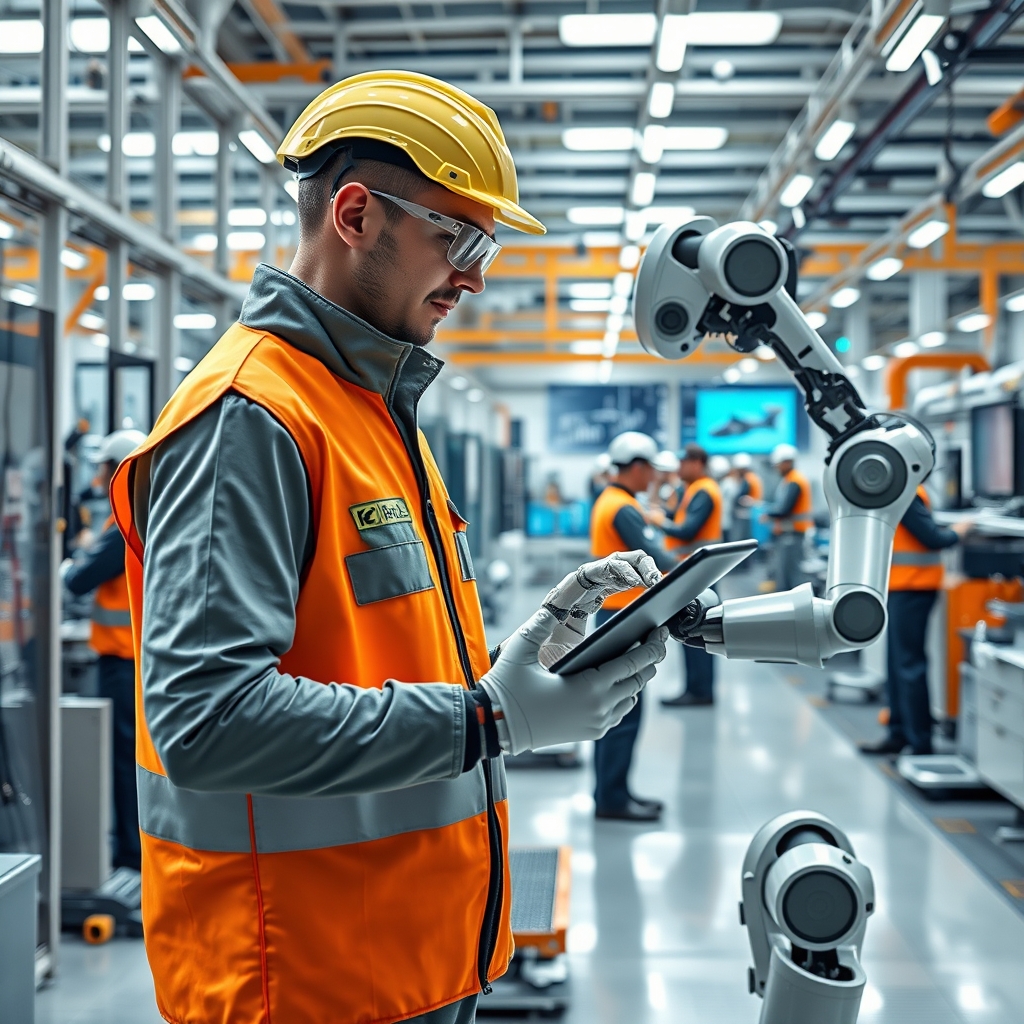
The modern manufacturing landscape is undergoing a seismic shift, where the lines between human ingenuity and machine precision are not just blurring—they are harmonizing. At the heart of this transformation lies the concept of human-centric production, a philosophy that places people at the core of smart factory integration. Unlike traditional automation, which often sidelines human workers in favor of efficiency, human-centric production leverages technology to augment human capabilities, creating a symbiotic relationship where both thrive. This approach is not just about keeping humans in the loop; it’s about reimagining their roles to drive innovation, flexibility, and resilience in an era dominated by collaborative robotics and real-time process analytics.
The Rise of Collaborative Robotics: A New Era of Partnership
Collaborative robots, or cobots, represent a paradigm shift in how automation is deployed on the factory floor. Unlike their industrial predecessors, cobots are designed to work alongside humans, not replace them. Equipped with advanced sensors, machine learning algorithms, and adaptive programming, these robots can perform repetitive, physically demanding, or hazardous tasks while allowing human workers to focus on higher-value activities. For instance, in an automotive assembly line, cobots can handle the heavy lifting of installing car doors, while human workers oversee quality control, troubleshoot issues, and make real-time adjustments based on real-time process analytics.
The integration of cobots into smart factories is not just about efficiency—it’s about creating a safer, more dynamic work environment. By taking over ergonomically challenging tasks, cobots reduce the risk of workplace injuries, while their ability to learn and adapt ensures they can respond to changing production needs. This flexibility is particularly valuable in industries where customization and small-batch production are becoming the norm, as cobots can be quickly reprogrammed to handle new tasks without the need for extensive downtime or retooling.
Redefining Roles: From Operators to Orchestrators
The introduction of collaborative robotics is reshaping the roles of factory workers, transforming them from mere operators into orchestrators of complex systems. In a human-centric smart factory, workers are no longer confined to monotonous tasks; instead, they are empowered to make decisions, solve problems, and drive continuous improvement. This shift is supported by tech-enabled workforce training, which equips employees with the skills needed to work alongside advanced technologies.
For example, workers trained in digital twin manufacturing can use virtual replicas of physical systems to simulate and optimize production processes before implementing changes in the real world. This not only enhances their understanding of the technology but also fosters a culture of innovation and experimentation. Similarly, training in predictive quality control enables workers to identify potential defects before they occur, reducing waste and improving product consistency. By investing in workforce development, manufacturers can ensure that their employees are not just keeping pace with technological advancements but are actively shaping them.
The Role of Real-Time Process Analytics in Human-Centric Production
At the intersection of human-centric production and smart factory integration lies real-time process analytics, a powerful tool that provides instant insights into every facet of the manufacturing process. By leveraging data from sensors, IoT devices, and machine learning algorithms, real-time analytics enable factories to monitor performance, detect anomalies, and make data-driven decisions on the fly. This capability is particularly valuable in human-centric production, where the goal is to create a responsive, adaptive environment that empowers workers to act quickly and decisively.
Consider a scenario where a production line is experiencing unexpected downtime due to a malfunctioning machine. In a traditional factory, diagnosing and resolving the issue could take hours, leading to significant losses in productivity. However, in a smart factory equipped with real-time analytics, the system can instantly identify the root cause of the problem, alert the relevant personnel, and even suggest corrective actions. Workers, armed with this information, can then collaborate with cobots to implement solutions, minimizing downtime and ensuring that production remains on track.
Enhancing Decision-Making with Data-Driven Insights
The true power of real-time process analytics lies in its ability to transform raw data into actionable insights. By integrating analytics into human-centric production, manufacturers can create a feedback loop where human intuition and machine intelligence work in tandem to optimize performance. For instance, analytics can highlight patterns in production data that might not be immediately obvious to human workers, such as subtle variations in material quality or equipment wear. Workers can then use this information to adjust processes, implement preventive equipment maintenance, or even redesign workflows to improve efficiency.
Moreover, real-time analytics can facilitate customer-integrated design by providing manufacturers with instant feedback on how changes in production affect product quality and performance. This enables companies to iterate quickly, responding to customer needs and market demands with agility. In an era where customization and speed-to-market are critical competitive advantages, the ability to make informed decisions in real time is a game-changer.
Building a Sustainable Future: Human-Centric Production and Ethical Manufacturing
Beyond efficiency and productivity, human-centric production also plays a crucial role in advancing sustainable supply chains and ethical sourcing transparency. By empowering workers to take ownership of their roles, manufacturers can foster a culture of responsibility and accountability that extends beyond the factory floor. For example, workers trained in sustainable practices can identify opportunities to reduce waste, optimize energy consumption, and source materials ethically, contributing to a more sustainable and socially responsible manufacturing ecosystem.
Collaborative robotics further enhances these efforts by enabling more precise and efficient use of resources. Cobots can be programmed to minimize material waste, reduce energy consumption, and even assist in recycling initiatives. When combined with real-time analytics, these technologies create a closed-loop system where sustainability is not just a goal but a measurable outcome. This approach aligns with the broader industry shift toward lean operational excellence, where every aspect of production is optimized for efficiency, quality, and environmental stewardship.
As smart factories continue to evolve, the integration of human-centric production and collaborative robotics will be key to unlocking their full potential. By placing people at the center of technological advancements, manufacturers can create workplaces that are not only more efficient and productive but also more inclusive, innovative, and sustainable. The future of manufacturing is not about choosing between humans and machines—it’s about harnessing the strengths of both to build a smarter, more resilient industry. In this new era, the human touch is not just preserved; it is amplified, ensuring that the factories of tomorrow are as dynamic and adaptable as the people who power them.