The Alchemy of Agility: How Modular Manufacturing and Additive Workflows Are Forging the Future of Smart Factories
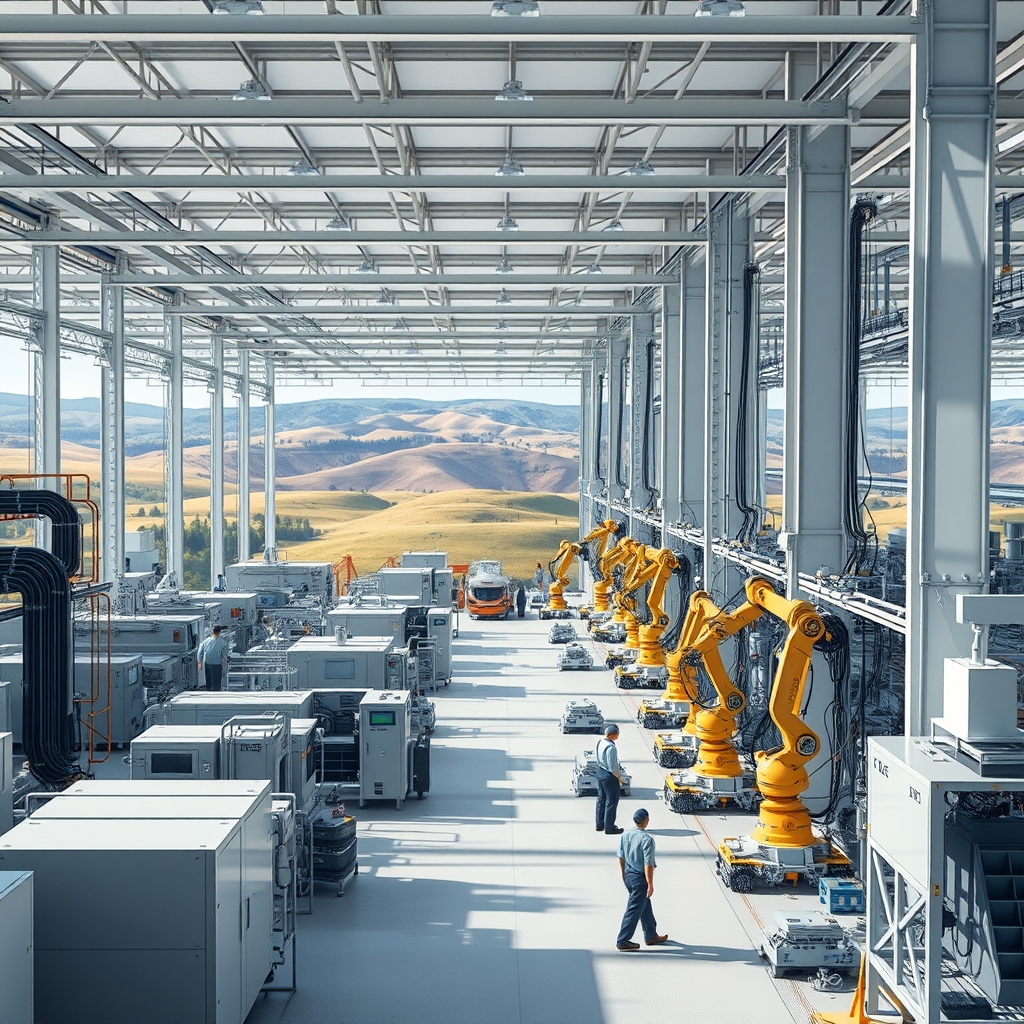
In the heart of the industrial revolution, a new paradigm is emerging, one that is reshaping the very fabric of manufacturing. This paradigm is not just about automation or digitalization, but about the seamless integration of these elements to create a responsive, agile, and sustainable production environment. At the core of this transformation are modular manufacturing systems and additive manufacturing workflows, which are forging the future of smart factories.
The Rise of Modular Manufacturing Systems
Modular manufacturing systems are the backbone of this new era. These systems are designed to be flexible, scalable, and adaptable, allowing manufacturers to quickly respond to changing market demands. Each module in the system is a self-contained unit that can be easily reconfigured or replaced, depending on the production requirements. This modularity not only enhances the efficiency of the production process but also reduces the downtime and the associated costs.
The Benefits of Modularity
One of the key benefits of modular manufacturing systems is their ability to facilitate rapid product development and innovation. By using interchangeable modules, manufacturers can quickly adapt to new product designs or market trends. This agility is crucial in today’s fast-paced and competitive market environment.
Moreover, modular systems are also highly scalable. They can be easily expanded or reduced to meet the fluctuating demand for products. This scalability is particularly beneficial for manufacturers who operate in industries with seasonal or cyclical demand patterns.
Additive Manufacturing Workflows: The Future of Production
Additive manufacturing, commonly known as 3D printing, is another game-changer in the world of manufacturing. This process involves the creation of a three-dimensional object from a digital file, layer by layer. It offers a level of flexibility and customization that is unparalleled in traditional manufacturing methods.
The Integration of Additive Manufacturing in Smart Factories
In smart factories, additive manufacturing is integrated into the overall production workflow. This integration allows for the creation of complex, customized products that can be produced on-demand. It also enables the rapid prototyping and testing of new product designs, significantly reducing the time-to-market.
Moreover, additive manufacturing is also contributing to the sustainability of the production process. By using less material and energy, and by enabling the production of lighter, more efficient products, it is helping to reduce the environmental impact of manufacturing.
The Synergy of Modular Manufacturing and Additive Workflows
The true power of the new manufacturing paradigm lies in the synergy between modular manufacturing systems and additive manufacturing workflows. This combination allows for the creation of a truly agile and responsive production environment.
Enhancing Flexibility and Customization
By integrating additive manufacturing into modular systems, manufacturers can achieve a high level of flexibility and customization. This is particularly beneficial in industries such as healthcare, aerospace, and automotive, where the demand for customized and complex products is high.
For instance, in the healthcare industry, additive manufacturing can be used to produce customized prosthetics, implants, and surgical tools. These products can be designed and manufactured on-demand, based on the specific needs of the patient. This level of customization is not possible with traditional manufacturing methods.
Driving Innovation and Sustainability
The integration of additive manufacturing and modular systems is also driving innovation and sustainability in the manufacturing process. By enabling the production of complex, lightweight products with less material and energy, it is helping to reduce the environmental impact of manufacturing.
Moreover, this integration is also fostering a culture of innovation and experimentation in the manufacturing environment. By making it easier to design, prototype, and test new products, it is encouraging manufacturers to think outside the box and explore new possibilities.
In conclusion, the future of smart factories is being forged by the seamless integration of modular manufacturing systems and additive manufacturing workflows. This integration is enhancing the flexibility, customization, and sustainability of the production process, and is driving innovation and agility in the manufacturing environment. As we move forward, it is clear that this new manufacturing paradigm will play a crucial role in shaping the future of industry.