
The Intersection of Additive Manufacturing and Digital Twin Technology: Crafting the Next Era of Smart Factories
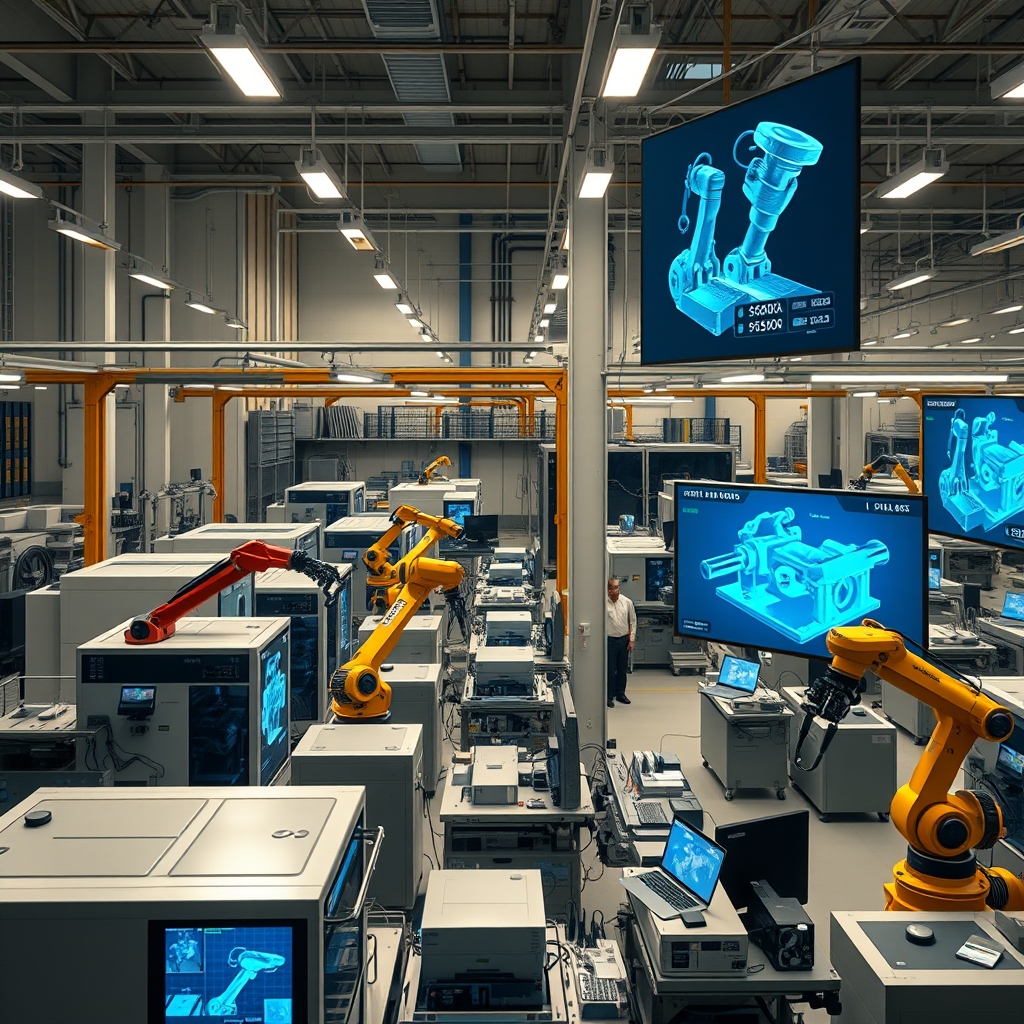
In the rapidly evolving landscape of manufacturing, the convergence of additive manufacturing (AM) and digital twin technology is heralding a new era of innovation and efficiency. This synergy is not merely a technological advancement but a fundamental shift in how we perceive and execute production processes. The marriage of these two technologies is redefining the very essence of smart factories, paving the way for unprecedented levels of agility, precision, and sustainability.
Additive Manufacturing: The Future of Flexible Production
Additive manufacturing, often referred to as 3D printing, has emerged as a game-changer in the manufacturing industry. Unlike traditional subtractive manufacturing methods, AM builds products layer by layer, directly from a digital file. This approach offers a myriad of advantages, including the ability to create complex geometries, reduce material waste, and produce customized products on demand. These capabilities are particularly beneficial in sectors such as aerospace, automotive, and healthcare, where customization and rapid prototyping are crucial.
The Role of Digital Twin Technology
Digital twin technology, on the other hand, involves creating a virtual replica of a physical object or system. This digital twin is a dynamic, real-time representation that can be used to simulate, monitor, and optimize the performance of the physical counterpart. When integrated with additive manufacturing, digital twins can provide a comprehensive view of the entire production process, from design to final product.
Synergizing AM and Digital Twin Technology
The integration of additive manufacturing and digital twin technology is revolutionizing the way products are designed, manufactured, and maintained. By leveraging the capabilities of digital twins, manufacturers can simulate the performance of 3D-printed components under various conditions, ensuring that the final product meets the desired specifications. This predictive capability allows for real-time adjustments and optimizations, leading to higher quality outputs and reduced production times.
Enhancing Predictive Quality Control
One of the most significant benefits of this integration is the enhancement of predictive quality control. Digital twins can continuously monitor the production process, detecting anomalies and deviations from the expected parameters. This real-time feedback loop enables manufacturers to take corrective actions promptly, minimizing the risk of defects and ensuring consistent product quality.
Optimizing Production Efficiency
Moreover, the synergy between AM and digital twin technology is driving significant improvements in production efficiency. By simulating different production scenarios, manufacturers can identify the most optimal pathways, reducing waste and streamlining the workflow. This optimization extends to the entire supply chain, from raw material procurement to final product delivery, leading to a more sustainable and efficient manufacturing process.
Fostering Human-Centric Production
While automation and advanced technologies are transforming the manufacturing landscape, the human element remains crucial. The integration of AM and digital twin technology does not replace human expertise but rather enhances it. Manufacturers can leverage the insights provided by digital twins to make informed decisions, while human creativity and problem-solving skills continue to drive innovation.
In conclusion, the intersection of additive manufacturing and digital twin technology is not just a technological trend but a fundamental transformation in the manufacturing industry. This synergy is paving the way for smarter, more efficient, and sustainable production processes. As we continue to explore the possibilities of this integration, the future of smart factories looks brighter than ever.