The Digital Tapestry: How Smart Contracts and Algorithmic Trading Are Weaving the Future of Investment Portfolio Management

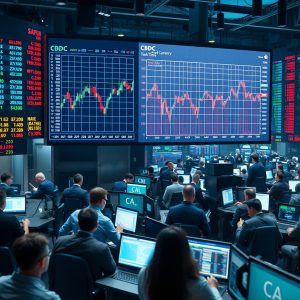
The hum of servers in a dimly lit data center is the modern symphony of finance, a relentless rhythm that pulses through the veins of global markets. Here, in the quiet anonymity of binary code, fortunes are made and lost in milliseconds, guided by the invisible hand of algorithmic trading systems. These digital maestros, armed with complex mathematical models, scan the vast expanse of the equity market trends, foreign exchange rates, and cryptocurrency trading landscapes, executing trades with a precision that human hands could never achieve. The era of gut-feel investing is fading, replaced by a new paradigm where data is the currency and speed is the ultimate advantage.
The Alchemy of Algorithms in Portfolio Management
At the heart of this transformation lies the alchemy of algorithms, a blend of machine learning, artificial intelligence, and big data analytics that is redefining investment portfolio management. These systems do not merely react to market conditions; they anticipate them, learning from historical patterns and adapting to new information in real-time. For instance, a hedge fund might deploy an algorithmic trading system that analyzes decades of stock market data, identifying subtle correlations between seemingly unrelated assets. When a specific trigger—such as a sudden shift in foreign exchange rates or a geopolitical event—occurs, the system executes a pre-programmed strategy, rebalancing the portfolio to mitigate risk or capitalize on emerging opportunities.
The impact of these systems extends beyond mere efficiency. They democratize access to sophisticated investment strategies that were once the exclusive domain of institutional investors. Retail traders, armed with user-friendly platforms and robo-advisors, can now leverage the same tools that power the portfolios of billion-dollar funds. This shift is not without its challenges, however. The opacity of some algorithmic models can create a black-box effect, where investors struggle to understand the rationale behind trades, leading to questions about accountability and trust.
The Rise of Smart Contracts: Trust in a Trustless World
Parallel to the rise of algorithmic trading is the emergence of smart contracts, self-executing agreements coded onto blockchain technology. These digital contracts are the backbone of decentralized finance (DeFi), a movement that seeks to eliminate intermediaries from financial transactions. Imagine a world where a loan is approved, disbursed, and repaid without a single human intervention, where the terms of the agreement are enforced by immutable code rather than legal jargon. This is the promise of smart contracts, and it is already reshaping asset wealth management.
In the realm of investment portfolio management, smart contracts offer unparalleled transparency and security. Consider a scenario where an investor allocates funds to a decentralized autonomous organization (DAO). The DAO’s smart contract automatically diversifies the investment across a basket of assets, rebalancing the portfolio based on predefined rules. If the value of a particular asset falls below a certain threshold, the contract triggers a sale, reinvesting the proceeds into higher-performing assets. All of this occurs without the need for a traditional fund manager, reducing costs and eliminating the potential for human error or bias.
Yet, the adoption of smart contracts is not without its hurdles. The nascent nature of blockchain technology means that vulnerabilities can be exploited, as seen in high-profile hacks of DeFi platforms. Moreover, the legal status of smart contracts remains ambiguous in many jurisdictions, creating uncertainty for investors and institutions alike. Despite these challenges, the potential for smart contracts to streamline financial transactions and reduce friction is too significant to ignore.
The Intersection of Risk and Opportunity
The convergence of algorithmic trading and smart contracts is creating a new frontier in financial risk assessment. Traditional models, which rely on historical data and probabilistic forecasts, are being augmented by real-time analytics and predictive algorithms. For example, a portfolio manager might use a machine learning model to simulate thousands of market scenarios, stress-testing the resilience of an investment strategy against black swan events. Meanwhile, smart contracts can automate the execution of risk mitigation strategies, such as hedging against currency fluctuations or liquidating positions in response to a sudden market downturn.
This fusion of technology and finance is also giving rise to new asset classes. Central bank digital currencies (CBDCs), for instance, are poised to revolutionize the way governments and institutions manage monetary policy. Unlike cryptocurrencies, which are decentralized and volatile, CBDCs are issued and regulated by central banks, offering the stability of fiat currency with the efficiency of blockchain technology. For investors, CBDCs present an opportunity to diversify portfolios with assets that are both liquid and secure, bridging the gap between traditional finance and the digital economy.
The Human Element in a Digital World
As the financial landscape becomes increasingly automated, the role of the human investor is evolving. While algorithms and smart contracts handle the heavy lifting of execution and compliance, human intuition and creativity remain irreplaceable. The most successful investors are those who can blend the precision of technology with the nuance of human judgment, using data as a guide rather than a crutch. For instance, a seasoned trader might use algorithmic insights to identify a potential opportunity in the equity market but rely on their experience to assess the broader economic context before making a decision.
Moreover, the rise of digital banking and decentralized finance is fostering a more inclusive financial ecosystem. High-yield savings accounts, once the preserve of the wealthy, are now accessible to anyone with an internet connection, offering competitive returns in an era of low interest rates. Similarly, DeFi platforms are opening up avenues for passive income, allowing individuals to lend, borrow, and stake assets without the need for a traditional bank. This democratization of finance is not just a technological shift; it is a cultural one, empowering individuals to take control of their financial futures.
The digital tapestry of modern finance is a complex and ever-evolving landscape, where the threads of algorithmic trading, smart contracts, and decentralized systems intertwine to create new patterns of wealth and opportunity. As these technologies mature, they will continue to redefine the boundaries of what is possible, challenging our notions of trust, risk, and value. The future of investment portfolio management is not just about numbers on a screen; it is about the stories those numbers tell, the risks they mitigate, and the opportunities they unlock. In this brave new world, the most valuable asset is not just capital, but the ability to adapt, innovate, and see beyond the horizon of the present.