The Alchemy of Yield: How High-Frequency Trading and Central Bank Policies Are Reshaping Investment Portfolios

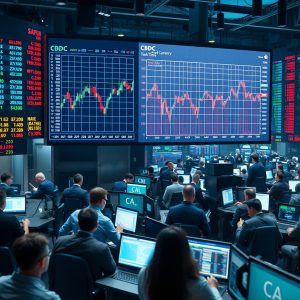
The hum of servers in a dimly lit data center is the modern symphony of wealth creation, where microseconds dictate fortunes and algorithms dance with market data in a relentless pursuit of profit. This is the world of high-frequency trading (HFT), a domain where the traditional rhythms of stock market analysis and equity market trends have been replaced by the staccato beats of computational prowess. Here, the alchemy of yield is not performed by human hands but by lines of code, executing trades at speeds that defy comprehension, reshaping the very fabric of investment portfolio management.
The Rise of the Machines: Algorithmic Trading Systems in the Modern Era
Algorithmic trading systems have evolved from mere tools to the invisible architects of global markets. These systems, powered by complex mathematical models and machine learning, dissect vast oceans of data to identify patterns invisible to the human eye. They operate across asset classes—from cryptocurrency trading to foreign exchange rates—executing trades with precision and speed that no human trader could match. The equity market trends of today are no longer charted solely by analysts with spreadsheets but by algorithms that can predict and react to market movements in real time.
In the realm of digital banking, these systems have become indispensable. Retail banking innovations now integrate algorithmic trading to offer clients personalized investment strategies, blending the accessibility of high-yield savings accounts with the sophistication of hedge fund tactics. The result is a democratization of financial strategies once reserved for institutional investors, where even individual traders can leverage the power of HFT to optimize their returns.
The Central Bank Digital Currency Paradox
As algorithmic trading systems dominate the markets, central banks are not standing idle. The advent of central bank digital currencies (CBDCs) is poised to redefine the landscape of fiscal policy impact and global market indices. Unlike decentralized cryptocurrencies, CBDCs are issued and regulated by central authorities, offering a digital alternative to traditional fiat currencies. Their introduction could streamline cross-border transactions, reduce settlement times, and enhance monetary policy transmission, but they also introduce new variables into the equation of financial risk assessment.
For traders and investors, CBDCs represent both an opportunity and a challenge. On one hand, they could stabilize foreign exchange rates and reduce the volatility that often plagues cryptocurrency trading. On the other, they could centralize financial control in ways that limit the autonomy of decentralized finance (DeFi) platforms. The interplay between CBDCs and existing financial systems will be a defining narrative in the coming decade, influencing everything from forex trading strategies to the structure of asset wealth management.
The DeFi Frontier: Where Blockchain Meets Investment
While central banks explore the potential of CBDCs, the decentralized finance movement continues to push the boundaries of what is possible in finance. DeFi platforms leverage blockchain technology and smart contract development to create financial instruments that operate without intermediaries. From lending and borrowing to yield farming and liquidity mining, DeFi offers a parallel financial ecosystem where users retain full control over their assets.
The allure of DeFi lies in its promise of transparency, security, and accessibility. Crypto wallet security, for instance, is no longer just about safeguarding private keys but about ensuring that the underlying smart contracts are free from vulnerabilities. The rise of DeFi has also given birth to new investment opportunities, where users can earn passive income through staking or providing liquidity, often at yields far exceeding those of traditional high-yield savings accounts.
The Double-Edged Sword of High-Frequency Trading
Yet, the rise of HFT and algorithmic trading is not without its controversies. Critics argue that these systems contribute to market fragility, amplifying volatility and creating flash crashes that can wipe out billions in seconds. The 2010 Flash Crash, where the Dow Jones Industrial Average plummeted nearly 1,000 points in minutes, remains a cautionary tale of what happens when algorithms spiral out of control. Financial risk assessment in this environment requires not just an understanding of market fundamentals but also the technical intricacies of the systems driving them.
Moreover, the dominance of HFT firms has raised questions about market fairness. With their ability to execute thousands of trades per second, these firms can front-run traditional investors, exploiting minuscule price discrepancies that are invisible to slower market participants. Regulators worldwide are grappling with how to balance innovation with fairness, ensuring that the benefits of algorithmic trading are not monopolized by a select few.
The Future of Investment: A Hybrid Approach
As the financial landscape evolves, the most successful investment strategies will likely be those that blend the best of both worlds. Traditional asset wealth management principles—diversification, risk management, and long-term planning—remain as relevant as ever. However, the tools and technologies available to investors today are unprecedented. Algorithmic trading systems can provide the speed and precision needed to capitalize on short-term opportunities, while a deep understanding of global market indices and fiscal policy impact can guide long-term investment decisions.
The integration of blockchain technology into investment portfolios is another frontier worth exploring. Smart contracts can automate complex financial agreements, reducing the need for intermediaries and lowering costs. Meanwhile, the transparency of blockchain can enhance trust in financial transactions, making it an invaluable tool for both retail and institutional investors. The key lies in striking a balance—leveraging the efficiency of algorithms and the security of blockchain while maintaining a human touch in decision-making.
The financial markets of tomorrow will be shaped by the interplay of technology, policy, and human ingenuity. Whether through the lightning-fast trades of high-frequency systems, the stability of central bank digital currencies, or the decentralized ethos of DeFi, one thing is clear: the alchemy of yield is no longer confined to the vaults of Wall Street. It is accessible to anyone with the knowledge and tools to harness it, transforming the way we think about wealth, risk, and opportunity in an increasingly digital world. The challenge—and the excitement—lies in navigating this new frontier, where the rules are still being written and the possibilities are as vast as the data streams that power them.