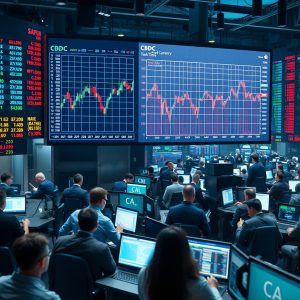
The Quantum Leap: How Blockchain and Algorithmic Trading Are Redefining Equity Market Trends in the Age of Digital Banking

The hum of servers in a dimly lit data center is the new heartbeat of global finance. No longer confined to the bustling floors of stock exchanges or the whispered deals in marble-clad boardrooms, the equity markets have undergone a metamorphosis, driven by the relentless march of technology. At the forefront of this transformation are two powerful forces: blockchain technology and algorithmic trading systems. Together, they are not just reshaping equity market trends but redefining the very fabric of how wealth is created, managed, and secured in the digital age.
The Algorithmic Pulse of Modern Markets
Imagine a world where trades are executed in microseconds, where patterns invisible to the human eye are deciphered in real-time, and where market inefficiencies are exploited before they even materialize. This is the realm of algorithmic trading, a domain where complex mathematical models and high-speed computing converge to dominate the equity markets. These systems, often referred to as “algos,” analyze vast datasets—from historical price movements to real-time news feeds—to make split-second decisions that can mean the difference between profit and loss.
In the past decade, algorithmic trading has grown from a niche strategy employed by hedge funds to a mainstream tool used by institutional and even retail investors. The allure is undeniable: reduced human error, lower transaction costs, and the ability to capitalize on fleeting market opportunities. Yet, this shift has also introduced new complexities. The flash crashes of 2010 and 2015, where markets plummeted and recovered within minutes, served as stark reminders of the power—and peril—of algorithmic trading. These events underscored the need for robust financial risk assessment frameworks to mitigate the systemic risks posed by automated systems.
The Blockchain Backbone
While algorithmic trading has revolutionized the speed and efficiency of equity markets, blockchain technology is redefining their transparency and security. At its core, blockchain is a decentralized ledger that records transactions across a network of computers, ensuring that each entry is immutable and verifiable. This technology, initially synonymous with cryptocurrency trading, has found a natural home in the equity markets, where trust and transparency are paramount.
One of the most compelling applications of blockchain in equity markets is the tokenization of assets. By representing stocks, bonds, or other securities as digital tokens on a blockchain, investors can trade fractional ownership with unprecedented ease. This democratization of access lowers the barriers to entry, allowing a broader range of participants to engage in wealth management. Moreover, blockchain’s inherent transparency reduces the risk of fraud and manipulation, fostering greater confidence in the markets.
Smart contract development further amplifies blockchain’s potential. These self-executing contracts, encoded with predefined rules, automate processes such as dividend payments, corporate actions, and even complex derivatives settlements. By eliminating intermediaries, smart contracts streamline operations, reduce costs, and minimize the risk of human error. In an era where speed and accuracy are critical, their impact on equity market trends cannot be overstated.
The Convergence of Digital Banking and Equity Markets
The rise of digital banking has been a catalyst for the integration of blockchain and algorithmic trading into equity markets. Traditional banking institutions, once the gatekeepers of financial transactions, are now competing with agile fintech startups that leverage cutting-edge technology to offer seamless, user-centric services. Digital banks are not just facilitating transactions; they are becoming hubs for investment portfolio management, providing retail investors with tools once reserved for the elite.
High-yield savings accounts, for instance, are no longer the sole domain of brick-and-mortar banks. Digital platforms now offer competitive interest rates, often powered by algorithmic strategies that optimize returns. Similarly, robo-advisors—automated investment platforms that use algorithms to manage portfolios—are making asset wealth management accessible to the masses. These innovations are blurring the lines between traditional banking and equity market participation, creating a more inclusive financial ecosystem.
The Forex and Crypto Connection
The interplay between equity markets, foreign exchange rates, and cryptocurrency trading is another layer of this evolving landscape. Forex trading strategies, once the preserve of institutional investors, are now being automated through algorithmic systems that capitalize on minute fluctuations in currency pairs. Meanwhile, the volatility of cryptocurrencies has introduced a new asset class that both complements and challenges traditional equity markets.
Central Bank Digital Currencies (CBDCs) are poised to further disrupt this space. As governments explore the potential of digital currencies, the lines between fiat money, cryptocurrencies, and equity markets are becoming increasingly fluid. CBDCs could streamline cross-border transactions, reduce settlement times, and enhance monetary policy effectiveness. For equity markets, this could mean faster, more secure transactions and a more integrated global financial system.
The Future: A Symphony of Technology and Trust
The equity markets of tomorrow will be shaped by the seamless integration of blockchain, algorithmic trading, and digital banking. Yet, this future is not without its challenges. The rapid pace of innovation demands robust regulatory frameworks to ensure market stability and protect investors. Financial risk assessment will need to evolve to address the unique risks posed by decentralized finance (DeFi) and automated trading systems. Crypto wallet security, too, will remain a critical concern as the adoption of digital assets grows.
As these technologies converge, they are not merely tools but the architects of a new financial paradigm. The equity markets are no longer just about buying and selling stocks; they are about harnessing the power of data, automation, and decentralization to create a more efficient, transparent, and inclusive financial ecosystem. The question is no longer whether these changes will occur, but how swiftly and smoothly the global markets can adapt to this brave new world. The hum of those servers grows louder with each passing day, signaling a future where the only constant is change itself.