The Algorithmic Tide: How Smart Contracts and Forex Trading Are Reshaping the Future of Digital Banking

The financial world is no longer a quiet library of ledgers and handshakes; it is a roaring ocean, where currents of data surge and recede with relentless precision. At the heart of this transformation lies the fusion of two powerful forces: the immutable logic of smart contracts and the dynamic pulse of forex trading. Together, they are not just reshaping digital banking—they are redefining what it means to trust, transact, and thrive in an economy that moves at the speed of light.
The Rise of the Code-Backed Promise
Smart contracts are the silent architects of this new era, self-executing agreements written in code that eliminate the need for intermediaries. Imagine a world where loans are disbursed the moment collateral is verified, where cross-border payments settle in minutes rather than days, and where the terms of an investment are enforced not by a banker’s signature, but by an unbreakable chain of cryptographic truth. This is not a distant dream—it is the reality taking shape in decentralized finance (DeFi) platforms, where smart contracts are the backbone of a financial ecosystem that operates 24/7, without borders or bureaucracy.
In digital banking, smart contracts are doing more than automating processes; they are restoring faith in a system that has long been plagued by opacity and inefficiency. By embedding financial agreements into blockchain technology, banks and fintech companies are creating a layer of transparency that was once unimaginable. Every transaction, every interest calculation, every penalty for late payment—all are recorded on an immutable ledger, visible to all parties yet tamper-proof. This is not just innovation; it is a fundamental shift in how trust is established in finance.
The Forex Frontier: Where Algorithms Dance with Volatility
While smart contracts are rewriting the rules of trust, forex trading is undergoing its own revolution, driven by the relentless march of algorithmic systems. The foreign exchange market, the largest and most liquid in the world, has always been a playground for those who could read its rhythms. But today, the most successful players are not the ones with the sharpest instincts—they are the ones with the most sophisticated algorithms.
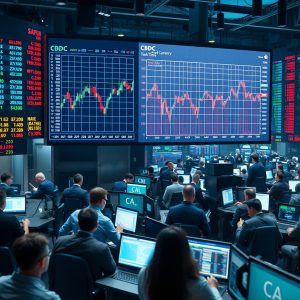
High-frequency trading (HFT) systems, powered by machine learning and real-time data analytics, now execute trades in microseconds, capitalizing on fleeting arbitrage opportunities that human traders could never hope to catch. These algorithms do not sleep; they do not hesitate. They analyze global economic indicators, central bank policies, and geopolitical events, then act with a precision that borders on the prophetic. For digital banks, this means offering clients not just access to forex markets, but a competitive edge—one that turns volatility from a risk into an opportunity.
The Marriage of Smart Contracts and Forex
The true magic happens when these two forces converge. Consider a scenario where a multinational corporation needs to hedge against currency fluctuations. Traditionally, this would involve a labyrinth of contracts, intermediaries, and settlement delays. But with smart contracts integrated into forex trading platforms, the process becomes seamless. A self-executing hedge agreement could automatically trigger a trade the moment a currency pair hits a predetermined threshold, locking in rates without human intervention. The result? Faster execution, lower costs, and a level of risk management that was once the exclusive domain of institutional giants.
This synergy is not just theoretical. Banks and fintech firms are already deploying hybrid systems that combine the security of smart contracts with the agility of algorithmic forex trading. For retail investors, this means access to tools that were once reserved for hedge funds. For businesses, it means the ability to navigate global markets with a confidence that was previously unattainable.
The Human Element in a Digital World
Yet, for all their sophistication, these systems are not without their challenges. Smart contracts, for all their promise, are only as good as the code that powers them. A single vulnerability can lead to catastrophic losses, as seen in high-profile DeFi exploits. Similarly, algorithmic trading systems, while powerful, can amplify market volatility if not properly calibrated. The 2010 Flash Crash, where algorithms triggered a trillion-dollar sell-off in minutes, serves as a stark reminder of the risks inherent in automated finance.
This is where the human element remains irreplaceable. While machines handle the execution, it is the strategists, the auditors, and the risk managers who ensure these systems operate within ethical and stable boundaries. Digital banking is not about replacing human judgment with code—it is about augmenting it, creating a partnership where technology handles the heavy lifting while humans provide the oversight and creativity that no algorithm can replicate.
The Road Ahead: A Financial Ecosystem Reimagined
As smart contracts and forex trading algorithms continue to evolve, they are laying the groundwork for a financial ecosystem that is more inclusive, efficient, and resilient. Central bank digital currencies (CBDCs) are poised to integrate with these systems, offering governments a way to modernize monetary policy while maintaining control over their economies. Meanwhile, decentralized finance is democratizing access to financial services, allowing individuals in underserved regions to participate in global markets with nothing more than a smartphone and an internet connection.
The implications stretch far beyond the balance sheets of banks and corporations. This is about rewriting the rules of economic participation, about giving individuals the tools to secure their financial futures in a world where traditional institutions no longer hold all the answers. The algorithmic tide is rising, and those who learn to navigate its currents will find themselves not just keeping pace with change, but shaping it. The question is no longer whether this transformation will happen—it is how quickly we can adapt to the opportunities it presents, and how wisely we can steer its course.