Tech-Enabled Workforce Training: Bridging the Skills Gap in Smart Factory Integration
The rapid evolution of manufacturing technologies has ushered in an era where smart factories are no longer a futuristic concept but a present-day reality. As industries embrace Smart Factory Integration, the demand for a skilled workforce capable of navigating this complex landscape has surged. However, the pace of technological advancement often outstrips the availability of trained personnel, creating a skills gap that threatens to hinder progress. The solution lies in Tech-Enabled Workforce Training, a dynamic approach that leverages cutting-edge tools to equip employees with the competencies needed to thrive in modern manufacturing environments.
The Imperative of Upskilling in the Digital Age
The transition from traditional manufacturing to smart factories is not merely about adopting new machinery or software; it is a fundamental shift in how production is conceptualized, executed, and optimized. Technologies such as Collaborative Robotics Deployment, Real-Time Process Analytics, and Digital Twin Manufacturing require workers to possess a blend of technical expertise and adaptability. Yet, many manufacturing employees were trained in an era where manual processes dominated, leaving them ill-prepared for the digital demands of today.
This skills gap is not just a challenge for individual workers but a critical bottleneck for industries aiming to achieve Data-Driven Production Efficiency and Lean Operational Excellence. Companies that fail to address this gap risk falling behind in an increasingly competitive global market. The answer is not to replace human workers with automation but to empower them through targeted, technology-driven training programs that foster continuous learning and growth.
Leveraging Technology for Effective Training
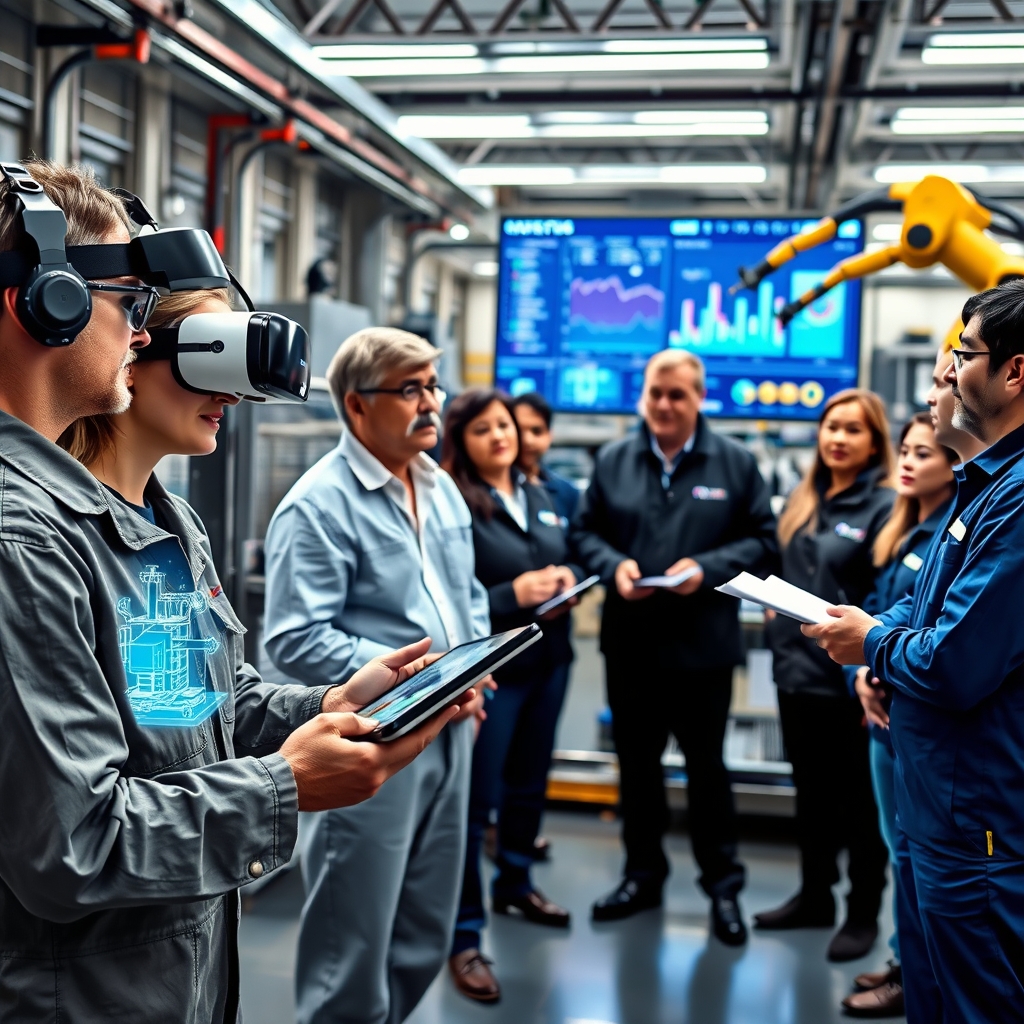
Tech-enabled workforce training is not a one-size-fits-all solution; it is a multifaceted strategy that integrates various digital tools to create immersive, engaging, and effective learning experiences. One of the most promising approaches is the use of Virtual Reality (VR) and Augmented Reality (AR) to simulate real-world manufacturing scenarios. These technologies allow workers to practice operating complex machinery, troubleshooting issues, and collaborating with robotic systems in a risk-free environment. For example, a technician can use VR to familiarize themselves with the intricacies of a Modular Manufacturing System before interacting with the actual equipment, reducing the learning curve and minimizing errors.
Another key component of tech-enabled training is the use of Artificial Intelligence (AI) and Machine Learning (ML) to personalize learning pathways. AI-driven platforms can assess an employee’s current skill level, identify gaps, and recommend tailored training modules to address those deficiencies. This adaptive learning approach ensures that workers receive the specific knowledge they need to excel in their roles, whether it’s mastering Predictive Quality Control techniques or understanding the nuances of Automated Assembly Insights. By leveraging AI, companies can create a more efficient and effective training process that maximizes both time and resources.
The Role of Gamification in Workforce Development
Gamification is another powerful tool in the tech-enabled training arsenal. By incorporating game-like elements such as points, badges, leaderboards, and challenges into training programs, companies can boost engagement and motivation among employees. For instance, a manufacturing plant might implement a gamified training platform where workers earn points for completing modules on Preventive Equipment Maintenance or Ethical Sourcing Transparency. These points could then be redeemed for rewards or recognition, fostering a culture of continuous improvement and friendly competition.
Gamification is particularly effective for younger workers who have grown up in a digital world and are accustomed to interactive, engaging experiences. However, its benefits extend to all age groups, as it transforms what could be a mundane training process into an enjoyable and rewarding journey. When combined with other tech-enabled tools, gamification can significantly enhance knowledge retention and application, ensuring that workers are not just trained but truly prepared to contribute to the success of a smart factory.
Building a Culture of Lifelong Learning
Tech-enabled workforce training is not a one-time initiative but an ongoing commitment to fostering a culture of lifelong learning within an organization. In the fast-paced world of manufacturing, where new technologies and methodologies emerge regularly, the ability to adapt and upskill is paramount. Companies that prioritize continuous learning create an environment where employees feel valued, supported, and empowered to take ownership of their professional development.
One way to cultivate this culture is by integrating training into the daily workflow. For example, a manufacturing plant might use Real-Time Process Analytics to identify areas where workers could benefit from additional training. If the data reveals a recurring issue with a particular machine, the company can provide targeted training to address that specific challenge. This just-in-time approach ensures that training is relevant, timely, and directly applicable to the worker’s role, increasing its effectiveness and impact.
Additionally, companies can leverage Collaborative Learning Platforms to encourage knowledge sharing among employees. These platforms allow workers to connect with peers, mentors, and experts, fostering a sense of community and collaboration. By creating opportunities for employees to learn from one another, companies can tap into the collective expertise of their workforce, driving innovation and problem-solving across the organization.
The Human-Centric Approach to Smart Factory Integration
At the heart of tech-enabled workforce training is a commitment to a Human-Centric Production model. While automation and digital technologies are transforming manufacturing, the human element remains irreplaceable. Workers bring creativity, critical thinking, and problem-solving skills to the table—qualities that machines cannot replicate. By investing in their development, companies not only bridge the skills gap but also create a more resilient, adaptable, and engaged workforce.
Moreover, a human-centric approach to smart factory integration ensures that technology serves as an enabler rather than a replacement. For instance, Collaborative Robotics Deployment is most effective when human workers are trained to work alongside robots, leveraging their unique strengths to achieve optimal results. Similarly, Digital Twin Manufacturing provides valuable insights, but it is the human interpretation and application of those insights that drive meaningful improvements in production efficiency and quality.
The future of manufacturing lies in the seamless integration of technology and human expertise. As industries continue to evolve, the companies that thrive will be those that recognize the value of their workforce and invest in their growth. Tech-enabled workforce training is not just a solution to the skills gap; it is a strategic imperative that positions companies for long-term success in the era of smart factories. By embracing this approach, manufacturers can unlock the full potential of their employees, drive innovation, and create a sustainable competitive advantage in an increasingly digital world. The journey toward a smarter, more efficient, and human-centric manufacturing future begins with the commitment to empower those who make it possible.