The Invisible Architects: How Algorithmic Trading Systems Are Sculpting the Future of Global Markets

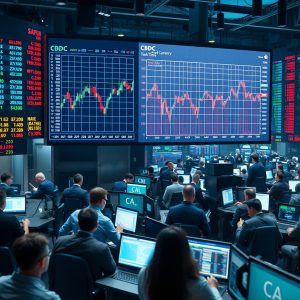
The hum of servers in a dimly lit data center is the modern symphony of global finance. Somewhere between the flickering screens and the relentless flow of data, decisions are being made—not by human hands, but by lines of code, mathematical models, and the cold precision of algorithms. Algorithmic trading systems have quietly become the invisible architects of the financial world, reshaping markets, redefining strategies, and rewriting the rules of engagement for traders, institutions, and even central banks. Their influence is pervasive, yet often unseen, like the currents beneath the ocean’s surface that dictate the direction of every wave.
The Rise of the Machines: A Brief History
The origins of algorithmic trading can be traced back to the 1970s, when the first electronic trading platforms began to emerge. The New York Stock Exchange introduced its Designated Order Turnaround (DOT) system in 1976, allowing brokers to route orders electronically. This was a far cry from the algorithmic systems of today, but it planted the seed for what was to come. By the 1980s and 1990s, advancements in computing power and the proliferation of high-speed internet laid the groundwork for more sophisticated trading strategies. The real turning point, however, came in the early 2000s, when hedge funds and investment banks began deploying algorithms to execute trades at speeds and volumes that were simply impossible for human traders.
Today, algorithmic trading accounts for a staggering portion of global market activity. In the U.S. equity markets, for example, it is estimated that algorithms are responsible for over 60% of all trading volume. In foreign exchange (Forex) markets, that figure climbs even higher, with some estimates suggesting that algorithms drive as much as 80% of trades. The reasons for this dominance are clear: speed, efficiency, and the ability to process vast amounts of data in real-time. Algorithms don’t sleep, they don’t hesitate, and they don’t succumb to the emotional biases that often cloud human judgment.
The Mechanics of the Machine: How Algorithms Work
At its core, algorithmic trading is the use of computer programs to execute trades based on predefined criteria. These criteria can range from simple rules, such as buying a stock when its price crosses a moving average, to complex strategies that involve machine learning, natural language processing, and predictive analytics. The most common types of algorithmic trading strategies include:
Market Making
Market-making algorithms provide liquidity to the markets by continuously buying and selling securities. They profit from the spread—the difference between the bid and ask prices—while helping to ensure that there is always a buyer or seller available for a given asset. High-frequency trading (HFT) firms are the most prominent practitioners of market-making, using ultra-low-latency systems to execute thousands of trades per second.
Arbitrage
Arbitrage algorithms exploit price discrepancies across different markets or assets. For example, if a stock is trading at $100 on one exchange and $101 on another, an arbitrage algorithm will simultaneously buy the stock on the cheaper exchange and sell it on the more expensive one, locking in a risk-free profit. These opportunities are often fleeting, lasting only milliseconds, which is why speed is of the essence in arbitrage trading.
Trend Following
Trend-following algorithms identify and capitalize on market trends, whether they are upward or downward. These systems use technical indicators, such as moving averages, relative strength index (RSI), and Bollinger Bands, to determine the direction of the market and execute trades accordingly. Trend-following strategies are particularly popular in Forex and commodity markets, where trends can persist for extended periods.
Mean Reversion
Mean reversion algorithms operate on the assumption that asset prices will eventually revert to their historical averages. If a stock’s price deviates significantly from its mean, the algorithm will take a position betting on a return to the norm. This strategy is often used in equity markets, where stocks can experience temporary spikes or drops due to news events or market sentiment.
The Double-Edged Sword: Benefits and Risks
The rise of algorithmic trading has brought with it a host of benefits. For one, it has dramatically increased market liquidity, making it easier for investors to buy and sell assets without significantly impacting prices. Algorithms also reduce the cost of trading, as they eliminate the need for human intermediaries and their associated fees. Moreover, they enable traders to backtest strategies using historical data, allowing for more informed decision-making and risk management.
However, the proliferation of algorithmic trading has also introduced new risks and challenges. One of the most significant concerns is the potential for market instability. Algorithms can amplify volatility, as seen in the 2010 Flash Crash, when the Dow Jones Industrial Average plunged nearly 1,000 points in a matter of minutes before rapidly recovering. The cause? A large sell order executed by an algorithm, which triggered a cascade of automated trades that sent the market into a tailspin. Events like these have led to calls for greater regulation and oversight of algorithmic trading systems.
Another risk is the potential for systemic failure. Algorithms are only as good as the data they are fed and the models they are based on. If a model is flawed or the data is corrupted, the results can be catastrophic. The 2020 oil price crash, where West Texas Intermediate (WTI) crude futures briefly turned negative, was partly attributed to algorithmic trading systems that were unable to handle the unprecedented market conditions. Such incidents highlight the need for robust risk management protocols and fail-safes to prevent algorithms from spiraling out of control.
The Human Element: Where Algorithms Fall Short
Despite their sophistication, algorithms are not infallible. They lack the ability to interpret nuanced information, such as geopolitical events, central bank communications, or shifts in market sentiment, in the way that human traders can. For example, during the 2016 Brexit referendum, many algorithmic trading systems were caught off guard by the unexpected outcome, leading to massive losses for some firms. Similarly, during the COVID-19 pandemic, algorithms struggled to adapt to the unprecedented volatility and uncertainty, often exacerbating market swings rather than stabilizing them.
This is where the human element remains indispensable. While algorithms excel at processing data and executing trades at lightning speed, they cannot replace the intuition, creativity, and contextual understanding that human traders bring to the table. The most successful trading strategies often combine the best of both worlds: the speed and efficiency of algorithms with the judgment and adaptability of human oversight. Firms that strike this balance are better positioned to navigate the complexities of modern financial markets.
The Future of Algorithmic Trading: AI and Beyond
The next frontier in algorithmic trading is the integration of artificial intelligence (AI) and machine learning. Unlike traditional algorithms, which rely on predefined rules, AI-driven systems can learn and adapt over time, improving their performance as they process more data. These systems can analyze unstructured data, such as news articles, social media posts, and earnings call transcripts, to identify patterns and make predictions that would be impossible for human traders to discern.
One area where AI is making significant inroads is in predictive analytics. By analyzing vast amounts of historical and real-time data, AI algorithms can forecast market movements with a high degree of accuracy. For example, hedge funds are increasingly using AI to predict the impact of central bank policy decisions on foreign exchange rates or to identify undervalued stocks in equity markets. Similarly, AI is being used to develop more sophisticated risk assessment models, helping traders to better manage their exposure to market fluctuations.
Another exciting development is the rise of decentralized finance (DeFi) and its intersection with algorithmic trading. DeFi platforms, which operate on blockchain technology, are creating new opportunities for algorithmic trading by enabling peer-to-peer transactions without the need for traditional intermediaries. Smart contracts, self-executing agreements written in code, are being used to automate trading strategies, further blurring the line between human and machine decision-making. As DeFi continues to grow, it is likely to become an increasingly important arena for algorithmic trading innovation.
The financial markets of tomorrow will be shaped by the relentless march of technology. Algorithmic trading systems, once the domain of a select few, are now accessible to retail traders and institutions alike, democratizing access to sophisticated trading strategies. Yet, as these systems become more pervasive, the need for transparency, accountability, and ethical considerations grows ever more pressing. The invisible architects of global finance must be guided by principles that ensure fairness, stability, and resilience in the markets they help to create. The future of trading is not just about speed or efficiency—it is about building systems that serve the greater good, even as they push the boundaries of what is possible.