Customer-Integrated Design: The Secret to Value-Added Manufacturing Services in the Digital Age
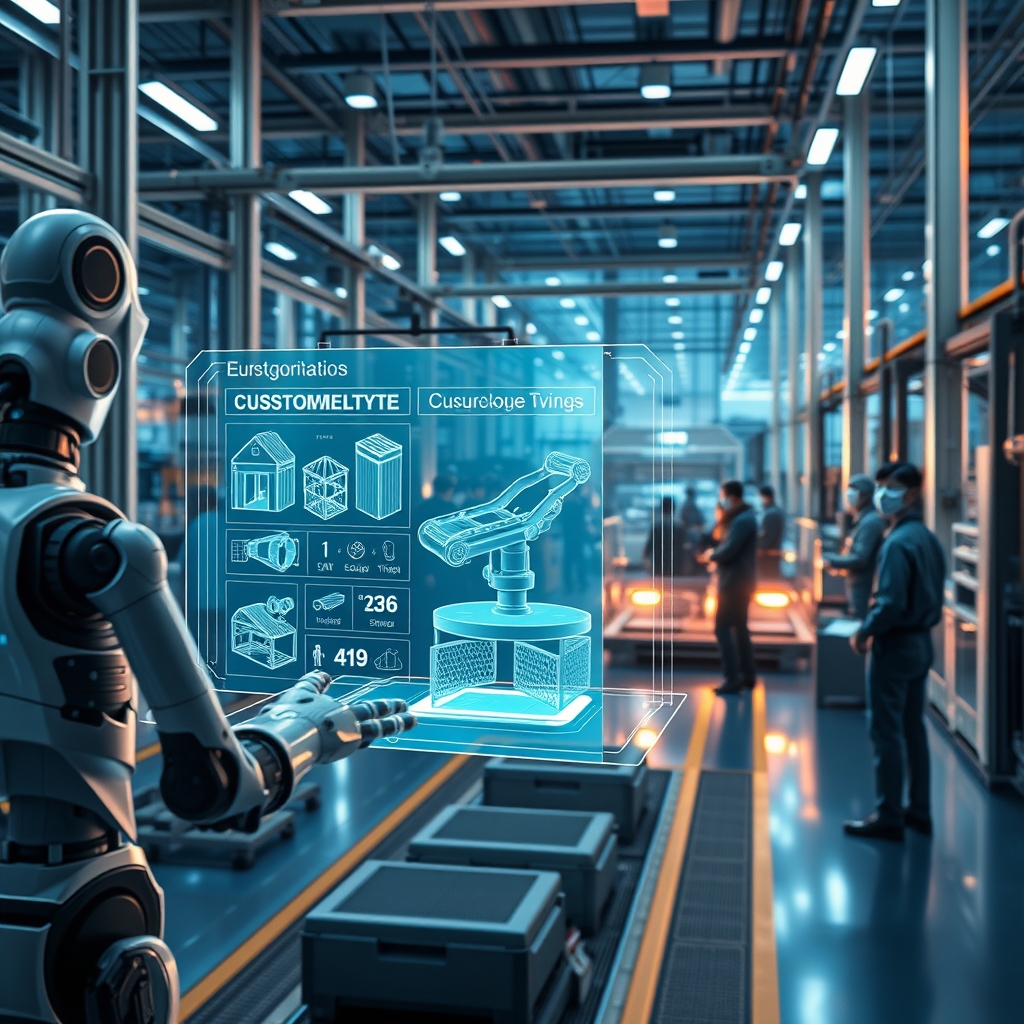
The manufacturing landscape is undergoing a seismic shift, moving away from isolated production lines toward a more interconnected, responsive, and customer-centric model. At the heart of this transformation lies Customer-Integrated Design (CID), a philosophy that blurs the lines between manufacturer and consumer, turning end-users into active participants in the product development lifecycle. This approach isn’t just about gathering feedback post-production; it’s about embedding customer insights into every stage—from ideation to delivery—creating products that don’t just meet expectations but anticipate them.
The Evolution of Customer-Centric Manufacturing
Traditionally, manufacturing operated on a linear model: design, produce, sell. Customer input, if considered at all, was often an afterthought, gathered through surveys or warranty claims long after the product hit the market. However, the rise of Digital Twin Manufacturing and Real-Time Process Analytics has dismantled this outdated framework. Today, manufacturers can simulate entire production cycles, test designs virtually, and iterate based on real-world performance data—all while keeping the customer in the loop.
This shift is driven by two key factors: the democratization of data and the demand for personalization. Consumers no longer want one-size-fits-all solutions; they expect products tailored to their unique needs, whether it’s a smartphone with customizable hardware or a car with modular features. Modular Manufacturing Systems and Additive Manufacturing Workflows have made this level of customization not just possible but economically viable. By integrating customer preferences directly into the design phase, manufacturers can reduce waste, shorten lead times, and deliver products that resonate on a deeper level.
How Technology Enables Seamless Integration
The backbone of Customer-Integrated Design is technology. Collaborative Robotics Deployment and Automated Assembly Insights allow manufacturers to adapt production lines in real time based on customer input. For example, a furniture manufacturer using Experiential Product Prototyping can let customers visualize and tweak designs in a virtual showroom before a single piece is built. This not only enhances satisfaction but also reduces the risk of costly redesigns later in the process.
Moreover, Data-Driven Production Efficiency tools like AI-powered analytics can predict trends and preferences before they become mainstream. By analyzing social media, purchase history, and even IoT-generated usage data, manufacturers can identify emerging demands and adjust their offerings accordingly. This proactive approach turns customers from passive buyers into co-creators, fostering loyalty and driving innovation.
The Role of Digital Twins in Co-Creation
One of the most powerful enablers of CID is Digital Twin Manufacturing. A digital twin is a virtual replica of a physical product or process, updated in real time with data from sensors, customer interactions, and market trends. For instance, an automotive company can use a digital twin to simulate how a customer’s customizations—such as seat materials or infotainment systems—affect performance, safety, and cost. Customers can then tweak their designs in a risk-free environment, seeing the impact of their choices instantly.
This level of transparency builds trust and reduces the friction traditionally associated with customization. It also allows manufacturers to test thousands of variations without physical prototypes, slashing development costs and time-to-market. The result? Products that are not only personalized but also optimized for performance, sustainability, and manufacturability.
Overcoming the Challenges of Customer Integration
While the benefits of CID are clear, implementation isn’t without hurdles. One of the biggest challenges is managing the sheer volume of customer data. Without robust Predictive Quality Control and Real-Time Process Analytics, manufacturers risk being overwhelmed by feedback, leading to analysis paralysis. The key is to leverage AI and machine learning to distill insights from noise, identifying patterns that drive meaningful improvements.
Another challenge is balancing customization with scalability. Modular Manufacturing Systems offer a solution by breaking down products into interchangeable components that can be mixed and matched based on customer preferences. This approach allows manufacturers to offer variety without sacrificing efficiency. For example, a consumer electronics company might use modular designs to let customers choose between different camera modules, battery sizes, or storage options—all while maintaining a streamlined production process.
Ethical Considerations and Transparency
As manufacturers collect more customer data, ethical considerations come to the forefront. Ethical Sourcing Transparency isn’t just about where materials come from; it’s also about how customer data is used. Companies must be transparent about what data they collect, how it’s stored, and how it influences design decisions. This transparency isn’t just a legal requirement—it’s a competitive advantage. Customers are more likely to engage with brands that respect their privacy and use their data responsibly.
Additionally, manufacturers must ensure that customization doesn’t come at the expense of sustainability. Sustainable Supply Chains and Lean Operational Excellence principles should guide CID initiatives, ensuring that personalized products are also environmentally responsible. For instance, using Additive Manufacturing Workflows to produce only what’s needed, when it’s needed, can minimize waste while still delivering bespoke solutions.
The Future of Manufacturing: A Two-Way Street
Customer-Integrated Design represents a fundamental shift in how products are conceived, developed, and delivered. It’s no longer enough for manufacturers to produce goods in isolation; success now depends on their ability to listen, adapt, and co-create with their customers. This shift isn’t just about technology—it’s about culture. Companies that embrace Human-Centric Production and Tech-Enabled Workforce Training will be best positioned to thrive in this new era, where the line between producer and consumer is increasingly blurred.
As tools like digital twins, AI, and collaborative robotics become more sophisticated, the possibilities for CID will expand. Imagine a world where customers can design their own products in real time, with manufacturers instantly validating feasibility, cost, and sustainability. This isn’t a distant dream—it’s the next logical step in the evolution of manufacturing. The factories of the future won’t just produce goods; they’ll cultivate relationships, turning every customer into a partner in innovation. The question isn’t whether manufacturers will adopt CID, but how quickly they can adapt to stay ahead of the curve.