The Digital Pulse: How Algorithmic Trading and Financial Risk Assessment Are Redefining Global Market Stability
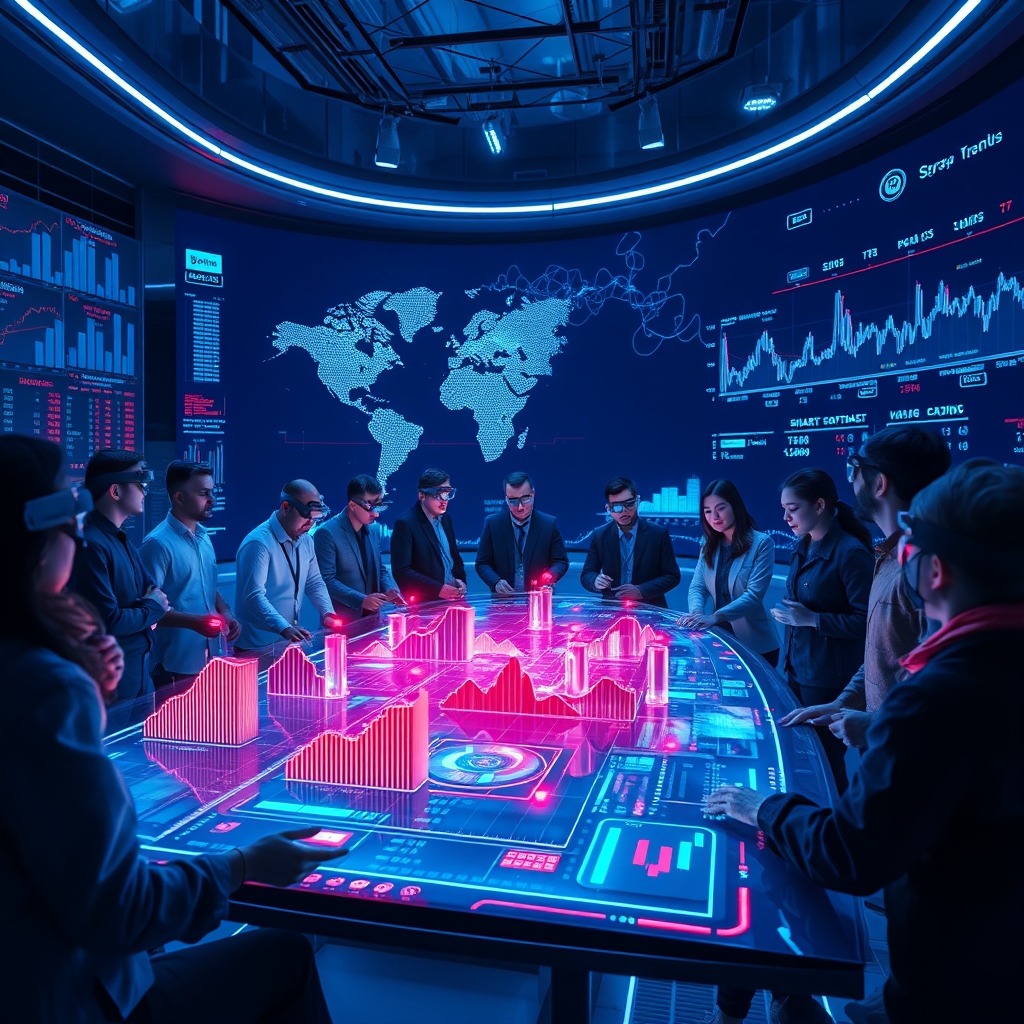
The financial world is no longer a quiet hum of ticker tapes and ringing phones. It is a living, breathing organism, pulsing with the relentless rhythm of algorithms and the silent whispers of blockchain networks. At the heart of this transformation lies the marriage of algorithmic trading systems and financial risk assessment—a union that is quietly rewriting the rules of global market stability. No longer are traders bound by the limitations of human intuition or the sluggish pace of manual analysis. Instead, they wield the precision of machine learning, the speed of high-frequency computations, and the foresight of predictive models to navigate the turbulent waters of modern finance.
The Algorithmic Revolution: Speed Meets Strategy
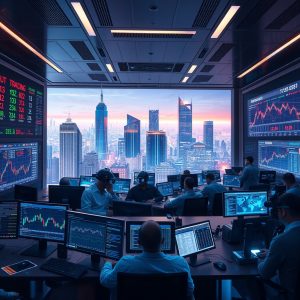
Algorithmic trading has evolved from a niche tool for hedge funds into the backbone of global markets. These systems, powered by complex mathematical models, execute trades at speeds incomprehensible to the human mind—often in microseconds. But speed alone is not the game-changer. The true power lies in their ability to dissect vast oceans of data, identifying patterns invisible to even the most seasoned traders. From equity market trends to forex trading strategies, algorithms are now the unseen architects of market movements, shaping everything from liquidity to volatility.
Yet, with great power comes great responsibility. The flash crashes of the past decade serve as stark reminders of what happens when algorithms run amok. The 2010 Flash Crash, where the Dow Jones plummeted nearly 1,000 points in minutes, was a wake-up call. It exposed the fragility of a system where human oversight had been sidelined in favor of raw computational power. Since then, financial institutions have doubled down on risk assessment frameworks, embedding safeguards into their algorithmic trading systems to prevent cascading failures. The question is no longer whether algorithms can trade faster, but whether they can trade smarter.
The Art of Financial Risk Assessment in a Digital Age
Financial risk assessment has always been the compass guiding investors through the stormy seas of uncertainty. But in an era where markets are increasingly driven by code rather than conviction, traditional risk models are being pushed to their limits. The rise of decentralized finance (DeFi) and cryptocurrency trading has introduced new layers of complexity, where volatility is not just a variable but a constant. Smart contracts, while revolutionary, are not immune to exploits—just ask the victims of the $600 million Poly Network hack or the countless DeFi protocols that have fallen prey to vulnerabilities in their code.
To counter these risks, financial institutions are turning to advanced analytics, real-time monitoring, and stress-testing simulations. Machine learning models now predict market shocks before they happen, while blockchain technology provides an immutable ledger to track transactions with unprecedented transparency. Yet, the challenge remains: how do you quantify risk in a system where the rules are still being written? The answer lies in adaptability. The most resilient firms are those that treat risk assessment not as a static process but as a dynamic, evolving discipline—one that evolves alongside the markets it seeks to tame.
The Symbiosis of Algorithms and Human Judgment
Despite the dominance of algorithmic trading, the human element remains irreplaceable. The most successful trading desks are those that strike a delicate balance between machine efficiency and human intuition. Algorithms may excel at processing data, but they lack the nuanced understanding of geopolitical shifts, central bank policies, or the psychological undercurrents that drive market sentiment. A seasoned trader can sense when a market is overbought or oversold in ways that no algorithm can replicate—at least, not yet.
This symbiosis is particularly evident in high-stakes environments like foreign exchange (forex) trading, where macroeconomic factors and fiscal policy impacts play a pivotal role. While algorithms can execute trades based on predefined parameters, human traders provide the contextual intelligence needed to interpret central bank announcements, trade wars, or unexpected geopolitical events. The result is a hybrid model where technology amplifies human decision-making rather than replacing it.
The Future: A Market Shaped by Code and Caution
As we look to the future, the interplay between algorithmic trading and financial risk assessment will only grow more intricate. Central bank digital currencies (CBDCs) are poised to enter the fray, introducing a new layer of digital liquidity that could reshape forex markets and investment portfolio management. Meanwhile, the rise of quantum computing threatens to render today’s encryption methods obsolete, forcing a reckoning in crypto wallet security and smart contract development.
Yet, amid this whirlwind of innovation, one truth remains constant: markets thrive on stability, and stability is born from vigilance. The firms that will lead the next era of finance are not those that chase the latest technological fads but those that master the art of risk-aware innovation. They will be the ones who recognize that algorithms, no matter how advanced, are only as good as the humans who design them—and the systems that keep them in check. The digital pulse of modern finance beats faster than ever before, but its rhythm is only as steady as the hands that guide it.