The Digital Oracle: How Algorithmic Trading Systems and Cryptocurrency Are Redefining Market Prophecy
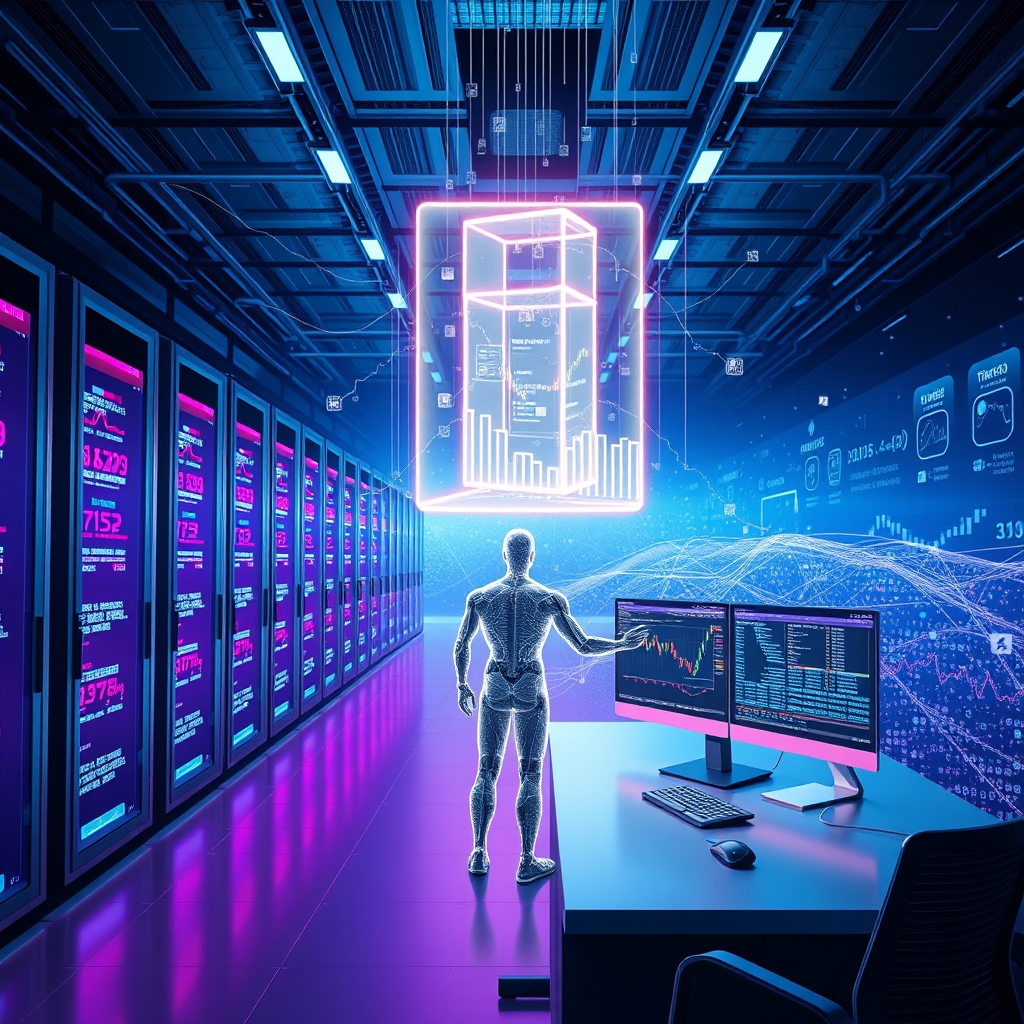
The hum of servers in a dimly lit data center is the modern equivalent of the ancient oracle’s whisper. No longer do traders rely on gut instinct or the rustle of paper stock tickers; today, the future of markets is written in lines of code, executed in milliseconds, and interpreted through the lens of cryptographic ledgers. The fusion of algorithmic trading systems and cryptocurrency has birthed a new era of financial divination—one where data is the seer, and the blockchain is the unalterable scroll upon which prophecies are etched.
The Algorithmic Seer: Decoding Market Patterns
Algorithmic trading systems have evolved from simple automated scripts to sophisticated neural networks capable of parsing terabytes of data in real time. These digital oracles ingest everything from equity market trends to foreign exchange rates, dissecting patterns with a precision no human could match. High-frequency trading (HFT) firms, for instance, leverage these systems to execute thousands of trades per second, capitalizing on micro-fluctuations in asset prices. The algorithms don’t just react; they anticipate, using historical data and predictive models to forecast movements before they occur.
Yet, the true power of these systems lies not in their speed, but in their adaptability. Machine learning models refine their strategies with each trade, learning from successes and failures alike. A poorly performing algorithm isn’t discarded—it’s dissected, its flaws analyzed, and its logic recalibrated. This iterative process mirrors the scientific method, transforming trading from an art into a discipline governed by empirical evidence. The result? Markets that are more efficient, liquid, and, paradoxically, more unpredictable, as algorithms engage in a silent, high-stakes game of cat and mouse.
The Cryptographic Ledger: The Immutable Truth
While algorithmic trading systems excel at prediction, cryptocurrency introduces a layer of transparency and security that traditional markets have long struggled to achieve. Blockchain technology, the backbone of digital currencies like Bitcoin and Ethereum, acts as an immutable ledger—a decentralized record of every transaction, visible to all yet controlled by none. This transparency is revolutionary, particularly in an era where trust in financial institutions has been eroded by opacity and scandal.
For traders, the blockchain is more than a ledger; it’s a tool for financial risk assessment. Smart contracts, self-executing agreements coded directly into the blockchain, eliminate the need for intermediaries, reducing counterparty risk and ensuring that terms are enforced without bias. In decentralized finance (DeFi), these contracts underpin everything from lending platforms to synthetic assets, enabling users to engage in complex financial transactions without ever setting foot in a bank. The security of these systems is bolstered by cryptographic principles, where private keys and multi-signature wallets act as the digital equivalent of a vault’s combination, safeguarding assets from both external threats and human error.
The Convergence: Where Algorithms Meet the Blockchain
The intersection of algorithmic trading and cryptocurrency is where the future of finance is being forged. Consider the rise of decentralized exchanges (DEXs), where trading bots execute orders directly on the blockchain, bypassing traditional intermediaries. These bots operate 24/7, exploiting arbitrage opportunities across global markets with a relentless efficiency. Unlike their centralized counterparts, DEXs are resistant to censorship and manipulation, their liquidity pools governed by smart contracts rather than human administrators.
This convergence also extends to asset wealth management. Robo-advisors, powered by algorithmic trading systems, now offer personalized investment strategies that incorporate cryptocurrency alongside traditional assets. These platforms assess an investor’s risk tolerance, financial goals, and market conditions to construct diversified portfolios that include everything from blue-chip stocks to high-yield savings accounts and crypto assets. The result is a democratization of wealth management, where sophisticated strategies once reserved for institutional investors are now accessible to retail traders.
The Risks: Navigating the Shadows of the Digital Oracle
For all their promise, algorithmic trading systems and cryptocurrency are not without their pitfalls. The flash crash of 2010, where the Dow Jones Industrial Average plummeted nearly 1,000 points in minutes, was a stark reminder of the dangers of unchecked automation. Algorithms, when fed flawed data or programmed with faulty logic, can spiral into self-reinforcing loops, amplifying market volatility rather than mitigating it. Similarly, the cryptocurrency space is rife with scams, hacks, and regulatory uncertainty, where a single exploit can wipe out millions in seconds.
Financial risk assessment in this landscape requires a new playbook. Traders must account for the systemic risks posed by interconnected algorithms, where a failure in one system can cascade across markets. Crypto wallet security, too, demands vigilance, as the irreversible nature of blockchain transactions means that a lost private key or a phishing attack can result in permanent loss. Even decentralized finance, with its promise of transparency, is not immune to exploits, as evidenced by the numerous smart contract hacks that have drained DeFi protocols of funds.
The Human Element: The Oracle’s Keeper
Despite the rise of automation, the human element remains indispensable. Algorithms may predict market movements, but they lack the intuition to navigate black swan events—unpredictable, high-impact occurrences that defy historical data. Similarly, while blockchain technology ensures transparency, it cannot replace the nuanced judgment required to interpret regulatory shifts or geopolitical tensions. The most successful traders in this new era are those who blend the precision of algorithms with the wisdom of experience, acting as the keepers of the digital oracle rather than its blind adherents.
This balance is perhaps most evident in the realm of venture capital funding, where algorithmic insights are used to identify high-potential startups, but human investors ultimately make the final call. The same holds true for equity market trends, where quantitative models provide a foundation, but qualitative factors—such as leadership changes or industry disruptions—often dictate the final outcome. Even in decentralized finance, where code is law, human governance remains a critical component, as communities vote on protocol upgrades and risk parameters.
The financial landscape of the 21st century is a tapestry woven from threads of code, cryptography, and human ingenuity. Algorithmic trading systems and cryptocurrency are not merely tools; they are the architects of a new financial paradigm, one where markets are faster, more transparent, and more accessible than ever before. Yet, for all their sophistication, they are still bound by the same fundamental truth that has governed markets since their inception: the future is not written in stone, but in the delicate interplay between data and human judgment. The digital oracle may whisper its prophecies, but it is up to us to decide whether to listen—and how to act.