The Future of Manufacturing: How Smart Factories Are Redefining Industry Standards
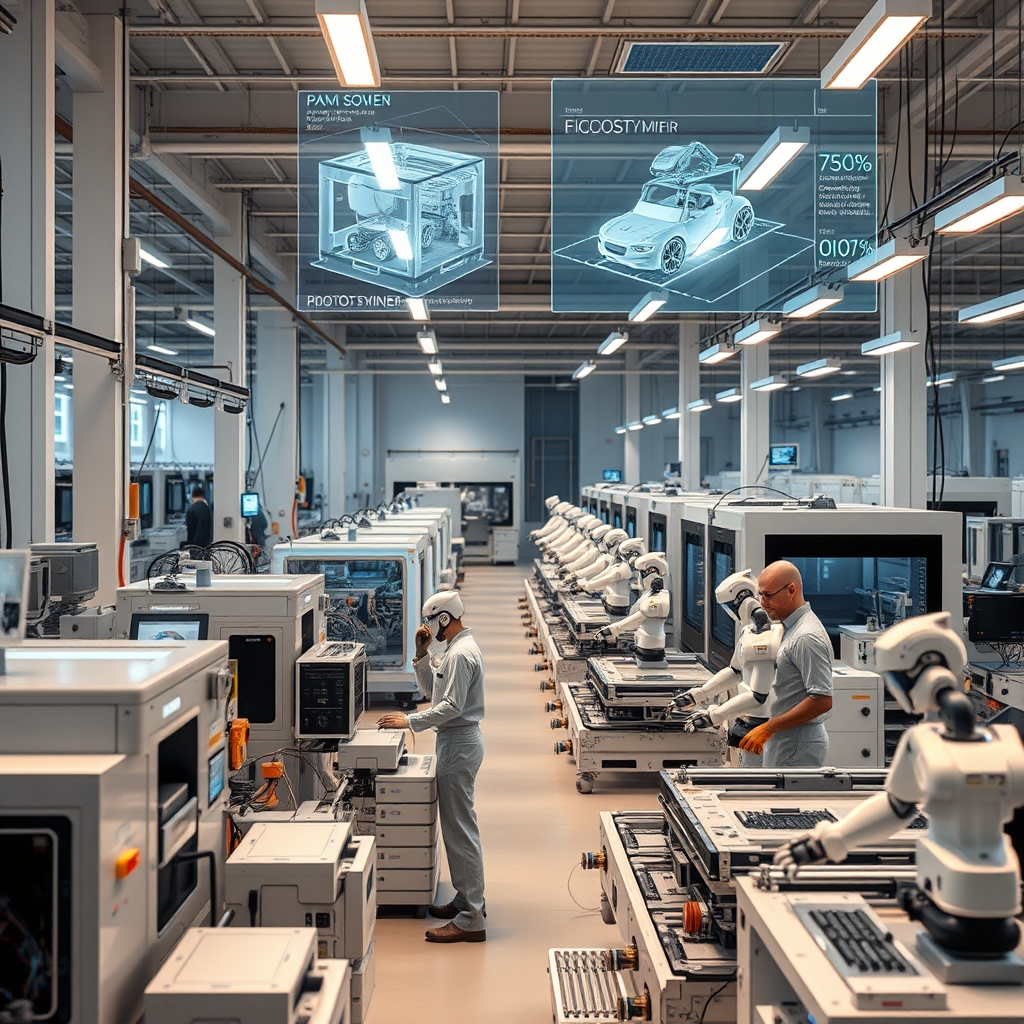
The manufacturing landscape is undergoing a seismic shift, driven by technological advancements that promise to redefine efficiency, sustainability, and innovation. At the heart of this transformation lies the concept of the Smart Factory, a fully integrated, collaborative ecosystem that leverages cutting-edge technologies to optimize every facet of production. From predictive quality control to collaborative robotics deployment, these innovations are not just enhancing operational excellence but are also paving the way for a more agile, human-centric, and sustainable future.
The Rise of Smart Factory Integration
Smart Factory Integration represents the convergence of digital and physical systems, creating a seamless flow of data and automation across the manufacturing floor. By harnessing the power of the Industrial Internet of Things (IIoT), artificial intelligence (AI), and cloud computing, factories are evolving into self-optimizing entities. Machines communicate with each other in real time, adjusting parameters dynamically to minimize downtime and maximize output. This level of integration ensures that production lines are not only faster but also more adaptable to changing demands, reducing waste and improving overall efficiency.
One of the most compelling examples of this integration is the use of Digital Twin Manufacturing. A digital twin is a virtual replica of a physical system, process, or product that allows manufacturers to simulate, analyze, and optimize operations before implementing changes in the real world. By creating a digital twin of a production line, engineers can test different scenarios, identify potential bottlenecks, and refine processes without disrupting actual operations. This not only accelerates innovation but also significantly reduces the risk of costly errors.
Predictive Quality Control and Real-Time Analytics
Quality control has long been a cornerstone of manufacturing, but traditional methods often rely on reactive measures—identifying defects after they occur. Predictive Quality Control, powered by AI and machine learning, flips this paradigm by anticipating issues before they arise. By analyzing historical and real-time data, these systems can detect patterns that indicate potential defects, allowing manufacturers to intervene proactively. This shift from reactive to predictive quality control not only improves product consistency but also reduces scrap and rework, leading to substantial cost savings.
Complementing predictive quality control is Real-Time Process Analytics, which provides manufacturers with instant insights into their operations. Sensors embedded throughout the production line collect data on everything from temperature and pressure to vibration and energy consumption. This data is then processed and visualized, giving operators a comprehensive view of their processes. With real-time analytics, manufacturers can make data-driven decisions on the fly, optimizing performance and ensuring that every aspect of production is running at peak efficiency.
Human-Centric Production: Balancing Automation and Workforce Empowerment
While automation and robotics are often seen as threats to the human workforce, the reality is far more nuanced. Human-Centric Production emphasizes the collaboration between humans and machines, leveraging the strengths of both to create a more productive and fulfilling work environment. Collaborative robots, or cobots, are designed to work alongside human operators, taking on repetitive or physically demanding tasks while allowing workers to focus on higher-value activities. This not only improves efficiency but also enhances job satisfaction and safety.
Moreover, the integration of Tech-Enabled Workforce Training ensures that employees are equipped with the skills needed to thrive in a smart factory environment. Virtual reality (VR) and augmented reality (AR) are increasingly being used to provide immersive training experiences, allowing workers to practice complex tasks in a risk-free virtual environment. This not only accelerates the learning curve but also prepares the workforce for the evolving demands of modern manufacturing.
Sustainability and Ethical Sourcing in the Supply Chain
As global awareness of environmental and social issues grows, manufacturers are under increasing pressure to adopt Sustainable Supply Chain practices. Smart factories are leading the charge by integrating sustainability into every stage of the production process. From energy-efficient machinery to waste reduction initiatives, these factories are minimizing their environmental footprint while maximizing resource efficiency. Additionally, Ethical Sourcing Transparency is becoming a key differentiator, with consumers and regulators alike demanding greater visibility into the origins of raw materials and the conditions under which they are sourced.
One of the most promising developments in sustainable manufacturing is the adoption of Additive Manufacturing Workflows, commonly known as 3D printing. Unlike traditional subtractive manufacturing, which often results in significant material waste, additive manufacturing builds products layer by layer, using only the material necessary to create the final product. This not only reduces waste but also enables the production of complex geometries that would be impossible with conventional methods. Furthermore, additive manufacturing allows for localized production, reducing the need for long-distance shipping and lowering carbon emissions.
Agile Manufacturing and Customer-Integrated Design
The ability to respond quickly to changing market demands is a critical competitive advantage in today’s fast-paced business environment. Agile Manufacturing Processes enable manufacturers to pivot rapidly, adjusting production lines to accommodate new products or design changes with minimal disruption. This agility is further enhanced by Modular Manufacturing Systems, which allow for the reconfiguration of production lines to suit different products or processes. By adopting modular systems, manufacturers can achieve greater flexibility and scalability, ensuring that they can meet the evolving needs of their customers.
Another key trend is Customer-Integrated Design, which involves customers directly in the product development process. Through digital platforms and Experiential Product Prototyping, manufacturers can gather real-time feedback from end-users, allowing them to refine designs and features before mass production begins. This not only reduces the risk of product failures but also ensures that the final product aligns closely with customer expectations. By fostering a closer connection between manufacturers and consumers, customer-integrated design is driving innovation and enhancing customer satisfaction.
The journey toward smart manufacturing is not without its challenges, but the potential rewards are immense. As factories become more connected, intelligent, and sustainable, they are not only transforming the way products are made but also redefining the role of manufacturing in society. The integration of advanced technologies is creating a future where efficiency, quality, and sustainability are not mutually exclusive but are instead intertwined in a seamless, data-driven ecosystem. The factories of tomorrow are being built today, and those who embrace this evolution will be the ones who lead the industry into a new era of innovation and growth.