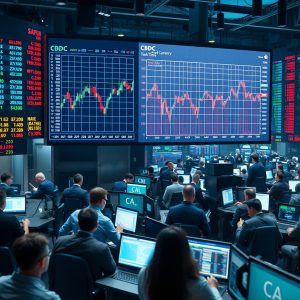
The Unseen Symphony: How Forex Trading Strategies and Blockchain Technology Are Composing the Future of Global Markets

The world of finance has always been a complex orchestra, where each instrument plays a distinct role in creating the harmonious—or sometimes dissonant—melodies of global markets. Yet, in recent years, two forces have emerged as the conductors of this symphony: the precision of forex trading strategies and the revolutionary potential of blockchain technology. Together, they are not just reshaping the financial landscape but composing an entirely new score for how money moves, grows, and evolves in the digital age.
The Rhythm of Forex: Strategies That Dance with Volatility
Foreign exchange markets, with their $7.5 trillion daily turnover, are the lifeblood of global trade, a ceaseless tide of currencies ebbing and flowing in response to economic signals, geopolitical shifts, and market sentiment. For traders, navigating this vast ocean requires more than intuition—it demands strategy, discipline, and an almost artistic ability to read the unseen currents beneath the surface.
One of the most compelling approaches in modern forex trading is the fusion of technical analysis with algorithmic precision. Traders no longer rely solely on candlestick patterns or moving averages; they now harness the power of machine learning to detect subtle correlations in price movements, news sentiment, and even social media chatter. These algorithmic systems, often running on high-frequency trading platforms, execute trades in milliseconds, capitalizing on fleeting opportunities that human traders might miss. Yet, for all their sophistication, these strategies are not infallible. The forex market remains a beast of volatility, where a single tweet from a central banker or an unexpected election result can send currencies spiraling in directions no model predicted.
This unpredictability has given rise to adaptive strategies, where traders blend quantitative models with qualitative insights. For instance, carry trades—borrowing in low-interest-rate currencies to invest in higher-yielding ones—have long been a staple of forex portfolios. However, the rise of central bank digital currencies (CBDCs) and shifting monetary policies has added new layers of complexity. Traders must now account for the potential impact of digital yuan or digital euro on traditional currency pairs, as well as the ripple effects of fiscal policies designed to combat inflation or stimulate growth.
The Blockchain Backbone: A New Architecture for Trust
If forex trading strategies are the rhythm of the financial symphony, then blockchain technology is the underlying structure that ensures every note is played with integrity. At its core, blockchain is a decentralized ledger, a digital record of transactions that is immutable, transparent, and resistant to tampering. This technology, first popularized by cryptocurrencies like Bitcoin, has since evolved into a foundational pillar for a wide range of financial innovations.
One of the most transformative applications of blockchain in global markets is the rise of decentralized finance (DeFi). Unlike traditional banking systems, where intermediaries like banks or brokers facilitate transactions, DeFi platforms operate on smart contracts—self-executing agreements coded directly into the blockchain. These contracts enable peer-to-peer lending, automated trading, and even the creation of synthetic assets that mimic the behavior of stocks, commodities, or forex pairs. For traders, this means lower fees, faster settlements, and access to financial instruments that were once the exclusive domain of institutional players.
Yet, blockchain’s influence extends beyond DeFi. In the realm of forex trading, blockchain is beginning to address long-standing challenges such as settlement times and counterparty risk. Traditional forex transactions can take days to settle, especially for cross-border trades, due to the involvement of multiple intermediaries. Blockchain-based platforms, however, can settle trades in near real-time, reducing the risk of default and freeing up capital that would otherwise be tied up in the settlement process. Moreover, the transparency of blockchain ledgers allows traders to verify transactions independently, fostering a new level of trust in a market where opacity has often been a source of frustration.
The Intersection of Forex and Blockchain: A New Frontier
The convergence of forex trading and blockchain technology is giving rise to entirely new financial ecosystems. One of the most exciting developments is the emergence of blockchain-based forex platforms that combine the liquidity of traditional markets with the efficiency of decentralized systems. These platforms allow traders to access forex markets directly, without the need for brokers or banks, while also enabling the creation of tokenized currencies that can be traded 24/7.
For example, stablecoins—cryptocurrencies pegged to the value of fiat currencies like the US dollar or the euro—are becoming increasingly popular in forex trading. These digital assets offer the stability of traditional currencies with the speed and flexibility of blockchain transactions. Traders can use stablecoins to hedge against volatility in forex markets, execute cross-border payments, or even participate in yield-generating strategies within DeFi platforms. The result is a more fluid, interconnected financial system where the boundaries between forex, crypto, and traditional banking begin to blur.
Another area where forex and blockchain intersect is in the realm of financial risk assessment. Traditional risk management models rely on historical data and probabilistic forecasts, but these methods often struggle to account for the rapid pace of change in digital markets. Blockchain, with its real-time data capabilities, offers a solution. By integrating blockchain-based analytics into risk assessment tools, traders can gain a more dynamic understanding of market conditions, enabling them to adjust their strategies on the fly. This is particularly valuable in forex trading, where geopolitical events or sudden shifts in monetary policy can upend even the most carefully constructed models.
The Challenges Ahead: Navigating the Unknown
Despite the promise of this new financial frontier, challenges remain. Regulatory uncertainty is one of the most significant hurdles. Governments and central banks are still grappling with how to oversee blockchain-based financial systems, particularly when it comes to issues like anti-money laundering (AML) compliance, tax reporting, and consumer protection. The lack of standardized regulations across jurisdictions creates a patchwork of rules that can be difficult for traders and platforms to navigate.
Security is another critical concern. While blockchain itself is highly secure, the platforms and wallets that interact with it are not immune to hacking or fraud. High-profile breaches, such as the $600 million Poly Network hack in 2021, serve as stark reminders of the risks inherent in decentralized systems. For forex traders, this means that while blockchain can enhance transparency and efficiency, it also introduces new vulnerabilities that must be managed with robust security protocols, such as multi-signature wallets and hardware-based authentication.
Moreover, the integration of blockchain into forex markets is not without its skeptics. Critics argue that the hype surrounding decentralized finance and blockchain technology often outpaces the reality of its adoption. While the potential is undeniable, the path to widespread implementation is fraught with technical, regulatory, and cultural barriers. Traditional financial institutions, for instance, may be slow to adopt blockchain due to legacy systems, resistance to change, or concerns about losing control over their proprietary data.
The Human Element: Why Strategy Still Matters
Amid the rise of algorithmic trading and blockchain-based platforms, it’s easy to overlook the human element in finance. Yet, the most successful traders are those who recognize that technology is a tool, not a replacement for judgment, creativity, and adaptability. Forex markets, in particular, are deeply influenced by human psychology—fear, greed, and herd mentality can drive prices just as powerfully as economic indicators or algorithmic signals. Blockchain may provide the infrastructure for a more transparent and efficient financial system, but it is the traders, analysts, and strategists who will ultimately determine how that system evolves.
In this rapidly changing landscape, the traders who thrive will be those who can blend the precision of algorithmic strategies with the nuance of human insight. They will need to stay ahead of regulatory developments, adapt to new technologies, and remain vigilant against the ever-present risks of fraud and volatility. The symphony of global markets is being rewritten, and those who can read the score—while also improvising when necessary—will be the ones who shape its future. The fusion of forex trading strategies and blockchain technology is not just a trend; it is the next movement in the ongoing evolution of finance, a movement that promises to redefine how we think about money, trust, and the very nature of economic exchange.