The Resilient Circuit: Fortifying the Modern Electronics Supply Chain
In the fast-paced world of wholesale consumer electronics, the difference between market leadership and obsolescence can be a single disruption. Recent years have pulled back the curtain on the fragility of global supply chains, revealing how geopolitical shifts, natural disasters, and pandemics can bring the flow of goods to a grinding halt. The old model, focused solely on lean efficiency and Just-In-Time delivery, has proven brittle. Today, the defining characteristic of a successful electronics distributor is not just speed, but resilience—the ability to anticipate, adapt, and thrive amidst uncertainty. Building this resilience requires a strategic overhaul, weaving together technology, partnerships, and a forward-thinking approach to logistics and sustainability.
Rethinking the Warehouse: From Lean to Intelligent Inventory
For decades, Just-In-Time (JIT) delivery was the gold standard, minimizing warehousing costs by keeping inventory levels razor-thin. While efficient in a stable world, this model offers no buffer against shocks. The new paradigm shifts focus towards intelligent inventory management. This isn’t about reverting to bloated, costly stockpiles; it’s about leveraging data for strategic positioning. Modern Inventory Management Systems, powered by AI and predictive analytics, provide unprecedented visibility. Through robust Digital Inventory Tracking, distributors can monitor stock levels in real-time across jejich entire network, from central warehouses to regional hubs. This clarity allows for smarter Bulk Order Fulfillment and ensures that high-demand products are available where they’re needed most, creating a flexible buffer that can absorb supply shocks without crippling operations.
Forging Stronger Links: Sourcing and Distribution Networks
A chain is only as strong as its weakest link, and for electronics, those links are the sourcing and distribution partners. Over-reliance on a single supplier or region is a critical vulnerability. A resilient strategy is built on a foundation of Strategic Sourcing, which involves diversifying the supplier base across different geographical locations to mitigate risk. This is where modern B2B Procurement Platforms become invaluable, enabling businesses to discover, vet, and manage relationships with a wider pool of global partners. Equally important is the cultivation of a robust Authorized Dealer Network. These partners are more than just customers; they are an extension of the brand, ensuring products are sold, serviced, and supported to the highest standard, which in turn protects brand integrity and provides reliable channels to market, even when primary channels face disruption.
The Global Flow: Automation and Multi-Channel Strategy
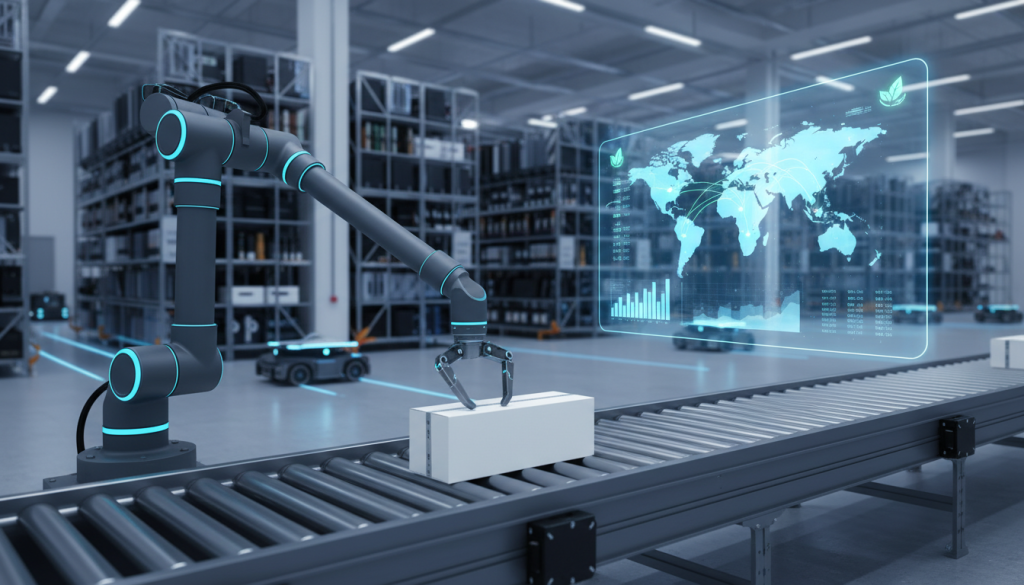
Moving components and finished goods across the globe is an intricate dance. A modern Global Logistics Strategy must be both robust and agile. This is where technology, particularly Warehouse Automation, plays a transformative role. Automated storage and retrieval systems (AS/RS), robotic sorters, and autonomous vehicles drastically increase the speed, accuracy, and efficiency of warehouse operations, reducing reliance on manual labor and minimizing human error. This technological backbone supports a flexible Multi-Channel Distribution approach. By serving diverse channels—from large B2B clients and value-added resellers to direct-to-consumer platforms—distributors can pivot quickly when one channel is compromised, ensuring a continuous flow of products to the end-user and solidifying their Market Penetration Strategy.
Closing the Loop: Sustainability and Reverse Logistics
True supply chain resilience extends beyond the forward journey of a product. A circular approach that incorporates sustainability is becoming a non-negotiable aspect of modern business. An effective Reverse Logistics program is central to this. Managing returns, repairs, and end-of-life products efficiently not only recaptures value but also strengthens customer loyalty through excellent After-Sales Service. This process is intrinsically linked to the growing challenge of E-Waste Recycling. By designing systems to properly dismantle and recycle electronics, companies can meet regulatory requirements, appeal to environmentally conscious consumers, and contribute to a more Sustainable Electronics Supply. This full-circle view transforms a potential cost center into a value-generating, brand-enhancing operation.
Ultimately, constructing a resilient supply chain is not a one-time project but a continuous process of evolution. It demands a holistic view that sees inventory, sourcing, logistics, and sustainability not as separate silos, but as interconnected nodes in a dynamic ecosystem. The businesses that invest in this integrated network—one that is transparent, diversified, technologically advanced, and socially responsible—are the ones that will not only weather the next storm but will also define the future of the global electronics marketplace.