The Echo in the Warehouse: Reimagining the Rhythm of Global Supply

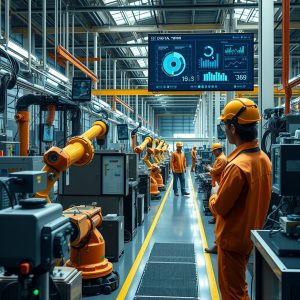
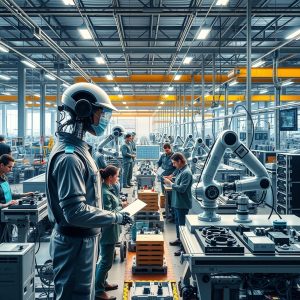
There is a particular silence that haunts a hyper-efficient warehouse, the ghost of a system perfected to the point of fragility. It’s the echo of the Just-In-Time delivery philosophy, a world where the hum of machinery was perfectly synchronized with the arrival of raw materials and the departure of finished goods. For years, this was the celebrated rhythm of modern global logistics, a ballet of precision that stripped away every redundancy. Materials arrived moments before they were needed on the assembly line, and products were shipped the instant they were complete, never touching a storage shelf. But this elegant silence, this complete absence of buffer, held a hidden vulnerability. It was the sound of a system too lean to endure the tremors of an imperfect world, and its echo now serves as a powerful reminder of a model that prioritized leanness over resilience.
The Cracks in a Lean Machine
For decades, the undisputed mantra was the elimination of waste in all its forms: wasted time, wasted space, and most critically, wasted inventory. Just-In-Time (JIT) was the highest expression of this creed, a philosophy that trimmed every ounce of fat from the supply chain. This relentless pursuit of optimization led to an intricate global dance of single-sourcing from low-cost regions and maintaining inventories so lean they were practically non-existent. While the immediate benefit was a healthier bottom line, it created a chain of dependencies as taut and fragile as a single thread. This hyper-optimization became a masterclass in risk amplification, not risk mitigation. When a single factory in a distant country shut down, a critical port faced congestion, or a geopolitical tremor sent shockwaves through trade routes, the entire network didn’t just bend—it shattered. The strategic lack of supplier diversification meant there was no Plan B, no alternate route. The music stopped, and the resulting silence was deafening.
Forging Resilience from the Fragments
The response to this systemic fragility is not to abandon the quest for efficiency, but to fundamentally redefine it. The new paradigm is one of supply chain resilience, a strategic evolution from a brittle, linear chain to a robust, agile web. This is where strategic sourcing moves beyond a simple cost-benefit analysis to become a comprehensive exercise in risk assessment and partnership building. The critical questions are no longer just ‘Who is the cheapest?’ but ‘Who is the most reliable? The most innovative? The most aligned with our long-term values?’ The goal is to cultivate a diverse portfolio of partners, a deliberate strategy of supplier diversification that provides the flexibility and redundancy necessary to absorb shocks and adapt to change.
Technology is the primary enabler of this crucial shift. Modern Vendor Management Systems and sophisticated Digital Procurement platforms act as the central nervous system for this new, dynamic model. They provide the end-to-end visibility needed to map complex supply networks, identify hidden dependencies, and accurately model the impact of potential disruptions. B2B marketplaces have evolved from simple directories into dynamic ecosystems where companies can rapidly discover, vet, and onboard new suppliers for direct material sourcing, turning what was once a months-long process into a matter of days. This digital agility allows businesses to pivot with a speed and confidence that was previously unimaginable.
The Sustainable Core of a Stronger Chain
True, long-term resilience, however, is built on more than just redundant nodes and powerful digital tools. It is fundamentally intertwined with sustainability. The mounting pressures of climate change, resource scarcity, and consumer demand for corporate responsibility are not secondary concerns; they are core components of modern risk mitigation. Sustainable procurement is no longer a niche practice for forward-thinking brands but a strategic imperative for survival. It involves scrutinizing the entire lifecycle of a product, from the ethical sourcing of raw materials to the carbon footprint of its final delivery. A supply chain that ignores its environmental and social impact is building its foundation on unstable ground.
This is where concepts like the circular economy and green logistics move from the theoretical to the practical. Instead of a linear ‘take-make-dispose’ model that is inherently wasteful, a circular supply chain designs out waste, keeps materials in use, and actively works to regenerate natural systems. Green logistics complements this by optimizing transportation routes, investing in alternative fuels, and innovating in packaging to reduce waste. A supply chain that depletes its own resources or alienates the communities it operates within is, by its very definition, not resilient. It is simply living on borrowed time, waiting for the next inevitable disruption.
The future of the global supply chain is therefore a complex tapestry, woven from threads of digital precision, strategic diversification, and a deep commitment to ethical and environmental stewardship. It acknowledges that the most efficient path is not always the strongest, and that the true cost of a product cannot be measured in dollars alone. The rhythm is changing from the metronomic, fragile beat of pure efficiency to a more complex, adaptive, and enduring symphony. It’s the sound of a network that is not just built to last, but designed to thrive in a world of constant change, echoing with the promise of a more robust and responsible tomorrow.