The Conscientious Network: Redefining the Modern Supply Chain
For decades, the global supply chain was celebrated as a marvel of efficiency, a finely tuned engine humming to the rhythm of ‘Just-In-Time’ delivery. The philosophy was simple and seductive: minimize waste, reduce inventory, and streamline every process to its leanest possible form. This model, a testament to industrial optimization, powered global commerce with unprecedented speed. Yet, recent history has shown us the profound fragility hidden within that perfection. A single disruption—a pandemic, a geopolitical tremor, a blocked canal—can send shockwaves through this rigid system, revealing that a chain is, by its very nature, only as strong as its weakest link.
From Lean Lines to Resilient Webs
The conversation has fundamentally shifted from pure efficiency to robust resilience. The new imperative is not just about cost-cutting but about building a supply network that can bend without breaking. This is the essence of Supply Chain Resilience, a strategic pivot away from dependency on single sources or regions. The primary tool in this endeavor is Supplier Diversification. This isn’t merely about having a ‘plan B’; it’s about architecting a multi-threaded, geographically distributed network of partners. By engaging in strategic sourcing with multiple suppliers, including those in different countries and even leveraging flexible Contract Manufacturing agreements, companies create a buffer against localized shocks. This approach to Risk Mitigation transforms the supply chain from a vulnerable line into a resilient, interconnected web capable of rerouting and adapting in real-time.
The Rise of the Ethical Imperative
Parallel to this quest for resilience is a powerful current of consciousness reshaping procurement itself. Consumers, investors, and regulators are increasingly demanding more than just a quality product at a fair price; they demand a product with a pedigree of integrity. This has elevated Sustainable Procurement and Ethical Sourcing from corporate social responsibility buzzwords to critical business functions. Companies are now scrutinized on their entire value chain, from the sourcing of direct materials to the carbon footprint of their Global Logistics. Transparent Sourcing, once a logistical challenge, is now a brand necessity. This involves a deep dive into supplier practices, ensuring fair labor, environmental stewardship, and ethical conduct. The goal is a supply chain that doesn’t just deliver goods, but also delivers on a promise of social and environmental accountability.
Weaving a Greener Thread
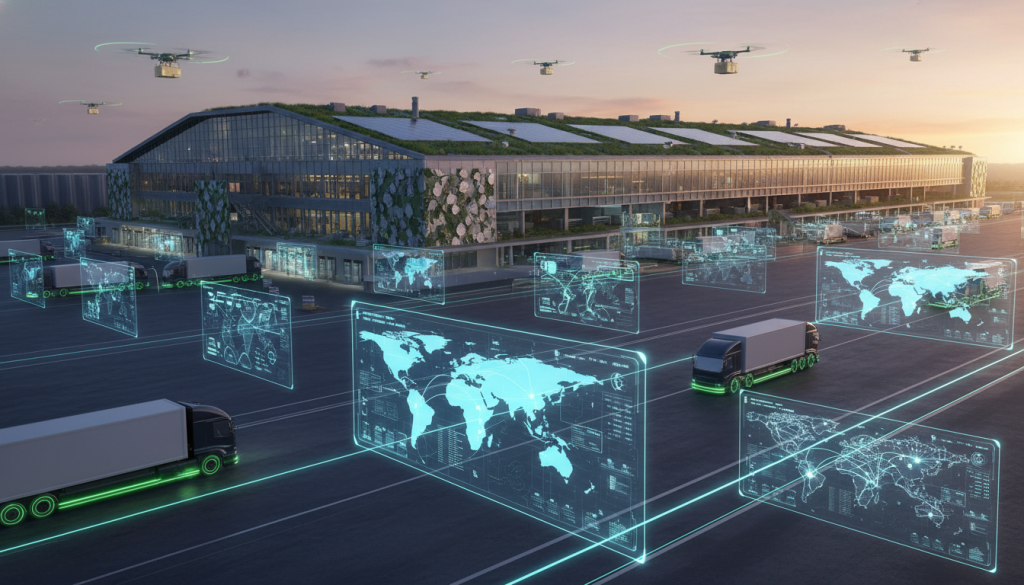
The principles of sustainability are extending beyond sourcing into the very mechanics of movement and lifecycle. Green Logistics is at the forefront of this change, focusing on optimizing transportation routes, adopting electric vehicles, and utilizing sustainable packaging to minimize environmental impact. This forward-thinking approach is intrinsically linked to the concept of the Circular Economy. Instead of the traditional ‘take-make-dispose’ model, businesses are designing systems for longevity and reuse. This is where Reverse Logistics becomes a vital component, managing the return of products for repair, refurbishment, or recycling. It closes the loop, transforming potential waste into valuable resources and creating a system that is not only efficient but also regenerative by design.
The Digital Backbone of a Modern Network
Orchestrating this complex interplay of resilience, ethics, and sustainability would be impossible without a powerful digital foundation. Digital Procurement is the central nervous system of the modern supply chain. Sophisticated Vendor Management Systems (VMS) provide a panoramic view of supplier performance, risk profiles, and compliance metrics. B2B Marketplaces are revolutionizing Direct Material Sourcing, offering greater transparency and agility in purchasing. Advanced analytics and AI-powered platforms enable dynamic Inventory Optimization, balancing the lean principles of the past with the resilience demands of the present. Technology provides the crucial visibility needed for Transparent Sourcing, allowing companies to track materials from origin to consumer and substantiate their ethical and green claims with verifiable data.
The journey from a simple, linear chain to a complex, conscientious network represents a fundamental redefinition of global commerce. It’s a move from a system designed solely for extraction of value to one designed for the creation of shared, sustainable value. This evolution requires a new mindset—one that sees suppliers not as interchangeable cogs but as strategic partners, and logistics not as a cost center but as a conduit for brand integrity. The most successful enterprises of tomorrow will be those who master this intricate dance, building supply networks that are not only profitable and efficient but also resilient, ethical, and regenerative to their core.